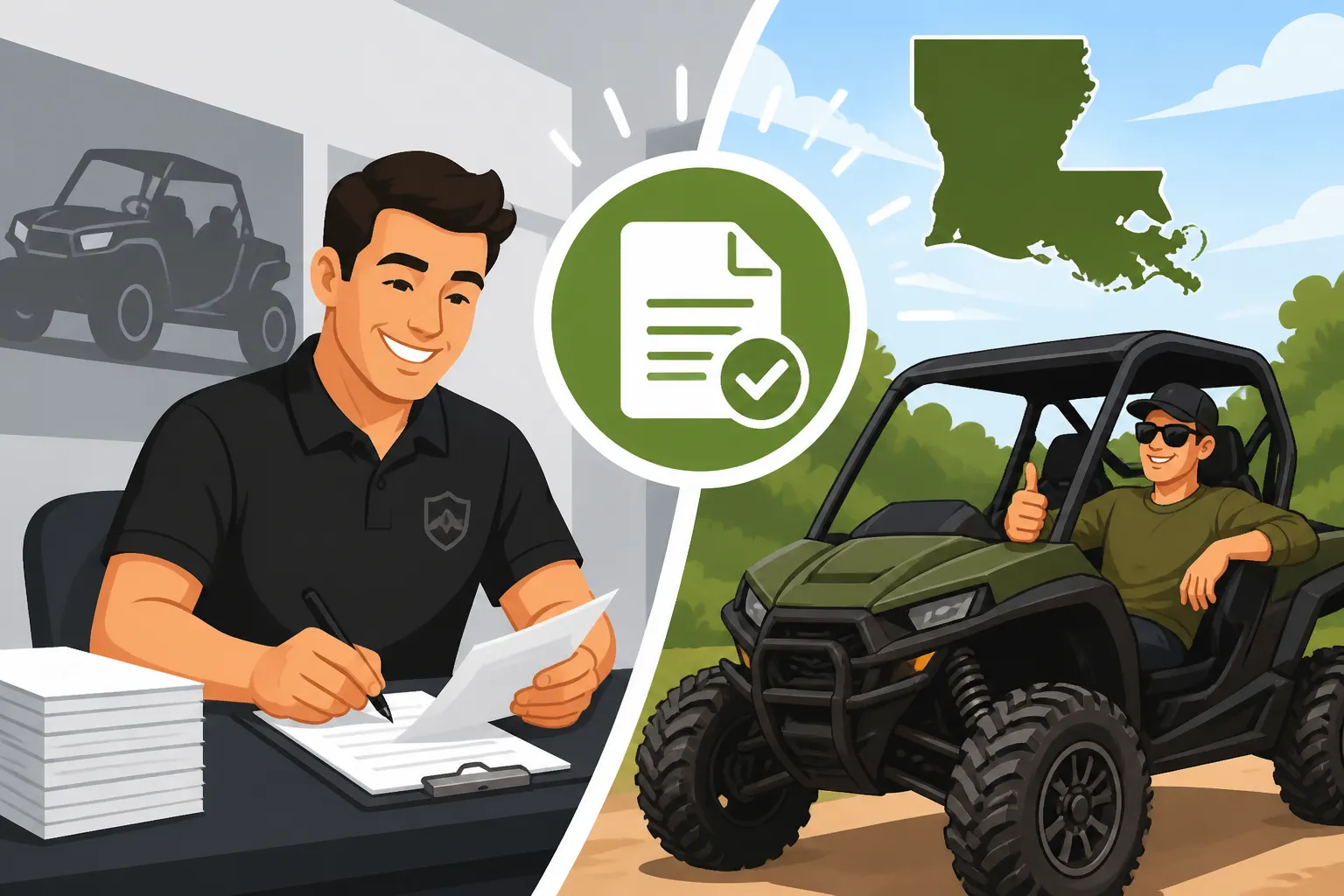
When the Dealer Files Your OMV Paperwork
Navigating the paperwork for a new ATV or UTV purchase in Louisiana can feel like an overwhelming stack of forms and regulations. Many folks wonder exactly where their responsibility ends and the dealer's begins when it comes to getting that machine legally registered and titled. This guide is here to demystify the process, explaining precisely when your dealer takes on the task of filing the necessary paperwork with the Louisiana Office of Motor Vehicles (OMV), and what you, as the new owner, still need to keep an eye on.
The Dealer's Role in Louisiana ATV/UTV Paperwork
When you purchase a new or used ATV or UTV from a licensed dealer in Louisiana, you're not just buying a machine; you're often purchasing a service that includes handling a significant portion of the administrative burden. Dealers are well-versed in the specific requirements of the OMV and are typically equipped to ensure the transaction complies with state law. This doesn't mean you're entirely off the hook, but it certainly streamlines the initial process.
Initial Sales Documentation
The very first step a dealer takes is generating all the core sales documentation. This includes the bill of sale, which details the purchase price, any trade-in value, and often an itemized list of additional charges like freight or setup fees. For new machines, the dealer will also provide the Manufacturer's Statement of Origin (MSO), which is essentially the birth certificate for your ATV or UTV. This MSO is crucial because it’s the original document proving the machine has never been titled before. Without it, the OMV cannot issue a first-time title.
Beyond these fundamental documents, the dealer will prepare the OMV application forms. These forms require precise information about both the buyer and the machine, including the Vehicle Identification Number (VIN), which must match exactly across all paperwork. The dealer's staff often have specialized software that populates these forms, minimizing the chance of transcription errors that can cause significant delays later on. It’s important to review these documents carefully before signing, ensuring all personal details and machine specifics are correct. You might even find it helpful to familiarize yourself with general legal document structures, perhaps by browsing examples on sites like LawDepot, so you know what information to look for.
Collecting Sales Tax and Fees
One of the most significant services a dealer provides is the collection and remittance of sales tax. In Louisiana, you owe both state and local parish sales tax on the purchase of an ATV or UTV. If you were to buy privately, you’d be responsible for paying this [Louisiana Sales Tax Proof at the Counter] directly to the OMV or Department of Revenue before you could even get your title. Dealers, however, calculate these taxes at the point of sale, add them to your total purchase price, and then forward them to the appropriate state and local agencies on your behalf. This is a huge convenience, as it means you're less likely to be surprised by an unexpected tax bill when you go to title your machine.
In addition to sales tax, dealers will also collect the various OMV fees that are part of the titling and registration process. This includes the [Louisiana Title Fee of $68.50], the [Louisiana Handling Fee of $8], and the cost of your initial [Louisiana ORV Decal Cost], which is typically $3 a year. Sometimes, if you're also registering a lien from a financing company, the dealer will collect the [Recording a Lien Costs $15 at the OMV] fee. They consolidate all these charges, provide you with a clear breakdown on your invoice, and ensure these funds reach the OMV along with your application. This integrated approach simplifies the financial side of ownership transfer, making it a smoother experience for the buyer.
Submitting to the OMV
Once all the sales documents are signed, the taxes and fees are collected, and your machine is ready to roll, the dealer typically takes on the responsibility of submitting the entire paperwork package to the OMV. This can happen in a few ways: some dealers have direct electronic access to the OMV system, allowing for faster processing, while others compile the physical documents and mail them or send them via courier. The goal is to get your application processed so that the OMV can issue your official title and off-road decal.
This submission process includes the completed OMV vehicle application, your MSO (for new machines) or the previously assigned title (for used machines), proof of sales tax payment, and any other supporting documents. The dealer acts as your agent in this step, ensuring everything is correctly bundled and addressed. It's a critical part of the transaction because any error or omission at this stage can lead to delays or even rejection of your application. While the dealer does the heavy lifting, it’s still wise for you to be aware of what [What to Fill In on the OMV Vehicle Application] entails, even if they're filling it out for you.
What Buyers Still Need to Do
Even with a reputable dealer handling most of the OMV paperwork, you, as the buyer, still have crucial responsibilities. Overlooking these can lead to frustration, delays, or even penalties down the line. Think of it as teamwork: the dealer preps and sends the ball, but you need to be ready to catch it and confirm it’s safely in play.
Verifying Submission and Tracking Progress
After you've driven off the lot, don't just assume everything is in order. It's smart practice to confirm with your dealer when they plan to submit your paperwork to the OMV. Ask for an estimated timeline and if they can provide a tracking number or confirmation that the submission has been made. While the OMV handles [Louisiana Title Processing Time] internally, knowing when your application officially entered their system gives you a starting point.
You should also keep copies of all your sales documents, including the bill of sale and any temporary permits or receipts provided by the dealer. These documents are your proof of purchase and can be invaluable if there are any questions or issues with your application. If you don't hear anything within the expected timeframe, don't hesitate to reach out to the dealer for an update. They should be able to check on the status of your application with the OMV or at least confirm it was sent. Sometimes, a quick call can resolve a minor holdup before it becomes a major headache.
Understanding Temporary Registrations
When you buy a new off-road machine from a dealer, they might issue you a temporary decal or permit. This allows you to legally operate your ATV or UTV for a short period while waiting for your official title and decal to arrive from the OMV. It's important to understand the validity period of these temporary documents. For instance, Louisiana often has a [You Have 30 Days to Affix the Decal] rule. You wouldn't want to get caught riding without valid documentation simply because you misunderstood the temporary permit's expiration.
Make sure the temporary tag is properly affixed or carried with you when you ride. Treat it as your official registration until the permanent decal arrives. If your temporary permit is nearing its expiration date and you still haven't received your permanent decal, it's definitely time to follow up with your dealer and, if necessary, the OMV. Riding with an expired temporary permit is essentially riding without a decal, which could lead to [Louisiana Penalties for No Decal].
When to Follow Up Yourself
While the dealer usually handles the primary submission, there might come a time when you need to take the reins. If significant time passes (typically several weeks beyond the estimated processing time) and you still haven't received your title and decal, it's time to contact the OMV directly. Before calling, have all your purchase information handy: dealer name, date of purchase, VIN, and any reference numbers the dealer provided.
Sometimes, issues arise that the dealer might not even be aware of, such as a lost application in the mail or a minor error that the OMV flagged but couldn't resolve without your input. Having your copies of the paperwork, including the MSO or previous title, can be crucial. If you're dealing with an older, used machine, remember that [Louisiana Requires an Assigned Title for a Used One] and any missing signatures or incorrect information on that transfer can hold things up. This is also where knowing your way around official forms, perhaps by having reviewed samples on LawDepot, can make you a more confident advocate for yourself. Don't be afraid to politely but persistently inquire until your issue is resolved.
Potential Pitfalls and How to Avoid Them
Even with the best intentions, the process of titling and registering an ATV or UTV can sometimes hit snags. Understanding these common pitfalls can help you avoid them or at least navigate them more effectively if they arise.
Missing or Incorrect Paperwork
One of the most frequent reasons for delays is missing or incorrect information on the application forms. This could be anything from a misspelled name to an incorrect VIN, or even a missing signature. While dealers strive for accuracy, human error can occur. For example, if the dealer failed to properly assign the previous owner's title to you for a used machine, that's a problem that will halt your application at the OMV. [What Happens When a Title Is Missing a Signature] is a common scenario that requires careful attention.
To minimize this risk, always thoroughly review every document before you sign it. Don't feel rushed. If something looks wrong or unclear, ask questions. Double-check your name, address, and especially the VIN on all paperwork. Comparing the VIN on the documents to the VIN stamped on your machine is a simple but effective preventative measure. If you're purchasing a used ATV from a dealer, ensure that the previous owner's signature is present on the assigned title, confirming its legal transfer.
Delays in Processing
Delays are a common frustration, especially during peak seasons or due to unforeseen administrative backlogs at the OMV. While your dealer may submit the paperwork promptly, the OMV still has its own processing times. It's not uncommon for it to take several weeks for your official title and decal to arrive in the mail. However, excessive delays (say, more than 6-8 weeks without any communication) warrant investigation.
If you suspect a delay, first contact your dealer for an update. They may have specific insight into the status of the batch of applications they submitted. If the dealer cannot provide a satisfactory update, then it's time to contact the OMV directly. Be prepared to provide the date of purchase, dealer name, and VIN. Understanding that this is a common issue can help manage your expectations, but staying proactive is key to ensuring your paperwork isn't simply forgotten.
Dealer Errors and Buyer Recourse
While most dealers are reputable and handle paperwork correctly, sometimes mistakes happen or, in rare cases, a dealer might fail to submit paperwork in a timely manner. If you find yourself in a situation where a dealer error is preventing you from getting your title and decal, you have recourse.
First, always attempt to resolve the issue directly with the dealership's management. They have a vested interest in customer satisfaction and their reputation. Document all communications, including dates, names of people you spoke with, and what was discussed. If direct communication fails, you may need to file a complaint with the Louisiana Used Motor Vehicle Commission (LUMVC) or the Louisiana Attorney General's Office. These agencies oversee dealer licensing and practices and can mediate disputes. Having all your original sales documents, perhaps organized with a system you might use for other legal documents, like those found on LawDepot, will be critical evidence in any such dispute.
The Benefits of Dealer-Handled Paperwork
Despite the potential for minor hiccups, having your dealer handle the OMV paperwork for your ATV or UTV purchase offers significant advantages that generally outweigh the small risk of issues.
Convenience and Expertise
For most buyers, the biggest benefit is sheer convenience. You're already excited about your new machine; the last thing you want to do is spend hours deciphering OMV forms, calculating sales tax, and waiting in line. Dealers take that burden off your shoulders, allowing you to focus on planning your first ride. Their staff are experts in the specific requirements for titling off-road vehicles in Louisiana, ensuring that the process is completed correctly and efficiently.
This expertise means fewer mistakes, which in turn means less chance of your application being rejected and returned, causing further delays. Imagine trying to figure out every line item for [Louisiana Title Fees for an ATV] or accurately filling out a complex form like the [Louisiana Form DPSMV 1799 Explained] on your own. Dealers do this every day, and their familiarity with the system saves you time, stress, and potential errors.
Avoiding Common Mistakes
The OMV process for ATVs and UTVs in Louisiana has very specific requirements. For instance, new machines require an MSO, while used ones need a properly [Louisiana Requires an Assigned Title for a Used One] from the previous owner. Incorrectly handling these foundational documents can lead to immediate rejection of your application. Dealers are trained to handle these details correctly.
Furthermore, calculating and submitting sales tax correctly is critical. If you buy privately and underpay your sales tax, the OMV will absolutely send your application back, demanding the correct amount. Dealers ensure all taxes, including both state and parish portions, are collected and remitted properly. They also ensure the correct off-road decal is applied for, preventing issues like [Louisiana Penalties for No Decal] down the road. This comprehensive handling protects you from the common pitfalls that private buyers often encounter, making the dealer an invaluable partner in your purchase.
Disclaimer
This article is for general informational purposes only and does not constitute professional advice. Laws, prices and regulations vary by location and change over time. Consult a qualified professional for guidance on your specific situation.