Moving to Louisiana With a Quad You Already Own
So you've made the exciting decision to move to Louisiana, and of course, your trusty ATV or UTV is coming along for the ride! While it might seem straightforward to just bring your machine and keep riding, Louisiana has its own specific rules when it comes to titling and registering off-road vehicles that originated out-of-state. This guide will walk you through everything you need to know to ensure your quad or side-by-side is properly recognized by the Louisiana Office of Motor Vehicles (OMV), saving you from frustrating delays and unexpected headaches at the counter.
Understanding Louisiana's Titling Requirements for Out-of-State Machines
When you move to a new state with an off-road vehicle you already own, one of the biggest initial hurdles is navigating the local titling system. Louisiana, like many states, has a vested interest in ensuring all vehicles operating within its borders are properly documented and have a clear chain of ownership. This isn't just about bureaucracy; it's about protecting you as the owner and preventing fraud.
The Core Principle: Louisiana Wants Its Own Title
Even if your ATV or UTV has a perfectly valid title from your previous state, Louisiana will generally require you to apply for a new Louisiana title. Think of it like getting a new driver's license when you move; your old one is proof of your driving privilege, but the new state wants to issue its own. The OMV needs to establish its own record of your ownership, ensuring all future transactions, like selling the machine or dealing with insurance claims, are rooted in a Louisiana-issued document. This process helps the state keep track of its motorized population and ensures that all applicable taxes and fees are handled locally. It can feel like a bit of a re-do, but it’s a necessary step to integrate your machine into Louisiana’s official system.
For a brand-new machine that you're bringing in, you'd typically have a Manufacturer's Statement of Origin (MSO) from the dealer where you purchased it. This MSO is the foundational document of ownership. For a used machine, you'll need the properly assigned title from your previous state. [Louisiana Requires an MSO for a New Machine] and [Louisiana Requires an Assigned Title for a Used One] are key concepts here. The OMV uses these documents to verify who legally owns the machine before issuing a new Louisiana title in your name. Without these crucial pieces of paper, the process simply can't begin, so make sure they're in order before you even think about heading to the OMV.
What Happens If Your Current State Doesn't Title ATVs?
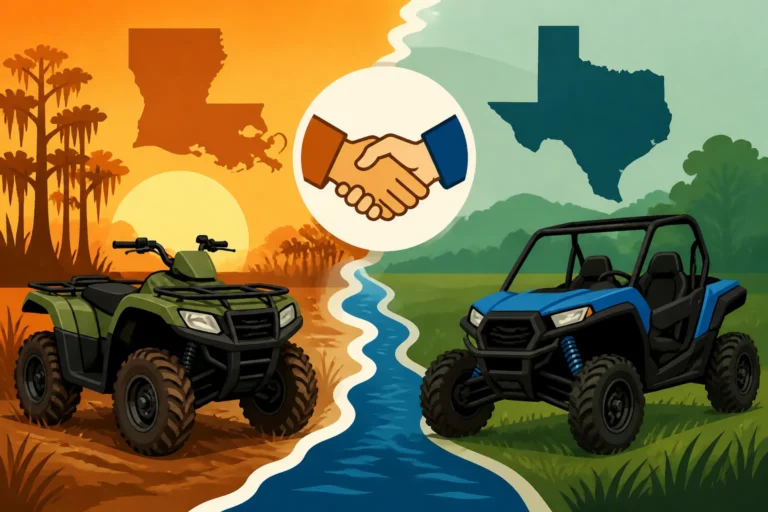
This is a common point of confusion for many new residents. Not all states title ATVs or UTVs, particularly if they are strictly off-road machines and not street legal. If you're moving from one of these non-titling states, you might be thinking, "Well, I don't have a title to hand over!" Don't panic. Louisiana's OMV is accustomed to this situation and has a process in place.
In cases where your previous state did not issue a title, you'll need to provide alternative proof of ownership. This usually means a notarized bill of sale, often accompanied by the original dealer invoice if you bought it new, or a series of bills of sale tracing the ownership back to the original sale. The goal is to provide the OMV with a clear and unbroken chain of ownership. You might also be asked to sign an affidavit swearing that your previous state did not title the machine. Having a robust bill of sale is critical here; it should clearly list the buyer, seller, date of sale, purchase price, and the machine's full Vehicle Identification Number (VIN). Services like LawDepot can be incredibly helpful for drafting professional, legally sound bills of sale if you ever need to create one for future transactions or to bolster your ownership proof in this specific scenario. They offer templates that ensure all the necessary information is included, which can prevent headaches down the line. It's all about demonstrating to Louisiana that you are, unequivocally, the rightful owner, even without a prior state-issued title.
Essential Documents for a Smooth Transition to a Louisiana Title
Getting your out-of-state ATV or UTV titled in Louisiana requires a careful collection of documents. Overlooking even one piece of paper can mean multiple trips to the OMV, which nobody wants. Being prepared is the key to a quick and efficient process.
Proof of Ownership: The Non-Negotiables
First and foremost, the OMV needs undeniable proof that you legally own the machine. If your previous state issued a title, you'll need the original title certificate, properly signed over to you. If there were multiple owners, ensure all signatures are present and correct. Any discrepancies or missing information could halt the process. The VIN on the title must match the VIN on your machine exactly.
For those coming from a state that doesn't title off-road vehicles, the requirement shifts to a robust set of alternative documents. A meticulously prepared bill of sale is paramount. This isn't just a scribble on a napkin; it needs to be detailed, ideally notarized, and include the full VIN, purchase price, date of sale, and the complete names and addresses of both buyer and seller. If you're worried about missing anything, using a service like LawDepot to generate a comprehensive bill of sale ensures all legal bases are covered. If you bought the machine new, keep that original dealer invoice handy too, as it serves as excellent supporting documentation. Sometimes, if the ownership chain is long and only bills of sale are available, the OMV might require an affidavit of ownership where you attest to the history of the machine. The clearer and more complete your ownership documentation, the smoother your OMV visit will be.
Sales Tax and Use Tax: Louisiana Wants Its Share
This is where many new residents get tripped up. Louisiana is going to want its share of sales tax on your machine, even if you already paid tax in another state. The specific mechanism here is often a "use tax." If you've owned the machine for a while and can prove you paid sales tax in your previous state at a rate equal to or higher than Louisiana's combined state and local rate, you might be exempt from paying additional tax. However, if your previous state's sales tax was lower, or if you didn't pay any sales tax (e.g., it was a gift or from a non-taxing private sale in that state), Louisiana will assess use tax based on the machine's purchase price or fair market value.
You will need to bring proof of any sales tax you previously paid. This could be a line item on your out-of-state title application, a dealer invoice clearly showing sales tax, or a receipt from your previous state's tax authority. Without this, expect to pay Louisiana's use tax at the OMV counter. [Louisiana Requires Proof of Sales Tax First] before they will even issue you a title. They want to ensure their coffers are appropriately filled. Be prepared to show your original purchase documents and be ready to pay any difference or the full use tax if applicable.
Identification and Residency Proof
Of course, the OMV needs to verify who you are and that you actually live in Louisiana. You'll need a valid form of identification, typically a driver's license or state-issued ID. Since you just moved, your out-of-state driver's license is fine initially, but you should also be working towards getting a Louisiana driver's license.
In addition to your ID, you'll need to provide proof of your Louisiana residency. This can include a utility bill (electricity, water, gas), a lease agreement, a mortgage statement, or official mail with your name and new Louisiana address. Make sure the address on your residency proof matches the address you're putting on your title application. Any discrepancies can cause delays. Having two forms of residency proof is often a good idea, just in case one isn't accepted.
The Step-by-Step Process at the OMV
Once you have all your documents gathered, it's time to head to the OMV. While the idea of a government office visit might not be anyone's idea of fun, being prepared can make it a surprisingly smooth experience.
Preparing for Your OMV Visit
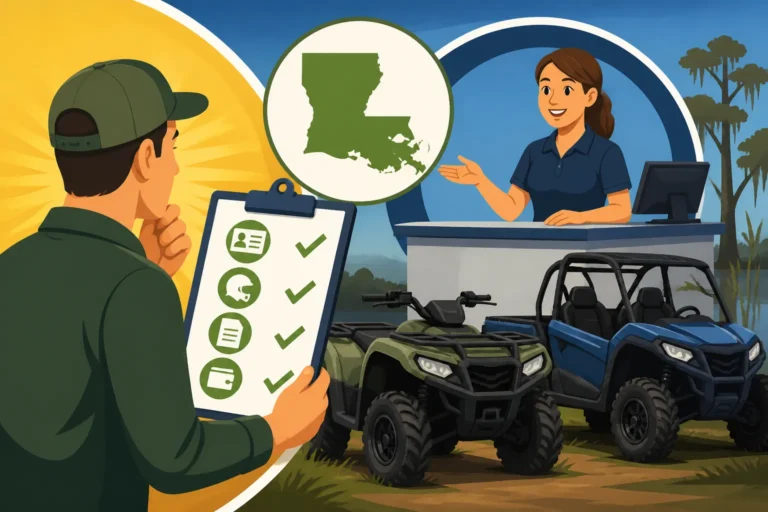
Before you even step out the door, take a moment to double-check everything. Gather all your original documents: your out-of-state title (if applicable) or robust bill of sale, proof of sales tax paid (or be ready to pay use tax), your identification, and proof of Louisiana residency. Make photocopies of everything – sometimes they'll keep a copy, and it's always good to have backups for your records.
It’s also wise to check the OMV's website for office hours and any specific requirements for new residents or out-of-state vehicle transfers. Some OMV locations might have different peak times, so planning your visit for an off-peak hour could save you a significant wait. Remember, the OMV clerks process a lot of transactions daily, and coming in organized and prepared helps them help you more efficiently. [Planning an OMV Counter Visit So It Takes One Trip] is a valuable strategy, as forgetting even a single document can send you back home to start all over again.
Filling Out the Necessary Forms
At the OMV, you'll be given a Vehicle Application Form (often referred to as Form DPSMV 1799). This form is crucial for titling any vehicle in Louisiana, including ATVs and UTVs. You'll need to accurately fill in all the details about yourself and your machine, including its make, model, year, and the all-important VIN. Double-check the VIN to ensure it matches your ownership documents perfectly. Errors here can lead to delays or even a rejected application.
Some forms might also require a physical inspection or verification of the VIN, especially for out-of-state vehicles. The OMV clerk might ask to see the VIN stamped on the machine itself to verify it matches your paperwork. In some cases, a law enforcement officer might need to perform this verification. Don't worry, it's a standard procedure to prevent fraud and ensure the machine isn't stolen or misrepresented. Be ready to provide your machine's information clearly and legibly on all forms. [What to Fill In on the OMV Vehicle Application] can give you a head start on what information you'll need at your fingertips.
Paying the Fees: Title, Decal, and Handling
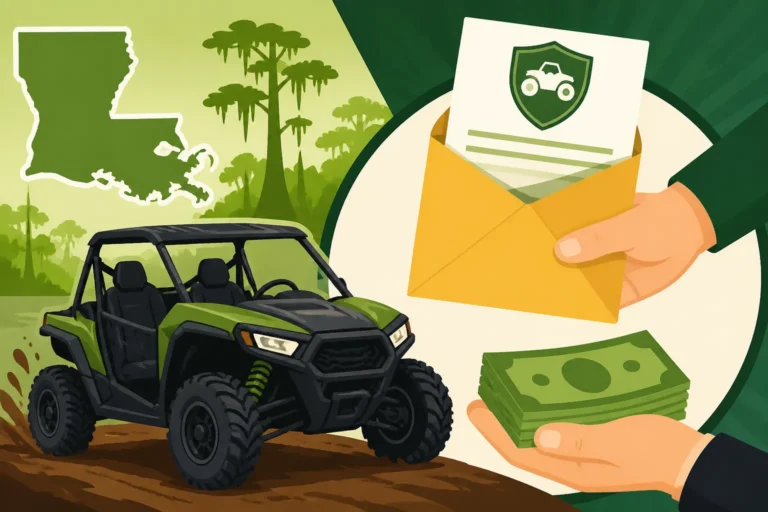
Once your documents are in order and forms are filled out, it's time to pay the necessary fees. There are generally a few components to this:
- The Title Fee: This is a flat fee charged by the state for issuing your new Louisiana title certificate. [Louisiana Title Fees for an ATV] will give you an idea of the cost.
- The Off-Road Decal Fee: In addition to titling, Louisiana requires most ATVs and UTVs to carry an annual off-road decal. This is a separate, smaller fee that ensures your machine is registered for off-road use within the state. [Louisiana's Yearly Off-Road Decal] typically has a very low yearly cost, but it's mandatory.
- Handling Fee: The OMV also charges a small handling fee for processing transactions. This covers their administrative costs. [Louisiana Handling Fee of $8] is a common figure you might see.
- Sales/Use Tax (if applicable): As discussed, if you haven't paid sales tax equivalent to Louisiana's rate, you'll pay the use tax at this point.
While I can't give you exact current figures, understand that these fees are non-negotiable and must be paid at the time of application. The OMV typically accepts various forms of payment, but it's always a good idea to have a debit card or check ready, just in case. They'll issue you a temporary receipt, and your official title certificate will usually be mailed to you within a few weeks. The decal may be issued on the spot or also mailed.
Beyond the Title: Decals and Road Rules
Getting your Louisiana title is a huge step, but your journey isn't quite over. There are other important aspects of owning an off-road machine in Louisiana that new residents need to understand, particularly regarding decals and where you can legally ride.
The All-Important Louisiana ORV Decal
Even after you've secured your shiny new Louisiana title, you're not quite done. Your ATV or UTV will also need a Louisiana Off-Road Vehicle (ORV) decal. This decal is separate from the title but equally important for legal off-road operation in designated areas. The title proves ownership, while the decal signifies that your machine is registered for use on public lands and designated trails. Many newcomers mistakenly think that having a title means they're all set, but [Why an ATV Needs Both a Title and a Decal] is a question many ask.
The decal is a small sticker that you'll need to affix to a visible part of your machine, typically in a designated area. [Louisiana Decal Placement on a Machine] is important to get right to avoid issues. These decals are generally renewed on a specific cycle, often annually or biannually, so you'll need to keep track of its expiration date. [When a Louisiana ORV Decal Comes Up for Renewal] is something to make a note of on your calendar. It's a small cost, but neglecting to get or renew this decal can lead to fines if you're caught riding without it, so make it a priority once your title is in hand.
Understanding Louisiana's Riding Regulations
Finally, a key part of moving your off-road machine to Louisiana is understanding where you can actually ride it. Louisiana has specific laws governing the use of ATVs and UTVs, particularly when it comes to public roads and lands. It's crucial to understand that even with a title and an ORV decal, your machine is generally not street legal. [Can You Ride an ATV on the Road in Louisiana?] The answer is usually a resounding "no," with very limited exceptions.
Louisiana Revised Statute 32:299 (for ATVs) and 32:299.3 (for UTVs) outline the rules. Generally, these machines are restricted to off-road use, private property with permission, or specifically designated trails and areas. There are narrow exceptions for agricultural purposes on parish roads within a certain radius, or for crossing a public road where incidental to off-road use, but these are highly conditional. [Louisiana ATV Road Rules Under 32:299] details these specific rules. It's not like simply registering a car; off-road vehicles have a different legal status. Before you hit the trails or fields, always research the specific regulations for the area you plan to ride in, including local parish ordinances, as these can add further restrictions. Ignorance of the law is not a valid defense, and violations can result in significant fines and even impoundment of your machine.
OMV Document Checklist for Out-of-State ATV/UTV
| Document Category | Required Items | Notes |
|---|---|---|
| Proof of Ownership | Original Out-of-State Title (if issued) | Must be properly assigned to you. VIN must match machine. |
| Notarized Bill of Sale (if no title from previous state) | Must include full VIN, purchase price, date, buyer/seller info. LawDepot templates are helpful. | |
| Original Dealer Invoice (for new machines, or to support bill of sale) | Clearly showing purchase details and VIN. | |
| Tax Documentation | Proof of Sales Tax Paid in Previous State | Invoice or receipt showing tax paid. Needed to assess Louisiana use tax. |
| Be prepared to pay Louisiana Use Tax | If previous state's tax was lower or not paid, OMV will assess tax at counter. | |
| Personal ID | Valid Photo Identification (Driver's License or State ID) | Your current out-of-state ID is acceptable, but a Louisiana ID is preferred if available. |
| Proof of Residency | Two Forms of Louisiana Residency Proof | Utility bill, lease agreement, mortgage statement, official mail with your name and new Louisiana address. |
| Machine Information | Vehicle Identification Number (VIN) | Ensure it's legible and matches all documentation. |
| OMV Forms | Completed Vehicle Application Form (DPSMV 1799) | Available at OMV office. Fill out accurately with all machine and owner details. |
| Payment for Fees | Funds for Title Fee, Decal Fee, Handling Fee, and any Use Tax | Check OMV for accepted payment methods (debit card, check recommended). |
Disclaimer
This article is for general informational purposes only and does not constitute professional advice. Laws, prices and regulations vary by location and change over time. Consult a qualified professional for guidance on your specific situation.