Where a Notary Fits in the Title Paperwork
Dealing with the paperwork for your ATV or UTV in Louisiana can feel like navigating a swamp in the dark – confusing, full of hidden obstacles, and prone to getting you stuck. One of the trickiest parts for many private buyers and sellers is figuring out exactly where a notary fits into the process, and what happens if you miss that crucial step. This guide is here to shine a light on the role of notarization in Louisiana ATV and UTV title transfers, helping you avoid common headaches and get your machine properly titled and ready to ride.
The Role of Notarization in Louisiana ATV/UTV Title Transfers
Let's cut right to the chase: in Louisiana, when you're buying or selling a used ATV or UTV privately, a notary isn't just a suggestion – it's often a legal requirement. This isn't just about adding an extra step to your day; it's about protecting both the buyer and the seller, and ensuring the Office of Motor Vehicles (OMV) has clear, legally sound documentation for the transfer of ownership. Without proper notarization, your title application will hit a brick wall, delaying your ability to get your [Louisiana ORV Decals and Titles Explained] and legally ride.
When a Notary is Absolutely Required for Your Bill of Sale
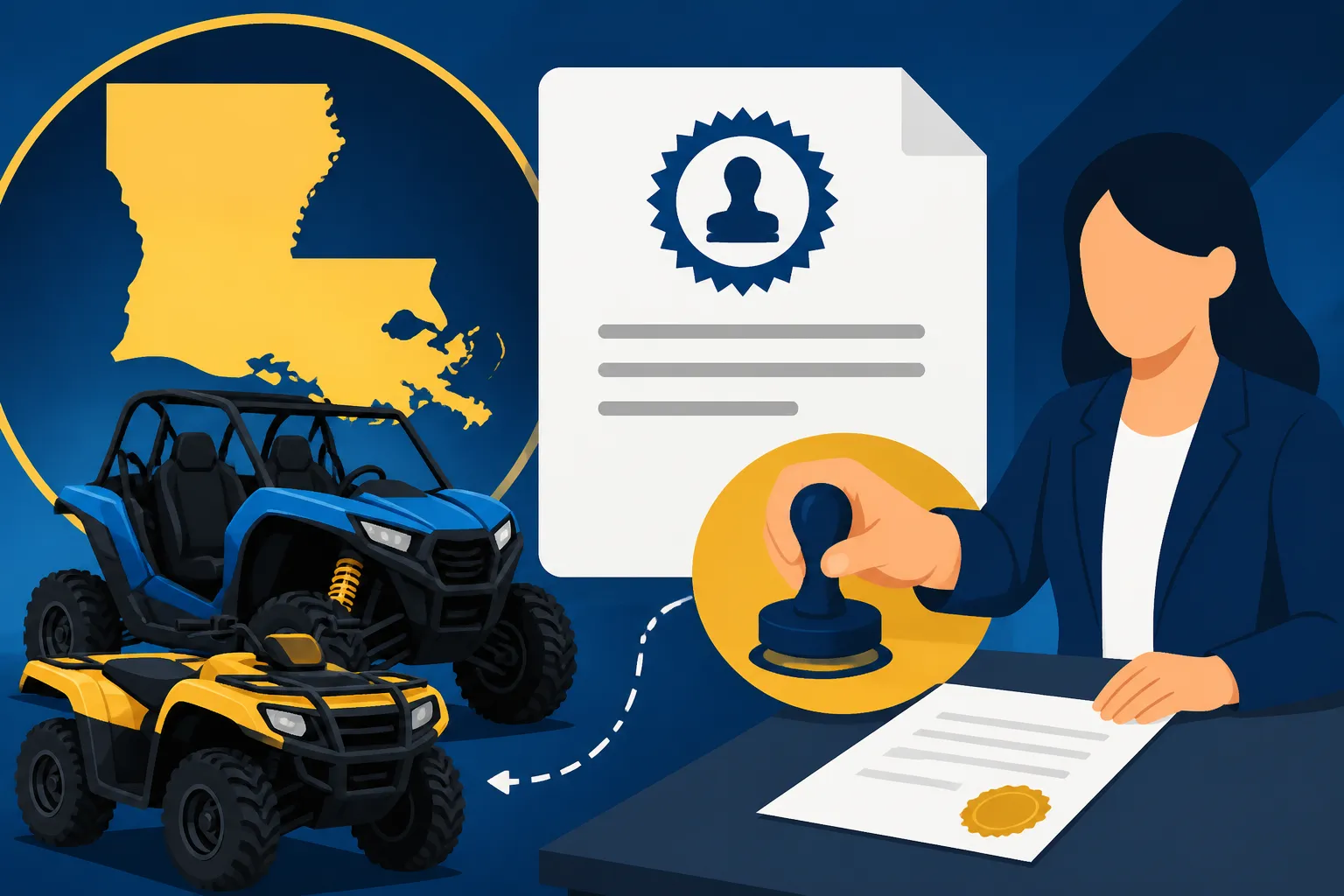
When you're engaged in a private sale of an ATV or UTV in Louisiana, the bill of sale absolutely needs to be notarized. This isn't a small detail; it's a fundamental step that ensures the authenticity of the transaction. Imagine you're buying a used side-by-side from a friend you've known for years, or from a stranger you met online. Regardless of how well you know the person, the OMV needs verifiable proof that both parties willingly entered into that sale agreement. A notary acts as an impartial third-party witness, confirming the identities of the signers and that they signed the document freely. This process significantly reduces the risk of fraud, like someone forging a signature or claiming a machine was sold when it wasn't.
Think about the importance of a clear chain of ownership. When the OMV is updating title records, they're essentially creating a legal history for that machine. If a link in that chain is weak – say, a bill of sale that could be easily disputed – it opens the door to potential problems down the road. This is why the state is so particular about [Louisiana Notarized Bills of Sale]. Without that notary's seal and signature, the OMV has no definitive confirmation that the seller genuinely transferred ownership to you, or that you genuinely accepted it. You might think it's just a handshake deal, but for the OMV, it needs to be much more concrete. For instance, if you purchase a machine from a private seller, you'll need that notarized bill of sale along with the properly assigned title from the previous owner to get your new title.
Situations Where a Notary Might Not Be Needed (or Who Provides It)
While notarization is crucial for most private sales, there are specific scenarios where it might not be a requirement or is handled differently. If you're purchasing a brand-new ATV or UTV from a licensed dealer in Louisiana, you generally won't need to worry about personally getting a bill of sale notarized. This is because new machines come with a Manufacturer's Statement of Origin (MSO), and the dealer, as a regulated business, handles all the initial paperwork, including ensuring the sales tax is collected and submitted. They act as the trusted intermediary, and their established business practices meet the state's requirements for verifying the transaction. The OMV trusts the dealer's paperwork, including their itemized invoice, which serves a similar purpose in verifying the sale details as a notarized bill of sale would for a private transaction. [Louisiana Itemized Dealer Invoices] are the key here.
Similarly, if you inherit a machine and the inheritance is clearly documented through probate or a valid will, the process for transferring the title may bypass the need for a separate notarized bill of sale. In such cases, the court documents or death certificate, combined with a properly filled out OMV application, serve as the legal instruments for transfer. However, even in these situations, you'll still need to work closely with the OMV to understand their specific requirements for [Louisiana Titles for an Inherited Machine]. It's always best to call ahead or check the OMV website for guidance on these less common situations. Also, remember that even if the bill of sale itself doesn't need notarization (as in a dealer sale), other forms you might need for your application, like certain affidavits, could still require it.
How to Get Your ATV/UTV Bill of Sale Notarized in Louisiana
So, you've got your ATV or UTV, or you're about to sell it, and you know you need that notarized bill of sale. Don't panic! The process itself is usually straightforward, but knowing what to expect can save you a lot of time and frustration. It's all about preparation and understanding the notary's role.
Preparing Your Documents for the Notary
Before you even think about stepping foot in front of a notary, you need to ensure your bill of sale is correctly and completely filled out. This isn't just about scribbling down the basics; it's about providing all the necessary details that the OMV will require. Your bill of sale should clearly include:
- The full names and addresses of both the buyer and the seller. This is crucial for establishing who is transferring ownership to whom.
- The make, model, year, and Vehicle Identification Number (VIN) of the ATV or UTV. The VIN is like your machine's social security number, uniquely identifying it. You'll also need to provide the previous owner's signed-over title, as [Louisiana Requires an Assigned Title for a Used One].
- The purchase price. This is vital because the OMV will use this figure to calculate the sales tax you owe, unless an exemption applies.
- The date of the sale. This helps establish the timeline of the transfer.
It is absolutely critical that you fill out all the information on the bill of sale, but DO NOT sign it yet. The signing has to happen in the presence of the notary. The notary's job is to witness your signature, not to witness you filling in blanks. If you sign it beforehand, the notary cannot legally attest that they witnessed you signing it. They might refuse to notarize it, or ask you to re-sign, which can be awkward and wastes time.
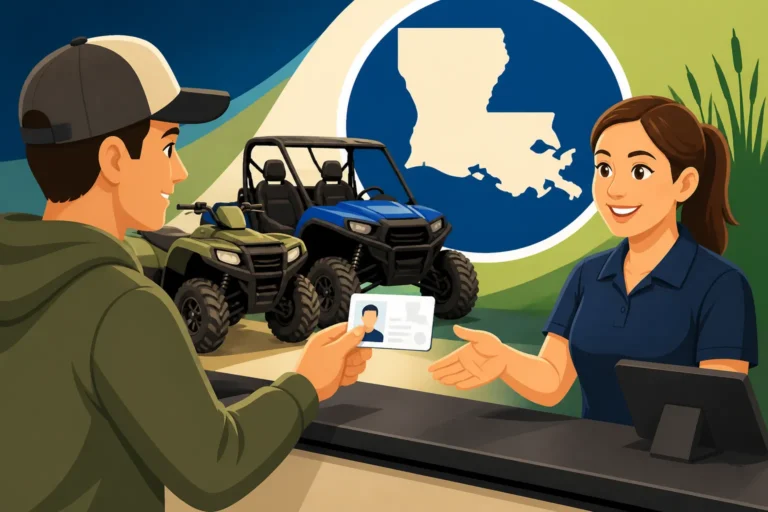
Furthermore, ensure that all parties who are required to sign the document are present. If you're a co-owner, or if the seller is married and both names are on the previous title, both individuals will need to appear before the notary with valid government-issued photo identification. This could be a driver's license, state ID card, or passport. The notary uses these IDs to confirm that the people signing the document are indeed who they claim to be. Taking these preparatory steps seriously will make the notarization process smooth and efficient, ensuring you're ready to proceed with your [What to Fill In on the OMV Vehicle Application] without a hitch.
Finding a Notary and What to Expect
Finding a notary in Louisiana is generally quite easy. Many banks and credit unions offer notary services to their customers, sometimes even for free. You can also find independent notaries listed online, at shipping stores like UPS Store locations, or often at local law offices. For those who prefer to prepare their documents digitally and sometimes even find notary services, platforms like LawDepot can be incredibly helpful for creating legally sound bills of sale and then connecting you to local notaries.
When you arrive, the process is usually quick:
- Present your ID: The notary will ask for your valid photo identification to verify your identity.
- Sign the document: You will sign the bill of sale (and any other documents requiring notarization) in front of the notary. They are witnessing your signature, not the content of the document itself.
- Notary completes their section: The notary will then complete their portion of the document, which typically includes their signature, seal, and the date. They will log the notarization in their official journal, which is a legal record of their acts.
- Pay the fee: Notaries typically charge a small fee for their services. This can vary, so it's a good idea to ask about the cost when you first contact them.
It’s important to understand what a notary does not do. A notary does not act as a legal advisor, nor do they validate the terms or legality of your transaction. Their role is strictly to verify identities and witness signatures. They cannot tell you if your sale price is fair, or if your contract is legally sound. They are simply verifying that the people signing the document are who they say they are and that they signed it willingly. Keeping this distinction clear will help manage your expectations and ensure you get the service you need without confusion. Getting this step right the first time can significantly reduce your [Louisiana Title Processing Time].
Common Pitfalls and Misconceptions About Notarization
Even with the best intentions, it's easy to misunderstand certain aspects of notarization, especially when dealing with something as specific as ATV and UTV titles. These misconceptions can lead to frustrating delays at the OMV, and nobody wants to spend more time than necessary there! Let's clear up some common pitfalls.
The Difference Between a Notary and a Witness
This is a big one. Many people mistakenly believe that having a friend or family member witness a signature on a bill of sale is sufficient. While a witness confirms they saw someone sign, a notary does much more than that, and their role carries significantly more legal weight. A witness simply confirms a signature was made. A notary, however, confirms:
- Identity: They verify, using official photo identification, that the person signing is indeed the person they claim to be. This protects against impersonation.
- Voluntary Act: They ensure the signer is not being coerced or signing under duress.
- Competence: They observe if the signer appears to understand what they are signing.
- Official Record: They maintain a journal of every notarization, which creates a verifiable record of the event.
The notary’s official seal and signature are recognized by the state as a legal authentication of these facts. A simple witness signature, while perhaps well-intentioned, lacks this legal gravitas and will not be accepted by the Louisiana OMV for a private ATV/UTV sale. If you present a bill of sale with just a witness, you'll be sent home to get it properly notarized, adding unnecessary steps and frustration to your titling process.
What Happens If Your Bill of Sale Isn't Notarized When Required
If you try to title your ATV or UTV with a private sale bill of sale that lacks proper notarization, the OMV will simply reject your application. It’s a hard stop. You won't be able to proceed with getting your title, which means you can't get your decal, and ultimately, you can't legally ride your machine off private land. This often leads to a cascade of problems:
- Delays and Frustration: You'll have to go back, track down the seller (who might not be as eager to meet up a second time), and get the document correctly notarized. This can be particularly difficult if the seller lives far away or has moved.
- Risk of Loss: In some unfortunate scenarios, if a seller is uncooperative or disappears, you might find yourself in a very difficult position trying to prove ownership, potentially rendering your machine unsellable or untitlable without a lengthy and expensive legal process. This is the exact kind of situation where you might find yourself needing to know [Louisiana Title Without a Bill of Sale], which is far more complicated than simply getting a notarized one.
- Legal Disputes: Without a properly notarized bill of sale, the transfer of ownership can be easily disputed, leading to potential legal headaches for both buyer and seller. The OMV needs clear, unambiguous proof for [Louisiana Requires an Assigned Title for a Used One].
Ultimately, an unnotarized bill of sale when required is a dead end. It’s far easier and less stressful to ensure this step is completed correctly from the very beginning.
Notary Services for Out-of-State Purchases
Buying an ATV or UTV from a private seller across state lines introduces another layer of complexity. If you're a Louisiana resident buying a machine from, say, Texas or Mississippi, Louisiana's OMV will still expect a valid notarized bill of sale if that transaction would require one within Louisiana. This means that if the seller is in a state that doesn't typically require notarization for private vehicle sales, you'll still need to ensure the bill of sale is notarized according to Louisiana's standards before you bring it to your local OMV.
You'll need to coordinate with the out-of-state seller to find a notary in their state who can properly notarize the document. Most states have a similar process for notarization, but it's crucial to confirm that the notarization meets the general requirements of a valid legal document (e.g., proper seal, signature, and journal entry). This step is just as vital as providing [Louisiana Sales Tax Proof at the Counter] for your [Louisiana Titles for an Out-of-State Purchase]. Failing to get an out-of-state bill of sale notarized will result in the same rejection and delays as if you had bought the machine locally without notarization.
Beyond the Bill of Sale: Other Notarized Documents
While the notarized bill of sale is the most common requirement for ATV and UTV transactions, it's not the only document that might need a notary's stamp and signature. The OMV deals with various situations, and sometimes, additional sworn statements or official authorizations are necessary to complete a title transfer or registration.
Affidavits and Declarations
An affidavit is a written statement confirmed by oath or affirmation, typically made before a notary public. Essentially, you're swearing that the information contained within the document is true to the best of your knowledge. This is a powerful legal tool used when there might be missing paperwork, specific circumstances to attest to, or declarations required by the state.
For ATV and UTV owners in Louisiana, you might encounter situations requiring a notarized affidavit for things like:
- Proof of ownership when a title or bill of sale is missing: If you legitimately own a machine but have lost the original title or bill of sale, the OMV may, in certain circumstances, allow you to submit a notarized affidavit explaining the situation and swearing to your ownership. This is often the path taken when you find yourself in the difficult position of trying to get a [Louisiana Title Without a Bill of Sale]. It requires careful detail and a truthful account, as you're making a sworn statement under penalty of perjury.
- Special exemptions: For instance, if you're claiming the agricultural use exemption for an ATV or UTV that will primarily be used on a farm, you might need to sign a [Louisiana Agricultural Affidavits for an ATV] confirming that the machine meets the specific criteria for this exemption. This notarized affidavit tells the state that you qualify for certain privileges or exemptions based on your sworn statement.
- Correcting errors on a title: If there's a minor error on a title that needs correction, such as a misspelled name, an affidavit might be required to attest to the correct information and request the change.
Platforms like LawDepot can be invaluable resources for drafting these types of affidavits. They often provide templates and guidance to ensure your statements are clear, comprehensive, and legally sound before you take them to a notary for certification. This helps ensure that the information you're providing to the OMV is presented in a format they can accept, speeding up your process.
Power of Attorney for ATV/UTV Transactions
A Power of Attorney (POA) is a legal document that grants one person (the "agent" or "attorney-in-fact") the authority to act on behalf of another person (the "principal") in legal or financial matters. In the context of ATV and UTV transactions, you might need a POA if:
- You're selling a machine but cannot be present to sign the title and bill of sale. For example, if you're out of the state or incapacitated.
- You're buying a machine but need someone else to handle the paperwork at the OMV. Perhaps you're busy or have a trusted family member assisting you.
For a POA to be valid for OMV transactions, it usually needs to be notarized. This ensures that the principal genuinely authorized the agent to act on their behalf and that the principal was of sound mind when granting this authority. The OMV needs this legal assurance to prevent fraudulent transfers. The POA document itself must be very specific about the powers granted. A general POA might not be sufficient; it often needs to explicitly state the authority to buy, sell, title, and register vehicles. Without a properly executed and notarized POA that clearly outlines these powers, the OMV will likely refuse to accept documents signed by an agent on behalf of the principal.
Summary of Notarization Requirements
To help you keep track, here's a quick reference table summarizing when notarization is typically needed for common ATV/UTV scenarios in Louisiana:
| Scenario | Notarization Required? | Details |
|---|---|---|
| Buying from a Private Seller (Used Machine) | Yes | The bill of sale must be notarized to confirm identities and voluntary signing. This is critical for Louisiana OMV acceptance. |
| Selling to a Private Buyer (Used Machine) | Yes | As the seller, you need to sign the title over and the bill of sale. Your signature on the bill of sale will need to be notarized. |
| Buying a New Machine from a Dealer | No (Dealer handles) | Dealers handle the initial paperwork with an MSO and their own invoices. No separate notarized bill of sale is typically required from the buyer. |
| Inherited Machine | No (Court documents) | Generally, probate documents, a will, or a death certificate with specific OMV forms substitute for a notarized bill of sale. |
| Gifted Machine | Yes (Often) | Even if no money changes hands, a notarized statement or bill of sale confirming the gift and value is usually required for title transfer and sales tax (even if the tax amount is zero). |
| Affidavits (e.g., Farm Exemption) | Yes | Any sworn statement of fact, like an affidavit for [Louisiana Agricultural Affidavits for an ATV] or for lost paperwork, must be notarized to be legally valid. |
| Power of Attorney (for OMV actions) | Yes | If someone is acting on your behalf for titling or registration, the Power of Attorney document itself must be properly notarized to grant that legal authority. |
| Correcting a Title Error | Yes (Often) | Depending on the nature of the error, a notarized affidavit explaining the mistake and requesting correction is usually required. |
Navigating the ins and outs of ATV and UTV titling and registration in Louisiana can be a headache, but understanding the crucial role of notarization is a huge step toward a smooth process. Whether you're buying, selling, or dealing with special circumstances, getting that bill of sale or affidavit properly notarized will save you time, frustration, and potential legal woes. Don't skip this vital step – your ability to legally enjoy your machine on Louisiana's trails depends on it!
Disclaimer
This article is for general informational purposes only and does not constitute professional advice. Laws, prices and regulations vary by location and change over time. Consult a qualified professional for guidance on your specific situation.