Why a License Transfer Only Costs $3
Dealing with the Louisiana Office of Motor Vehicles (OMV) can sometimes feel like navigating a maze, especially when it comes to understanding all the different fees for your ATV or UTV. Many folks brace themselves for a barrage of charges, so it's often a pleasant surprise to learn that the "license transfer" fee, when it applies to your off-road machine, can be as little as a mere $3. This guide will help you understand why this particular fee is so low and what it actually covers in the grand scheme of Louisiana ATV and UTV paperwork.
Deconstructing the $3 License Transfer Fee
It’s easy to get confused when you see different fees for different things at the OMV. There are title fees, sales tax, handling fees, and then this little $3 charge. Let’s break down what this particular "license transfer" fee means and why its cost is remarkably small compared to the others.
What "License Transfer" Really Means for Your Off-Road Machine
First off, let’s clear up a common misunderstanding. When the OMV refers to a "$3 license transfer fee" in the context of an ATV or UTV, they aren't talking about your driver's license. You absolutely need a Class E driver’s license to operate many off-road machines on designated public roads in Louisiana, but that’s a separate process entirely. This particular fee relates to the administrative task of updating the state's records when the ownership of your off-road machine changes. It’s about the underlying administrative information, not your personal driving privilege.
Think of it this way: when you purchase a used ATV from a private seller, the previous owner’s information is on file with the OMV, linked to that specific machine’s Vehicle Identification Number (VIN). The OMV needs to formally update its database to reflect that you are now the rightful owner. This $3 fee is essentially for that data entry and record update. It ensures that the state’s official ledger accurately tracks who is responsible for which machine, which is crucial for everything from law enforcement inquiries to proving ownership. It’s a behind-the-scenes administrative charge, largely about maintaining an accurate registry of ownership, rather than a significant transaction fee.
Why Just $3 When Other Fees Are So Much Higher?
This is the question that puzzles many. You might look at the [Louisiana Title Fee of $68.50] or the various sales tax charges and wonder why this one fee is so minimal. The simple answer lies in the scope of what each fee covers. The $68.50 title fee, for example, covers the actual creation and issuance of a new physical title document, which is a legal certificate of ownership. This document involves more complex processes, security features, and is fundamental to proving who legally owns the machine. It’s a foundational document for property rights.
Sales tax, on the other hand, is a revenue generator for the state and parishes, calculated as a percentage of the machine's purchase price. This can easily run into hundreds or even thousands of dollars, making it by far the largest cost you'll face when buying an ATV or UTV. The [Louisiana OMV Policy Changes for 2026] might impact other fees, but this administrative transfer charge tends to stay stable because it represents a very specific, low-overhead task. The $3 license transfer fee, in contrast, covers the relatively minor administrative effort of changing a name in a database record. It doesn't involve issuing a new high-security document or funding public services through taxation. It's a fee for a specific, basic administrative action, not a broader financial or legal transaction.
The Administrative Simplicity Behind the Small Charge
The core reason for the low cost is the administrative simplicity of the task. When you transfer ownership, especially for a used machine where a title already exists, the OMV isn't starting from scratch. They are essentially updating existing information. The process usually involves reviewing the existing title, verifying signatures, inputting your new owner information, and updating their electronic records. It doesn't involve the complex calculations of sales tax, the printing of new secure documents, or the detailed checks required for a brand-new title issuance.
While you might need documents like a bill of sale—and a well-drafted one, perhaps even one prepared using a service like LawDepot, can make this process smoother—the OMV clerk isn't creating entirely new legal instruments from scratch. They're processing a change within an established system. This streamlined, data-focused task simply doesn’t demand a high fee. It’s a testament to the efficiency of modern record-keeping, where a quick update in a digital system is a relatively low-cost operation for the state. This efficiency is what allows the fee to remain so modest, truly reflecting the minimal administrative burden it represents.
The Bigger Picture: Understanding All Your OMV Fees
While the $3 license transfer fee is a welcome low cost, it’s crucial not to let it overshadow the other, often much larger, fees you’ll encounter when buying or owning an ATV or UTV in Louisiana. Many first-time buyers are caught off guard by the cumulative cost, thinking they've budgeted enough only to find additional charges. Understanding the full landscape of fees is key to avoiding surprises.
Title Fees and Sales Tax: The Heavy Hitters
Without a doubt, sales tax and the actual title fee are the two biggest financial considerations when acquiring an off-road machine in Louisiana. The state sales tax rate, plus any applicable parish sales tax, can quickly add up. For example, if you purchase a machine for several thousand dollars, a combined sales tax rate (which can be over 10% in some parishes) means you’ll be paying hundreds, if not thousands, of dollars in tax alone. This tax must often be paid and proven to the OMV before they will even issue you a title. This is why [Louisiana Requires Proof of Sales Tax First]. This is a major point of frustration for many, as they budget for the machine itself, but forget the substantial tax burden.
Then there’s the title fee. In Louisiana, this is often a fixed amount, which for an ATV or UTV is a separate charge from the sales tax. This fee covers the cost of processing your application and issuing the official certificate of title, which is your ultimate proof of ownership. Without a proper title, you can run into significant problems down the road, especially if you ever need to sell the machine, deal with insurance claims, or simply prove it belongs to you. Always budget for these two fees as your primary expenses beyond the purchase price of the machine itself. For a new machine, you’ll present the Manufacturer's Statement of Origin (MSO), while a used one requires an assigned title. [Louisiana Requires an MSO for a New Machine] and [Louisiana Requires an Assigned Title for a Used One] are essential steps in this process.
Decal Fees and Handling Fees: The Regular Charges
Beyond the initial big costs, you’ll also encounter other, typically smaller, fees. The annual off-road vehicle (ORV) decal is one such recurring charge. While it only costs about $3 a year, it's absolutely mandatory for riding on designated public trails or certain public lands. This decal helps fund the maintenance of these areas and enforcement of off-road regulations. [Louisiana ORV Decals and Titles Explained] clarifies why both are needed. Missing this decal can lead to penalties, including fines or even impoundment of your machine if you're caught riding without it. [Louisiana Penalties for No Decal] can be a harsh lesson for unprepared riders. You typically get a sticker good for a few years, but the fee is assessed annually.
Another common fee is the OMV handling fee. This is a small, fixed charge that the OMV assesses for processing many transactions. It's a general administrative fee that covers the basic overhead of providing their services, separate from specific document issuance or record updates. While these fees are not nearly as substantial as sales tax or title fees, they are part of the total cost you need to factor in. They may seem minor individually, but they are consistently applied and contribute to the overall expenses of legally owning and operating an off-road machine in Louisiana.
Here’s a quick overview of some common OMV fees for ATVs and UTVs:
| Fee Type | What It Covers | Typical Cost (Shape) | Frequency |
|---|---|---|---|
| Sales Tax | State & Parish Revenue from Purchase | High (Percentage) | One-time (at purchase) |
| Title Fee | Issuance of Legal Ownership Document | Moderate (Fixed) | One-time (at initial titling) |
| License Transfer Fee | Updating Ownership Records in Database | Very Low (Fixed) | One-time (on ownership change) |
| ORV Decal Fee | Access to Public Trails, Enforcement Funding | Low (Fixed) | Annually |
| OMV Handling Fee | General Administrative Processing | Low (Fixed) | Per Transaction |
| Mortgage Recordation Fee | Recording a Lien on the Title (if financed) | Low (Fixed) | One-time (if financed) |
The Difference Between Transferring a License and Getting a New Title
This distinction is often where confusion really sets in. When you buy a brand-new ATV or UTV, you aren't "transferring a license." You are getting a brand-new title issued for the first time, based on the Manufacturer's Statement of Origin (MSO) provided by the dealer. This involves the full title fee because a completely new legal document is being created and recorded in your name. [Louisiana Titles ATVs Through the OMV] details this process.
However, when you purchase a used machine from a private seller or even an auction, the machine likely already has a title in someone else’s name. In this scenario, you are usually applying for a new title in your name, but the administrative process sometimes involves the OMV system updating or transferring the existing 'license' or record information from the previous owner to you, which triggers that small $3 administrative charge alongside the full title fee. It’s crucial to understand that these aren't mutually exclusive. You'll still pay the larger title fee to get the new physical title in your name, but the $3 charge is for the underlying record adjustment. The OMV is simultaneously updating the record of who is linked to that VIN and issuing a new physical title certificate to you. It's the small administrative component of that larger transaction that only costs $3.
When Does the $3 License Transfer Fee Apply?
Understanding when this specific, minimal fee comes into play can help you anticipate costs and prepare your paperwork correctly. It’s not something you’ll encounter in every single transaction, but it’s common in several key scenarios.
Private Sales and Transfers of Ownership
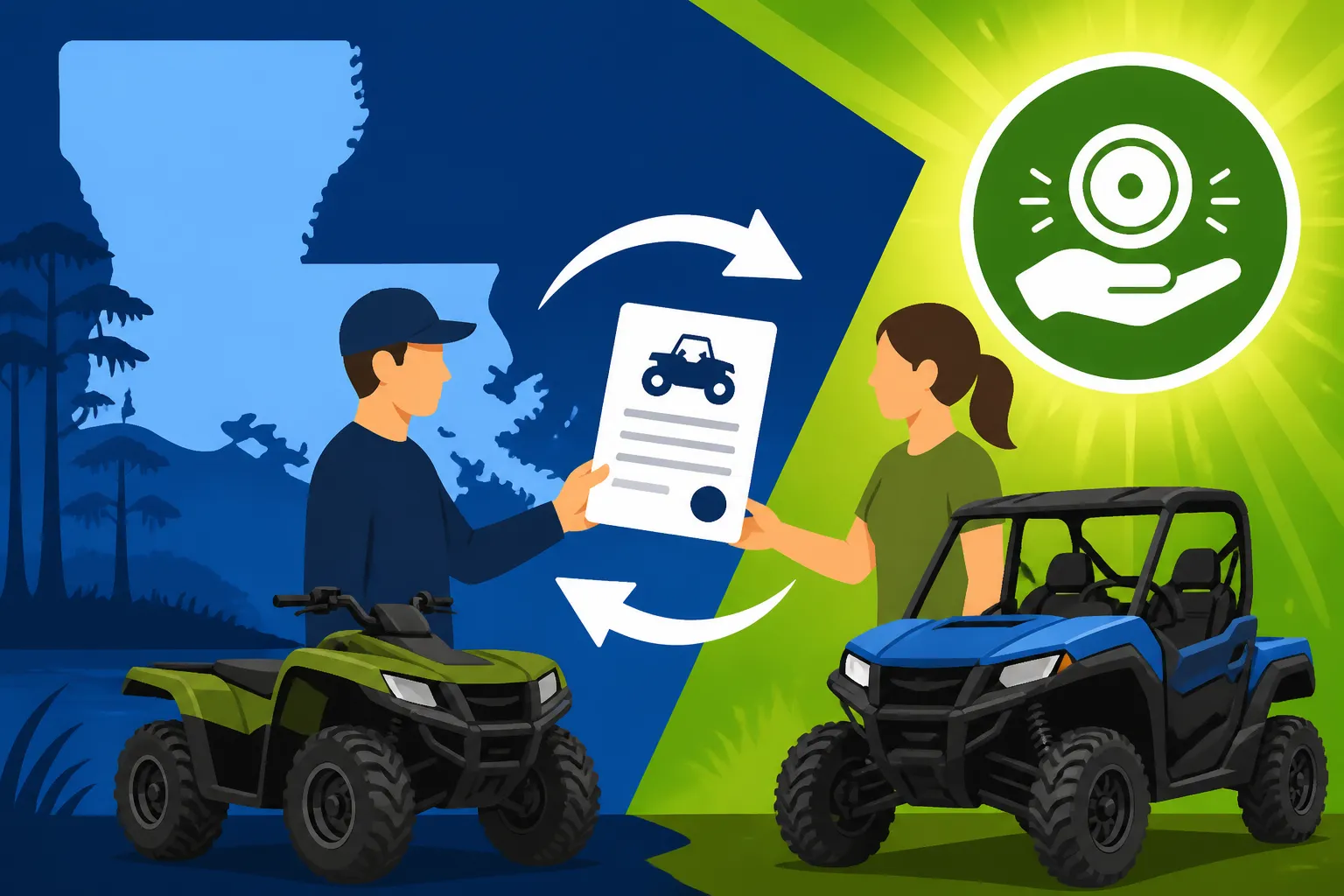
The most frequent situation where you’ll encounter the $3 license transfer fee is during a private sale of a used ATV or UTV. When you buy a machine directly from an individual, you'll receive the existing title, signed over by the previous owner. Your job then is to take that signed title, along with a bill of sale, to the OMV. Here, the OMV processes the change of ownership. They'll issue you a new title (which incurs the standard title fee), but as part of that process, they also perform the administrative "license transfer" of the machine’s record from the previous owner to you. This is where the $3 fee comes in—it’s for that specific record update.
For a smooth private sale, ensuring you have a proper bill of sale is paramount. Many people find templates from resources like LawDepot helpful to ensure all necessary details are included, such as the VIN, purchase price, seller and buyer information, and a space for notarization. [Louisiana Notarized Bills of Sale] are often preferred, or even required, to prevent future disputes. Having all your ducks in a row for a private sale, from the [Louisiana Title Fees for an ATV] to the bill of sale, can make a world of difference at the OMV counter.
Dealer Transactions and the Bundled Costs
When you purchase an ATV or UTV from a licensed dealer in Louisiana, their process for handling fees can sometimes be a bit different. Dealers often manage all the OMV paperwork for you as part of the sale, which is a great convenience but means you might not see the $3 license transfer fee listed separately on your invoice. Instead, it might be bundled into a larger "documentation fee" or "registration fees" line item. [Louisiana Dealer Documentary Fee Cap] sets a limit on what dealers can charge for these services. Dealers have staff dedicated to processing titles, tax, and registration, and they incorporate these various small charges into their overall service fee.
While it’s convenient, it’s always a good idea to ask for an itemized breakdown of all fees, including any OMV charges, even if they are grouped. A clear, [Louisiana Itemized Dealer Invoices] can help you understand exactly what you're paying for. This ensures transparency and helps you compare costs accurately between different dealerships. Even if you don't see the $3 fee explicitly, rest assured it's still part of the underlying administrative process the dealer is facilitating on your behalf.
Special Cases: Inherited or Gifted Machines
The $3 license transfer fee can also apply in less common scenarios, such as when you inherit an ATV or UTV or receive one as a gift. In these cases, there might not be a direct "sale" with a purchase price, but the ownership still needs to be transferred officially. When you present the necessary documents, such as a probate court order for an inherited machine or a notarized Act of Donation for a gifted one, the OMV will process the ownership change.
For an inherited machine, you’ll need to follow specific procedures, often including death certificates and wills, to prove your right to the machine. [Louisiana Titles for an Inherited Machine] is a complex process. Similarly, a gifted machine still requires an official transfer of record, even if no money changes hands. While you won't pay sales tax on a legitimate gift, you will still need to handle the title transfer paperwork and associated fees, including that minor $3 administrative charge to update the records in your name. In these situations, getting legal advice or using document services like LawDepot for affidavits can be very helpful to ensure all the paperwork is correctly prepared for the OMV.
Preparing for Your OMV Visit: Beyond the $3
So, you know the $3 license transfer fee exists and why it's so low. But successfully navigating the OMV, especially for an ATV or UTV title and decal, involves much more than just that small amount. Being prepared with the right documents and knowing what to expect can save you a lot of time and frustration.
Essential Documents to Bring
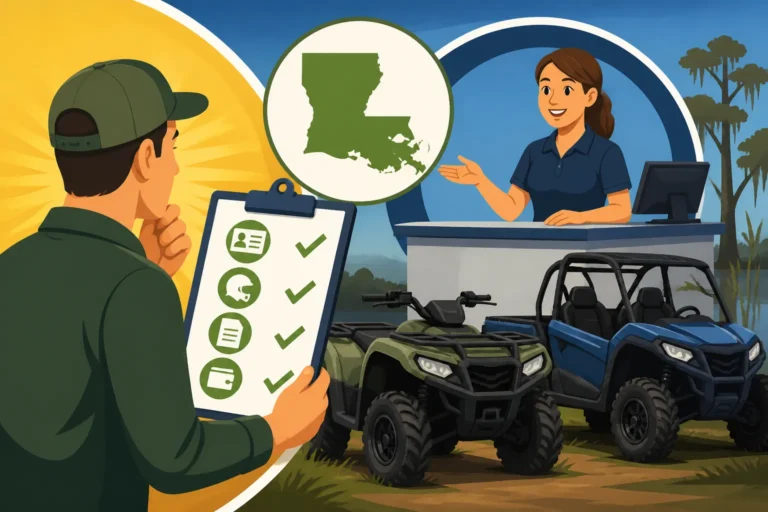
This is where many people get tripped up. Assuming you only need the signed title and a check for $3 is a recipe for a return trip. For any title transfer, whether you bought the machine from a dealer or a private party, you'll need a comprehensive set of documents. This typically includes:
- The original, properly assigned title (for a used machine) or the Manufacturer's Statement of Origin (MSO) (for a new machine). Make sure all sections are filled out accurately and signed by the previous owner. [What Happens When a Title Is Missing a Signature] can mean delays.
- Proof of sales tax payment or an exemption. For private sales, you might pay this directly at the OMV, or show a receipt from the Louisiana Department of Revenue. For dealer sales, the dealer will typically provide this. [Why Tax Proof Comes First] is a critical step.
- A notarized bill of sale, especially for private party transactions. This protects both buyer and seller. LawDepot offers excellent templates for such documents.
- Your valid Louisiana driver's license or state ID. [Louisiana Photo ID at the Counter] is non-negotiable for identification.
- Proof of residency, such as a utility bill or lease agreement, if your address on your ID isn't current or if specifically requested. [Louisiana Title and Proof of Address] is often required.
- Payment for all fees, including the title fee, handling fee, decal fee, and the $3 license transfer fee. While some OMV locations accept cards, it’s always wise to have cash or a check as a backup. [Louisiana Title Payment Methods] vary by office.
- A completed OMV Vehicle Application (Form DPSMV 1799). You can often download and fill this out beforehand, saving time. [Louisiana Form DPSMV 1799 Explained] clarifies what needs to be filled in.
Having everything organized in a folder will demonstrate your preparedness to the OMV clerk and significantly speed up your transaction. For example, if you're titling a machine for a hunting camp, ensure you have all the specifics for [Louisiana Title for a Camp Machine] ready.
Avoiding Common Pitfalls at the OMV Counter
An OMV visit can either be a quick, painless experience or a frustrating saga of multiple trips and long waits. The difference often comes down to preparation. Here are some common pitfalls to avoid:
- Incomplete Paperwork: This is the biggest one. Double-check every form, every signature, and ensure all blanks are filled in. A missing date or signature on the title or bill of sale can send you right back home. Always remember to check for [Louisiana Title Questions Clerks Hear] before you go.
- Incorrect Sales Tax: Ensure you've calculated or paid the correct sales tax for your parish. If you're paying at the OMV, know the exact purchase price and be prepared for both state and local taxes. [Louisiana Sales Tax Proof at the Counter] is a must.
- Assuming Fees: Don't assume you know all the fees. While the $3 license transfer fee is fixed, others can vary slightly or stack up unexpectedly. Ask the clerk for a total breakdown before you hand over payment. [Questions Worth Asking an OMV Office] include total costs.
- No Notary: For private sales, especially older machines or those with any ambiguity, a notarized bill of sale is highly recommended. Some OMV offices may even require it for specific types of transfers. LawDepot can assist with creating legally sound documents for such transactions. [Why Your Bill of Sale Needs a Notary] is about avoiding future headaches.
- Timing: Weekends, lunch hours, and the end of the month are often the busiest times at the OMV. If you have flexibility, go on a weekday morning.
- Lack of Identification: Always have your current, valid photo ID.
- Not Knowing Your VIN: The Vehicle Identification Number (VIN) is critical for all OMV transactions. Make sure it's accurate on all your documents. [Serial Numbers the OMV Will Accept on a Title] vary, so double check.
By meticulously preparing all your documents, anticipating all potential fees, and understanding the process, your OMV visit for your ATV or UTV will be far smoother. The $3 license transfer fee is just one small piece of a larger, more involved puzzle. Knowing how all the pieces fit together will save you time, stress, and potentially costly delays.
Disclaimer
This article is for general informational purposes only and does not constitute professional advice. Laws, prices and regulations vary by location and change over time. Consult a qualified professional for guidance on your specific situation.