Why an ATV Needs Both a Title and a Decal
You’ve just bought that shiny new (or new-to-you) ATV or UTV, dreaming of mud holes and pine trails, only to be met with a mountain of paperwork. Many Louisiana off-road enthusiasts find themselves scratching their heads, wondering why the state demands both a title and an ORV decal. This guide is here to untangle that bureaucratic mess, explaining precisely why both documents are essential for legally owning and enjoying your machine here in the Bayou State.
The Louisiana ATV Title: More Than Just Paper
When you buy a car, you get a title, right? It's the same fundamental principle for your ATV or UTV in Louisiana. While your off-road machine might not be cruising down I-10, it's still a valuable asset, and the state wants a clear record of who owns it. The title serves as that official proof, establishing a chain of ownership that protects both buyers and sellers. It's the foundational document that solidifies your claim to the machine.
Establishing Legal Ownership and Preventing Theft
Think of your ATV's title as its birth certificate and legal ID all rolled into one. It’s the formal document issued by the state that proves you are the rightful owner. Without a clear title, proving ownership can become a nightmare. Imagine you buy a used quad from a private seller, pay your hard-earned cash, and don't get a proper title. Down the line, if that machine turns out to be stolen, or if the original owner claims it back, you have very little recourse. A title prevents these kinds of headaches. It's especially crucial for deterring theft, as a thief would have immense difficulty selling a machine without a legitimate title to transfer. [Louisiana Requires an Assigned Title for a Used One] when you’re making a purchase, and you’ll want to ensure that title is properly transferred into your name.
This legal proof of ownership is also vital for insurance purposes. If your machine is ever damaged, stolen, or involved in an accident, your insurance company will absolutely require proof of ownership before they pay out a claim. Having your name on the title solidifies your legal standing. Without it, you might find yourself in a really tough spot, both financially and legally. It’s not just a formality; it’s a critical layer of protection for your investment.
The Role of the OMV in Titling Your Machine
Unlike some other states where the Department of Wildlife and Fisheries might handle off-road vehicle registration, in Louisiana, it’s the Office of Motor Vehicles (OMV) that is responsible for titling ATVs and UTVs. This might seem a little counterintuitive since your quad isn't exactly a "motor vehicle" in the traditional sense of driving on public roads, but the OMV is the state agency tasked with maintaining records of vehicle ownership. They handle everything from cars and trucks to boats and, yes, your off-road machines. When you purchase an ATV, whether new from a dealer or used from a private party, you’ll be making a trip to the OMV to get that title in your name. [Louisiana Titles ATVs Through the OMV] is a critical piece of information many new riders overlook.
This process involves submitting paperwork like a bill of sale, proof of sales tax payment, and often a signed-over Manufacturer’s Statement of Origin (MSO) for new machines, or an assigned title for used ones. The OMV ensures that all transactions are recorded, and any liens, such as from a bank loan, are properly noted on the title. It’s a thorough process, and they take it seriously, which is a good thing for protecting legitimate owners. They’re the keepers of the official record, and their involvement ensures a centralized, consistent approach to ownership tracking across the state.
What Happens When a Lien is Involved
Many of us don't have enough cash sitting around to buy a new ATV outright, so financing is a common path. When you take out a loan to purchase your off-road machine, the lender (a bank, credit union, or even the dealership) will place a lien on your title. This simply means that they have a legal interest in your ATV until the loan is fully paid off. The OMV will record this lien directly on your title, indicating that while you possess the machine, the financial institution holds a claim to it. This is standard practice and protects the lender, ensuring they can repossess the machine if you default on your payments. [Louisiana Title and Lien Records] are meticulously kept by the OMV.
Once you’ve made that final payment and are officially debt-free, your lender will send you a lien release. You’ll then need to take this document to the OMV to have the lien removed from your title, clearing it completely. It’s an important step, as you won't be able to sell or transfer ownership of your ATV without a clear title, free of any outstanding liens. Trying to sell a machine with a lien still attached will cause significant delays and red tape for both you and the potential buyer, so always make sure your title is clear once your loan is settled.
The Louisiana ORV Decal: Your Permit to Ride
Now, let's talk about the other crucial piece of paper: the ORV decal. While the title tells the state who owns the machine, the decal tells law enforcement and land managers that you’re permitted to operate it in designated off-road areas. It’s your riding privilege, essentially. Without it, even if you have a perfectly clear title, you could face penalties for riding where you shouldn't.
Why the State Requires a Decal for Off-Road Use
The Louisiana ORV decal isn't just a bureaucratic nuisance; it serves several vital functions, primarily related to funding and regulating off-road recreation. The small fee associated with the decal, which is renewed [Louisiana's Yearly Off-Road Decal], goes directly into programs that support and enhance off-road riding opportunities. This often includes maintaining trails, developing new riding areas, and funding educational and safety initiatives. It’s a collective contribution from riders to ensure the sustainability of the sport. [What the $3 Yearly Off-Road Decal Buys] is more than just a sticker; it's an investment in your riding future.
Furthermore, the decal acts as a visible identification for law enforcement and land managers. When you're out on a trail in a designated riding area, the decal clearly shows that your machine is registered for that type of use. This helps agencies like the Louisiana Department of Wildlife and Fisheries, or park rangers in national forests, easily identify legally operating vehicles. It's a quick visual check that helps them manage crowds, enforce rules, and ensure that everyone is playing by the rules designed to keep both riders and the environment safe.
Where Your Decal Allows You to Ride (and Where it Doesn't)
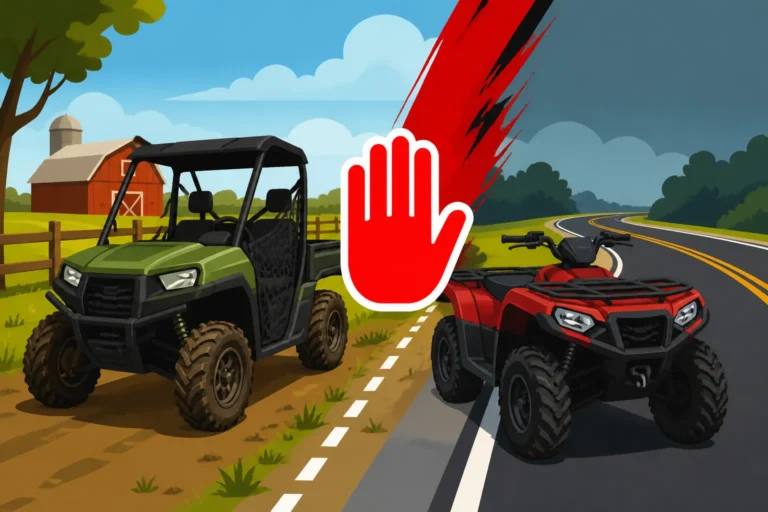
This is where many riders get confused, and it’s a critical distinction. Having an ORV decal means your machine is registered for off-road use in designated areas. This includes places like Kisatchie National Forest, many private mud parks, or potentially parish-designated roads if local ordinances allow (which is rare and very specific). It absolutely does not make your ATV or UTV street legal for general public road use. Trying to run errands on your quad down a state highway, even with a decal, is a recipe for a ticket. [Why a Title Still Keeps You Off the Road] and why the decal also does not grant street-legal privileges is a common misconception.
Louisiana has very specific laws regarding ATV and UTV use on public roads, and generally, they are prohibited unless explicitly designated by a parish or municipality, or for very limited agricultural purposes under strict conditions. So, while your decal opens up legal off-road trails, it’s not a magic pass for paved roads. Always check local ordinances and land management rules for specific riding areas. Ignorance of the law won't get you out of a fine or impoundment if you're caught riding inappropriately. [Louisiana Penalties for Riding Without a Decal] can be steep, so know where you can and cannot ride.
The Financial Impact of Decal Fees on Trail Systems
The small fee collected from the Louisiana ORV decal is directly reinvested into the state’s off-road recreation infrastructure. Think about it: trails don't just magically appear and maintain themselves. They require significant resources for upkeep, signage, safety improvements, and sometimes even the acquisition of new land to expand riding opportunities. The funds from these decals contribute to various programs aimed at supporting a robust and enjoyable riding experience for everyone. This includes managing erosion, repairing damage from heavy use, and ensuring that access points are well-maintained.
Without these decal fees, the burden of funding these critical services would fall elsewhere, or, more likely, trails would simply deteriorate or be closed due to lack of resources. So, while paying for another sticker might feel like a minor annoyance, remember that you're contributing to the very trails and parks that you love to ride. It's a user-pays system that benefits the entire off-road community, ensuring there are places for you and future generations to enjoy the thrill of the ride.
The Crucial Distinction: Why Both are Necessary
The biggest question riders have is, "Why can't one document cover both?" It's a valid point, and the answer lies in the distinct legal purposes and different state agencies involved in regulating vehicle ownership versus off-road operation. Louisiana, like many states, compartmentalizes these functions for clarity and enforcement.
Ownership vs. Operating Privilege: Understanding the Legal Difference
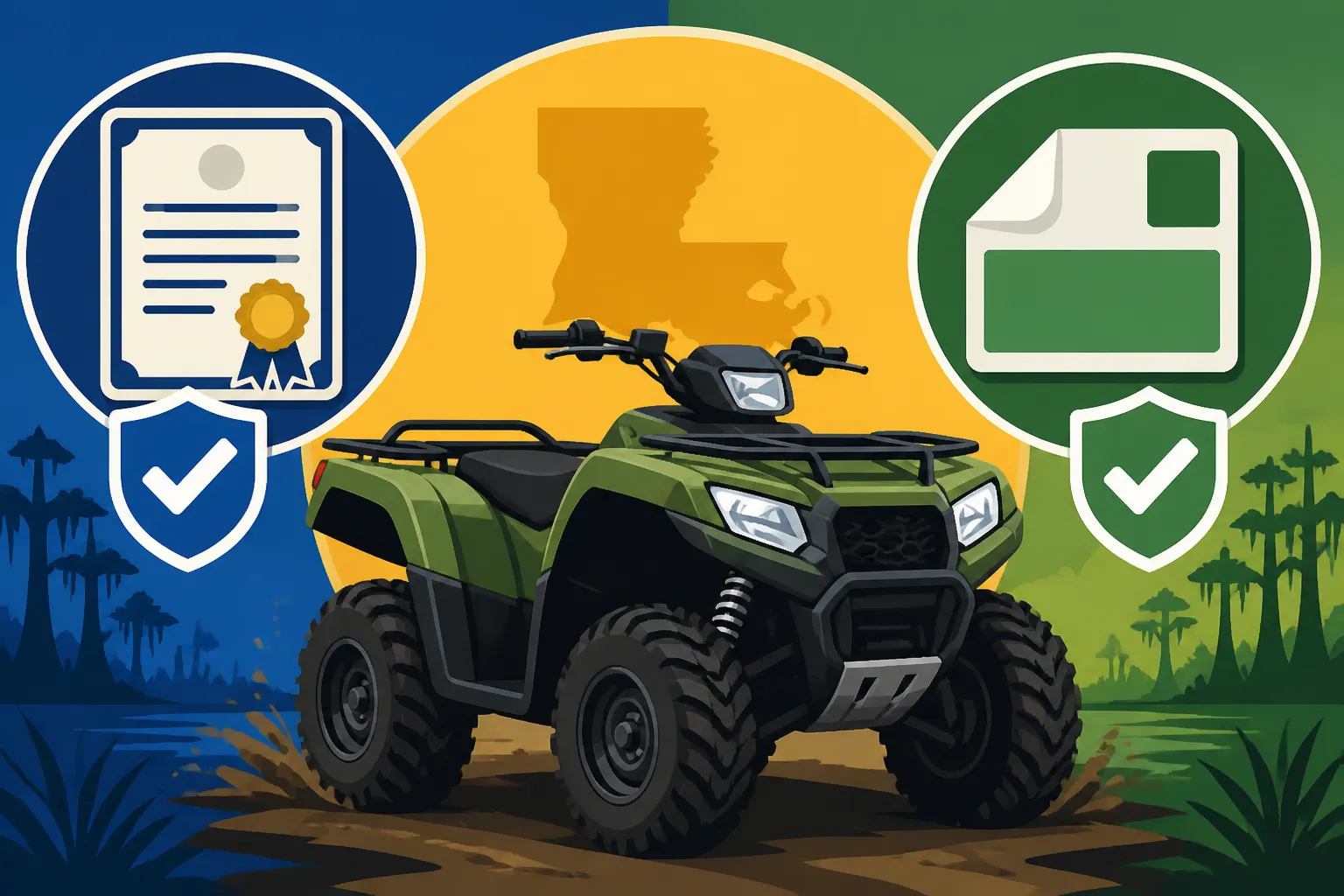
This is the core of the title-decal puzzle. The title is purely about ownership. It’s proof that you legally possess the machine, allowing you to buy, sell, insure, or use it as collateral. It’s a property right document. It establishes that you are the person who has the right to determine the machine's fate – who drives it, where it goes, or if it's sold. It doesn't, however, grant you any specific privileges about where you can operate that property.
The ORV decal, on the other hand, is an operating privilege. It’s essentially a permit to use your machine in specific, designated off-road areas. It signifies that your vehicle meets certain state requirements for off-road use and that you've contributed to the fund that supports these riding areas. You can own a machine all day long, but without the decal, you don't have the state's permission to take it onto public trails. Conversely, you could technically have a decal on a machine that isn't properly titled to you, but then you'd have major problems proving ownership if something happened. Both are necessary to cover all your bases: legal possession and legal operation.
OMV vs. Wildlife & Parks: Different Agencies, Different Missions
Part of the reason for two separate documents stems from different state agencies having different responsibilities. As we discussed, the OMV is the keeper of all vehicle ownership records in Louisiana. Their mission is to title vehicles, collect sales tax, record liens, and ensure a clear chain of custody. They are not primarily concerned with where or how you ride your off-road machine, beyond ensuring it's properly identified and taxed.
Conversely, the Louisiana Department of Wildlife and Fisheries (LDWF), along with national forest services and private park operators, are concerned with the management and regulation of recreational land use. They need a way to ensure that only authorized vehicles are on their trails, that funds are collected for maintenance, and that environmental impacts are minimized. The ORV decal is their tool for this. [The OMV Titles ATVs, Not the Wildlife Department] directly addresses this division of labor. Because these agencies have distinct, yet overlapping, responsibilities, you end up needing a document from each to fully comply with Louisiana law. It's a coordinated effort, even if it feels like extra hoops to jump through.
The Consequences of Missing Either Document
Falling short on either the title or the decal can lead to a heap of trouble. Let’s break down what you might face:
Missing or Improper Title:
- Difficulty Proving Ownership: Without a title in your name, selling the machine becomes incredibly difficult. Buyers will rightly be wary, and you might only be able to sell it for a fraction of its value to someone willing to jump through the hoops of obtaining a new title (which isn't always possible).
- Theft Risk: If your machine is stolen, law enforcement will have a much harder time recovering it for you without a clear title establishing your ownership.
- Insurance Problems: Your insurance company may deny claims if you can't prove you legally own the ATV.
- Sales Tax Issues: The OMV won't issue a title without [Louisiana Requires Proof of Sales Tax First]. If you skip this, you’ll hit a wall.
- Legal Disputes: If there’s any question about ownership, you'll be at a severe disadvantage in court without a properly transferred title. If you bought from a private seller and didn’t get a proper bill of sale or an assigned title, you might need to use a service like LawDepot to draft an affidavit or other documents to help establish your claim, but it’s an uphill battle.
Missing or Improper Decal:
- Fines and Citations: Riding on designated public lands (like national forests) or even some private parks without a current ORV decal can result in significant fines. [Louisiana Penalties for No Decal] can quickly ruin a fun day.
- Impoundment: In some cases, law enforcement can impound your machine if you’re caught riding without a proper decal, especially if you're in an unauthorized area. Getting an impounded machine back is often a costly and lengthy process.
- Access Denied: Many private parks, national forests, and WMAs will turn you away at the gate if you don't have a valid decal. You literally won't be allowed to ride.
- No Contribution to Trails: Without the decal fee, the very trails you enjoy would cease to be maintained or expanded, impacting the entire riding community.
As you can see, both documents are crucial for different reasons, and neglecting either one can have serious repercussions.
Navigating the Paperwork: Common Frustrations and Solutions
Let's be honest: dealing with government paperwork can be frustrating, confusing, and time-consuming. Louisiana's dual system of titles and decals is no exception. However, understanding the process and preparing properly can save you a lot of headaches.
The Confusion for New and Out-of-State Riders
If you're new to Louisiana or new to the world of off-road riding, the title and decal requirements can feel overwhelming. Many states have different systems, with some only requiring one or the other, or handling things through a different agency. An out-of-state rider moving to Louisiana, for instance, might assume their existing registration from Texas or Mississippi is sufficient, only to find they need to get a Louisiana title and decal. [Can an Out-of-State Owner Get a Louisiana Title?] Yes, but there's a specific process to follow, often involving paying Louisiana use tax.
The frustration is completely understandable. It feels like extra steps, especially when you just want to get out and ride. The key is to acknowledge that Louisiana has its own rules, and playing by them is the easiest path. Don't assume anything based on past experiences or what your buddy in another state does. Always verify the current requirements with the Louisiana OMV or the specific land management agency for your intended riding spot.
Streamlining Your Title and Decal Application Process
While the process involves a few steps, you can streamline it significantly with a little preparation. Here’s a general roadmap:
- Gather Documents: Before you even leave the house, make sure you have all necessary documents. This typically includes:
- Manufacturer’s Statement of Origin (MSO) for new machines, or the assigned title from the previous owner for used machines.
- A notarized bill of sale for private party purchases. You can find generic templates online, and services like LawDepot can help you generate legally sound documents if you're unsure.
- Proof of sales tax payment. If bought from a dealer, this will be on your invoice. If a private sale, you'll pay use tax at the OMV.
- Your Louisiana driver’s license or state ID. [Louisiana Photo ID at the Counter] is a must.
- Proof of residency (utility bill, etc.) if required.
- Payment for [Louisiana Title Fees for an ATV] and the decal fee.
- Visit the OMV: This is where you'll handle the title transfer and sales tax payment. Be prepared for potential wait times, especially if you go during peak hours. Ask questions if you're unsure about anything.
- Apply for Decal: You can usually get your decal at the same OMV visit after your title is processed. They will issue it on the spot.
- Affix the Decal: Make sure to properly affix your decal to your machine in a visible location, as specified by OMV guidelines. [Louisiana Decal Placement on a Machine] is important for compliance.
Being organized is your best friend here. Call your local OMV branch ahead of time to confirm their specific requirements or if you have any unusual circumstances. It can save you multiple trips and a lot of frustration.
When You Don't Have All the Papers: Dealing with Missing Documents
Life happens, and sometimes you end up with a machine that doesn't have a perfect paper trail. Maybe you inherited an ATV and the title is lost, or you bought a used quad years ago and never formally transferred the title. This is where things get tricky, but often not impossible.
- Lost Title: If the previous owner's title was lost, they typically need to apply for a duplicate title before they can transfer it to you. If it's your title that's lost after it was properly transferred into your name, you can apply for a duplicate at the OMV.
- No Bill of Sale: This is a common problem with older, private sales. The OMV may accept a notarized affidavit of ownership in lieu of a bill of sale in some cases, especially if supported by other evidence like old registration or insurance documents. Services like LawDepot can assist in drafting a suitable affidavit if necessary, but success is not guaranteed without solid supporting evidence.
- No Title at All: This is the hardest situation. If a machine was never titled in Louisiana, or the chain of title is completely broken, you might have a long and challenging road ahead. In some cases, you might need to go through a bonding process or even a court order to establish ownership, which can be expensive and time-consuming. Always be extremely wary of buying an ATV or UTV without a title. [Louisiana Title Without a Bill of Sale] is a common problem, but having no title at all is a much bigger headache.
It's always best to have all your paperwork in order from the start. If you’re considering buying a machine with missing documents, factor in the potential time, cost, and risk involved. Sometimes, paying a little more for a machine with clear paperwork is worth the peace of mind.
Here's a quick overview of the key differences:
| Feature | Louisiana ATV Title | Louisiana ORV Decal |
|---|---|---|
| Purpose | Proves legal ownership of the machine. | Permits operation in designated off-road areas. |
| Issued By | Louisiana Office of Motor Vehicles (OMV) | Louisiana Office of Motor Vehicles (OMV) |
| Cost (approx.) | Flat fee (check OMV for current rates). | Small annual fee (check OMV for current rates). |
| Validity | Permanent (until transferred). | Annually renewable. |
| Key Function | Ownership, sales tax, liens, insurance, theft prevention. | Trail access, funding for trails, visible identification. |
| Street Legal? | NO (does not make machine street legal). | NO (does not make machine street legal). |
| Consequences | Difficulty selling, theft recovery, insurance issues. | Fines, impoundment, denied access to riding areas. |
Remember, while it might seem like a hassle to get both a title and a decal, these requirements are in place to protect you as an owner and to sustain the sport we all love. Taking the time to understand and comply with Louisiana's regulations will ensure many years of worry-free riding on the Bayou State's fantastic trails.
Disclaimer
This article is for general informational purposes only and does not constitute professional advice. Laws, prices and regulations vary by location and change over time. Consult a qualified professional for guidance on your specific situation.