Campfire Rules When the Piney Woods Turn Dry
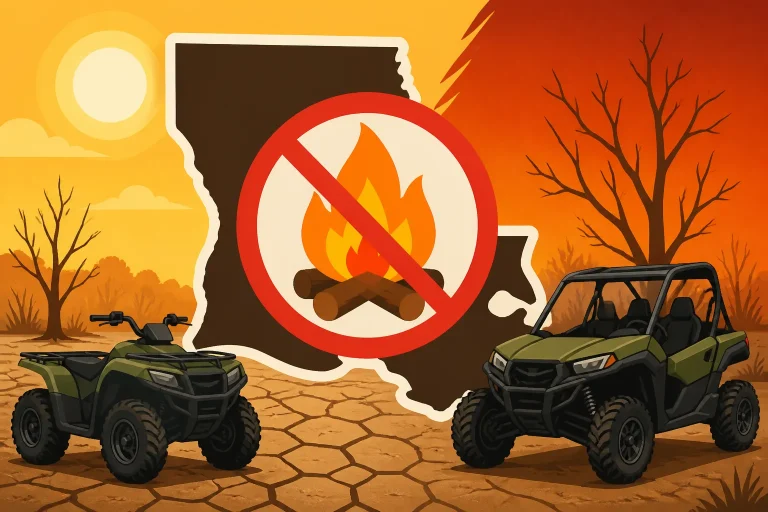
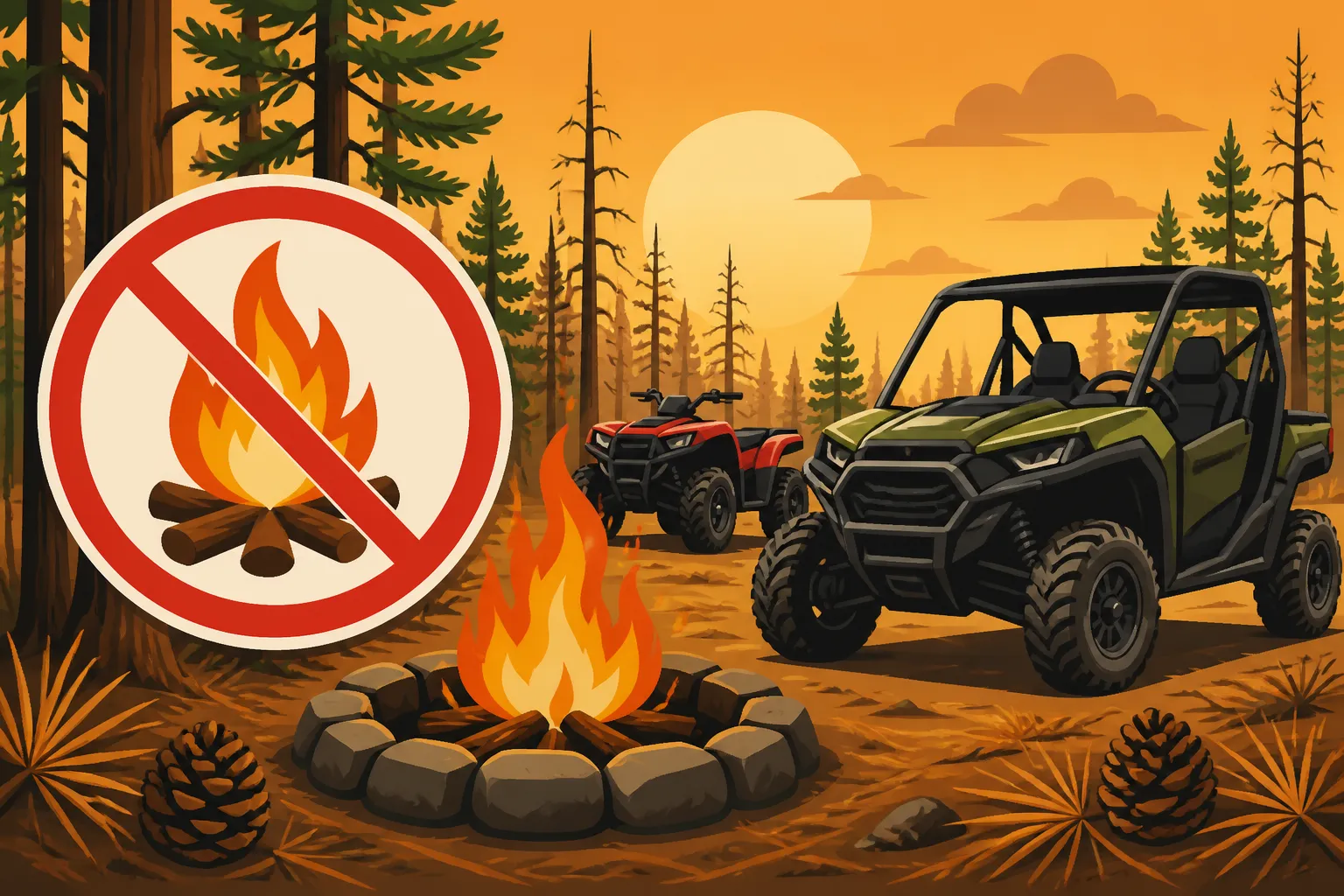
A quiet campfire can feel like part of an ATV or UTV weekend in Louisiana’s piney woods, but dry vegetation can turn a small mistake into a wildfire. The rules depend on who manages the land and whether temporary restrictions are in effect. Here’s how to check before lighting a fire, camp more safely, and know when the right choice is to skip it.
Check who manages the campsite and what restrictions apply
There isn’t one campfire rule that covers every Louisiana riding area. A campsite in Kisatchie National Forest, a private mud park, a developed campground and private land may each have different requirements. On top of standing rules, a manager or local authority may impose temporary restrictions when conditions become unusually dry or windy.
Start by identifying the land manager for the place where you’ll sleep. If you’re planning to ride and camp in Kisatchie, check the forest’s current notices and the specific recreation area’s rules before you leave. The general information in Kisatchie National Forest OHV Trails in Louisiana can help you plan a riding visit, but don’t assume that trail access means a campfire is allowed at every nearby site. Likewise, Louisiana OHV Camping With Trail Access can help narrow down camping options; confirm fire rules with the operator of the site you choose.
Before departing, ask the managing office, campground or private park:
- Are campfires allowed at this specific campsite?
- Must fires stay inside a provided ring or grill?
- Is there a temporary fire restriction or burn ban?
- Are charcoal grills, wood stoves or portable fire pits treated differently?
- Is firewood available or allowed from another source?
- What should campers do if the weather or restrictions change during the stay?
Don’t rely on an old social media post, a previous visit or a general trail map for current fire information. A site may remain open to riders while fires are prohibited, and conditions can change after you arrive. Check again shortly before departure, especially during a dry spell. Louisiana Fire Restrictions in Dry Months covers why a season or location can call for tighter precautions.
A notice that says “no open fires” may not answer every question about a charcoal grill, stove or contained portable fire pit. Don’t interpret the wording in your favor. Ask the land manager what the restriction covers and follow the stricter instruction if the answer is unclear. A fire container doesn’t automatically make a fire acceptable during a restriction.
Also distinguish between a statewide or local burn restriction and a campsite’s own policy. A private park may prohibit fires even when no public burn ban is in effect. A campground may allow fires only in its installed rings. Permission on one property does not carry over to a nearby trailhead or another section of forest.
| Where you plan to camp | What to confirm before lighting a fire |
|---|---|
| National forest campground or recreation area | Current forest notices, site-specific rules, and whether fires are allowed in the assigned area |
| Private riding park | The park’s current fire policy, including rules for fire rings, grills and portable pits |
| Developed campground | The campground’s fire instructions and any temporary restrictions |
| Private land or hunting camp | The landowner’s permission and any restrictions that apply to the location |
| Unfamiliar or roadside location | Whether camping and fires are allowed there at all; don’t assume public access means permission |
A forest pass, riding permit or campsite reservation is not, by itself, permission to build a fire. Treat access and fire authorization as separate questions.
Decide whether the conditions are safe enough
Even when a fire is technically allowed, dry needles, leaves, grasses and brush can make conditions risky. Wind can carry sparks out of a ring, and a small fire may spread along the ground before it looks alarming. A short ride back to camp doesn’t make an unattended fire safe, either.
Use a conservative decision rule: if there’s a fire restriction, follow it; if you can’t confirm the rule, don’t light a fire; and if the site is dry, gusty or surrounded by easy-to-ignite material, choose a no-flame alternative even if a fire would normally be allowed. The inconvenience of a cold evening is minor compared with a fire that escapes.
Pay attention to changing weather during the trip. Wind may pick up after sunset, or a dry front may arrive while you’re already set up. If a restriction is announced after you arrive, comply with it. Don’t assume a fire that was permitted earlier can keep burning under the new instruction.
Before lighting anything, look around the site. A designated metal ring is not a guarantee that the surrounding area is clear. Check for low branches, dry grass, pine litter, leaf piles, tents, vehicles and other flammable items. Keep your cooking, sleeping and fuel areas separated from the fire area, and don’t put a fire where sparks could reach a tent, tarp, trailer or machine.
If you’re camping with a group, make sure everyone understands the fire plan. A person who thinks someone else is watching the flames can leave the site unattended by mistake. Agree on who tends the fire and who checks it before everyone turns in or leaves for a ride.
Build, tend and extinguish a permitted fire carefully
Only build a campfire where the property manager allows one, and use the supplied ring or designated cooking area when required. Don’t create a new fire site by scraping away needles or moving rocks. A fire can smolder beneath the surface or in roots, and disturbing the ground may also violate site rules.
Keep the fire small and manageable. Use only the fuel allowed by the property, and don’t burn trash, plastics or treated materials. Never pour gasoline or other accelerants onto a campfire. Keep children and pets away from the flames, and don’t leave the fire unattended while riding, sleeping or packing.
Set out water and a shovel before lighting the fire, not after it gets out of control. A compact shovel, a sturdy water container and a metal bucket can be useful additions to a camping kit; outdoor retailers, including Amazon, carry these kinds of supplies. Check that the container is suitable for carrying water and that the shovel is practical for the ground at your campsite.
When you’re ready to leave the site or turn in for the night, extinguish the fire completely. A common safe approach is to drown the embers with water, stir the ashes and coals, then add more water and stir again. Continue until there is no heat, glow or smoke. Don’t bury hot embers or assume that a fire is out just because the flames have disappeared. If the site manager gives different instructions, follow those.
Before walking away, inspect the area around the ring for stray embers. Don’t leave a fire to burn down while everyone goes to bed, and don’t put hot ash into a trash bin or a plastic container. If you can’t make the fire completely cold, stay with it and keep working on it.
If flames escape the ring or spread into surrounding vegetation, alert the site manager or emergency services promptly. Don’t put yourself at risk trying to fight a fire that is growing or moving. Knowing how to report an emergency at your destination is worth sorting out before a ride, particularly where cell coverage is limited.
Make a no-fire plan for a dry weekend
If conditions are uncertain, plan to camp without an open fire. Pack food that can be eaten cold or prepared with equipment the land manager specifically permits. A stove is not automatically allowed just because it is smaller than a campfire, so check its status too. If all flame-producing equipment is prohibited, choose meals that need no cooking.
A lantern, extra layers and a dry place to sit can make an evening comfortable without flames. Keep lighting and cooking equipment away from dry vegetation, and follow the manufacturer’s instructions. Don’t improvise a cooking fire beside a trailer or machine.
For a riding trip, the safest plan is to check notices before loading, verify the rules with the site, and have a backup if fire use is restricted. Trail and campground information can change, so also check Checking a Trail Status Page First and Louisiana Trail Closures and Seasons when planning your route. A trail closure and a fire restriction are different things, but both can affect whether the trip works as planned.
Private parks set their own camping policies, so read them before reserving or arriving. Louisiana Private Park Camping Rules is a useful starting point, but the park’s current instructions control what you can do at its sites. If you’re unsure whether your portable grill or fire pit qualifies, ask rather than relying on its size or design.
A few practical steps keep the decision simple:
- Identify the land manager and campsite.
- Check current fire restrictions close to departure.
- Confirm whether the specific fire or cooking device is allowed.
- Pack water and a shovel if fires are permitted.
- Keep the fire attended and extinguish it until fully cold.
- Skip the fire if rules or conditions are unclear.
The key is not to treat a campfire as a routine part of every riding weekend. In Louisiana’s dry pine country, the land manager’s current rules and the day’s conditions matter more than what was allowed on a previous trip.
Disclaimer
This article is for general informational purposes only and does not constitute professional advice. Laws, prices and regulations vary by location and change over time. Consult a qualified professional for guidance on your specific situation.