Why a Parent Signs the Waiver at the Gate
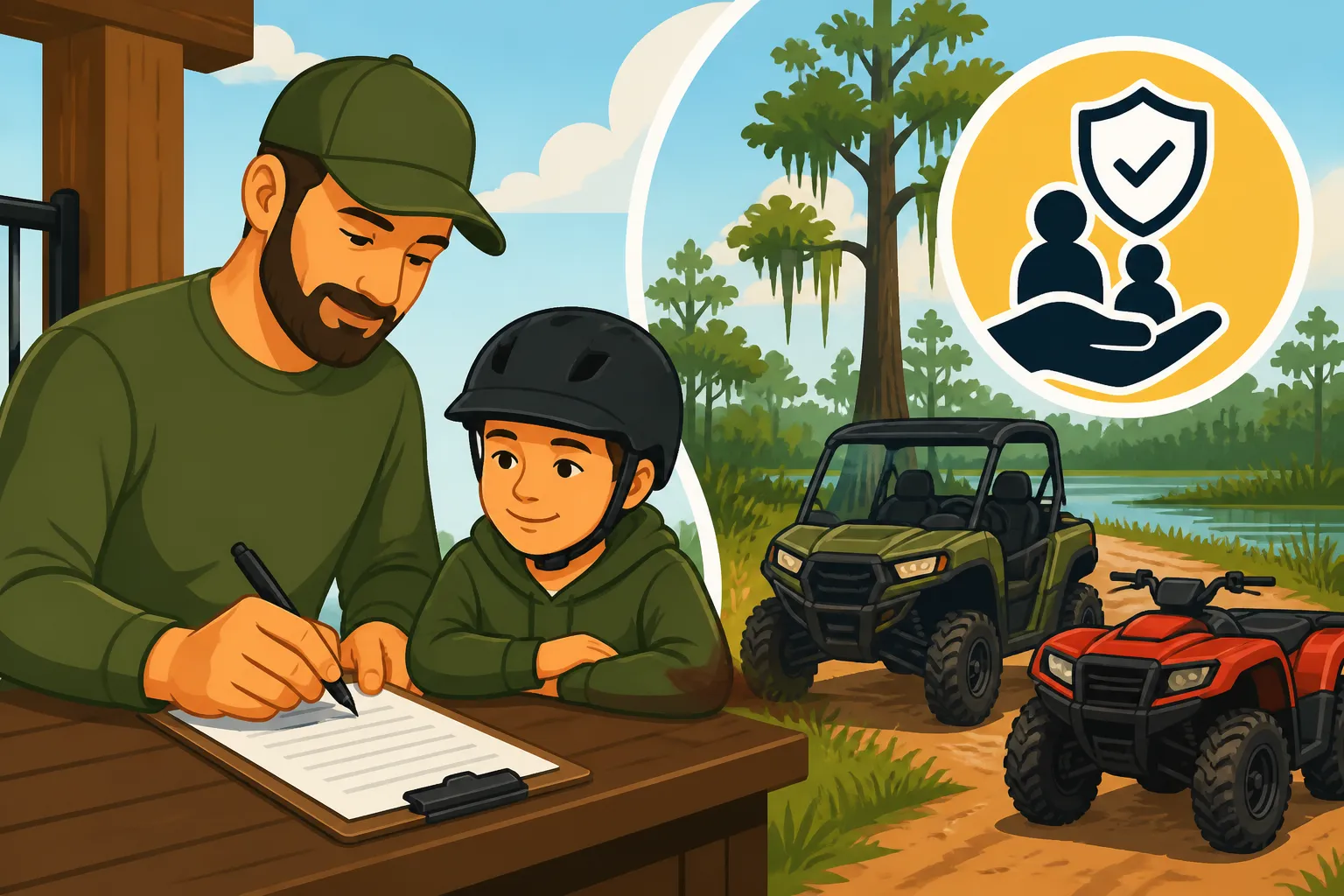
A parent signing a waiver at a Louisiana mud park is doing more than checking a box: the form may describe risks, set conditions for a child’s participation and explain the park’s rules. Knowing what the signature means—and what it does not—helps you avoid surprises at the gate and decide whether your child should ride.
What a parent’s signature usually means
Private riding parks commonly ask participants, and sometimes parents or guardians of minors, to complete paperwork before entering or riding. The form may combine several things: a release of claims, an acknowledgment of risks, consent for a child to participate, and agreement to follow park rules. These are related, but they are not interchangeable.
A parent’s signature may confirm that the adult has reviewed the terms and is giving permission for the child’s participation. It may also document that the parent understands riding involves hazards such as collisions, rollovers, changing terrain, water, mud, other riders and mechanical problems. The actual wording matters. One park’s form may be brief; another may describe risks in detail or cover more than one activity.
Do not assume the form is simply a routine entry ticket. Read it before signing, especially if the child will operate a machine, ride as a passenger, attend an event or use trails without an adult beside them. If a term is unclear, ask the park staff to explain what the form covers before you sign. If you are uncomfortable with the terms, you can decline to sign, but the park may then refuse entry or participation.
A waiver is also not a substitute for checking the park’s separate requirements. It does not necessarily mean a child can operate any machine, ride at any age, carry a passenger or use every part of the property. Age limits, supervision rules, helmet requirements and machine restrictions can still apply. Review the park’s Louisiana Private Park Waivers and Rules alongside the form you are asked to sign.
A waiver is not the same as a safety briefing
A signed document does not teach a young rider how to use a machine or make the ride safe. The form may acknowledge that risks exist, but it does not show that the child has the skills, judgment or equipment needed for the conditions that day.
Ask what instruction or orientation the park provides. Find out whether staff explain trail markings, speed expectations, right-of-way, closed areas, water hazards and what to do if a machine breaks down. Then decide whether the child is ready for the route and riding conditions. A short lap on easier terrain may be a better starting point than following an experienced group into deep mud.
A signature does not override park rules
Parents sometimes interpret signing as permission for their child to ride. The park may have a different age threshold for operating a machine, riding as a passenger or being on the property. A waiver may be required for all participants while separate rules determine who can do what.
Check the park’s [Louisiana Private Park Age Minimums] and Helmet Rules a Private Mud Park Enforces before traveling. If a child will ride with an adult in a side-by-side, check the park’s passenger rules as well. A parent’s approval cannot make an activity permitted if the park’s posted rules prohibit it.
What to check before signing at the gate
Gate lines, unloading and excited kids can make it tempting to sign quickly. If possible, ask the park for its waiver and rules before the trip. That gives you time to read the documents without pressure and to resolve practical questions before the child is ready to ride.
Look for the following details:
| What to check | Why it matters |
|---|---|
| Who must sign | The form may require a participant’s signature as well as a parent or guardian’s signature for a minor. |
| Which activities are covered | A form may apply to riding, events, camping or other park activities, or only to a specific activity. |
| What risks are described | The form may list hazards that help you understand what the park expects visitors to recognize. |
| How the child is identified | Check that the participant’s name and other requested details are accurate. |
| Supervision expectations | The park may require an adult to stay with a minor or remain on site. |
| Separate park rules | Age, passenger, helmet, machine and trail rules may be stated outside the waiver. |
| Emergency information | Confirm how the park handles an injury or emergency and what contact information it requests. |
| Copies and records | Ask whether you can keep a copy or receive confirmation that the form was accepted. |
Pay close attention to who the form says must sign. If the child is accompanied by a relative, family friend, coach or another adult, do not assume that person can sign as the parent or guardian. Ask the park what it accepts for a minor who arrives without a parent. If you are sharing custody or another adult has legal authority to make decisions for the child, check the document requirements with the park in advance rather than relying on an assumption at the gate.
The names and details should be complete and correct. If the waiver has a blank for the child’s name, make sure it refers to the child who will participate. If it asks for the adult’s relationship to the minor or emergency contact information, answer accurately. Do not sign a statement that you do not understand or that does not describe the situation.
If the park uses an electronic waiver, confirm that it has been submitted for each required participant. A confirmation screen or email can be useful to keep with your trip information. If a staff member says a form is missing, ask whether it can be completed on site and whether the child can enter or ride while the issue is being resolved.
Questions worth asking staff
A clear answer before riding is better than an argument after a rule has been broken. Ask direct questions, such as:
- Does every minor need a separate waiver, or does one form cover more than one child?
- Does the adult who signs have to stay at the park?
- What age and supervision rules apply to operating a machine?
- Are there different rules for passengers and drivers?
- Does the waiver cover the entire property and all activities, or only riding?
- What happens if the child changes machines or joins a different activity?
- How should a parent report an injury or request help?
The answers may vary from one park to another. Do not rely on a waiver from a previous visit or another location unless the park confirms it remains valid for the current visit.
How to decide whether your child should ride
Signing a waiver is an administrative step. The more important decision is whether the child can participate safely under the conditions and rules at that park. A child may be old enough under a park’s policy yet still lack the experience, size or confidence for a particular machine or trail.
Start with the machine and the child’s role. Operating a quad is different from riding as a passenger in a properly equipped side-by-side. A child’s ability to reach the controls, understand braking and steering, and respond calmly to changing conditions matters. Do not treat age alone as proof of readiness.
Next, consider the route. A marked beginner area may be manageable for a new rider, while a busy event weekend, deep mud, steep ground or crowded trail can raise the difficulty. Ask park staff which areas are suitable for a young or inexperienced rider. Check whether the child can ride with an adult nearby and whether there are designated beginner routes.
Equipment matters, too. Use properly fitted protective gear and confirm what the park requires. A helmet that is loose, damaged or the wrong size is not a good fit simply because it is available. The child should understand how to stop, where to go for help and what to do if separated from the group. If the park offers a briefing, attend it together.
For a child passenger, confirm that the specific machine is designed for passengers and that the child can sit securely and hold on as intended. Do not assume a passenger is allowed just because the machine has an extra seat. The park may set its own rules, and Louisiana road rules are a separate issue from private-property rules. The article Louisiana Rules for a Child Passenger can help clarify the distinction between riding at a private park and riding on public roads.
For a teen who wants to operate a machine, check the park’s age policy and supervision requirements before you arrive. Also consider the difference between what the park permits and what the teen can handle. Louisiana Rules for a Teen Rider addresses the separate questions that can arise outside a private park. If the child will ride a UTV as a passenger, review the park’s Passenger Rules at a Private Mud Park rather than assuming the quad rules apply.
A parent’s role does not end when the form is signed. Stay attentive to changing weather, fatigue, heat, poor visibility and the child’s comfort level. If a young rider becomes overwhelmed, tired or frustrated, call the ride early. A waiver does not obligate a child to continue, and a parent can decide that the conditions are no longer right.
When you may want to pause
Do not rush through the paperwork if the child’s identity, the signer’s authority or the scope of the form is unclear. Pause if the park’s age or passenger rules do not match what you expected, if staff cannot explain a restriction, or if the waiver appears to cover activities you do not intend to allow. You can ask whether the child may attend without riding, or whether there is a more appropriate activity.
If you disagree with a term, do not assume that writing a note beside your signature changes the agreement. Ask the park how it handles concerns or obtain advice from a qualified professional if the legal effect of the form is important to your decision. Staff may not be able to negotiate the form at the gate, and the practical result may be that the child cannot participate.
Make the gate visit smoother
The easiest way to avoid a rushed decision is to handle the basics before loading the trailer. Check the park’s current waiver, admission instructions, age limits and equipment rules directly with the park. Policies can differ between private properties and may change, so a friend’s recollection or an old social media post may not be enough.
Use a simple pre-trip routine:
- Ask the park how it handles waivers for minors and who must sign.
- Confirm the child’s intended role: driver, passenger or non-riding visitor.
- Check age, supervision, helmet and passenger rules for that role.
- Read the waiver before departure if the park makes it available.
- Bring any identification or information the park says is required.
- Review the park’s safety instructions with the child before unloading.
- Keep the completed waiver confirmation and park contact details accessible.
If another adult is bringing the child, settle the paperwork question first. Ask the park whether it requires a parent or legal guardian to be physically present, accepts advance authorization, or has another process. Do not send a child with an adult who is unsure what they are allowed to sign.
At the gate, have the child listen while you review the rules. Explain that permission to participate depends on following staff instructions and staying within allowed areas. Make it clear that a signed form does not mean the child can ignore a helmet rule, ride beyond their ability or join a group on a route the park has restricted.
Keep expectations realistic. Private parks set their own operating policies, and a waiver’s legal effect depends on its wording and the circumstances. A signed form is not a guarantee that the park can never be held responsible, nor is it a promise that every possible injury is covered or compensated. If a serious injury or dispute occurs, preserve relevant paperwork and seek appropriate professional guidance rather than relying on a general explanation of waivers.
The parent’s signature is best treated as one part of a larger decision: understanding the park’s terms, confirming the child meets the rules, and choosing an activity that fits the child and conditions. Taking a few minutes to check those points can prevent confusion at the entrance and help everyone focus on a safer, more enjoyable visit.
Disclaimer
This article is for general informational purposes only and does not constitute professional advice. Laws, prices and regulations vary by location and change over time. Consult a qualified professional for guidance on your specific situation.