Louisiana Private Park Helmet Rules
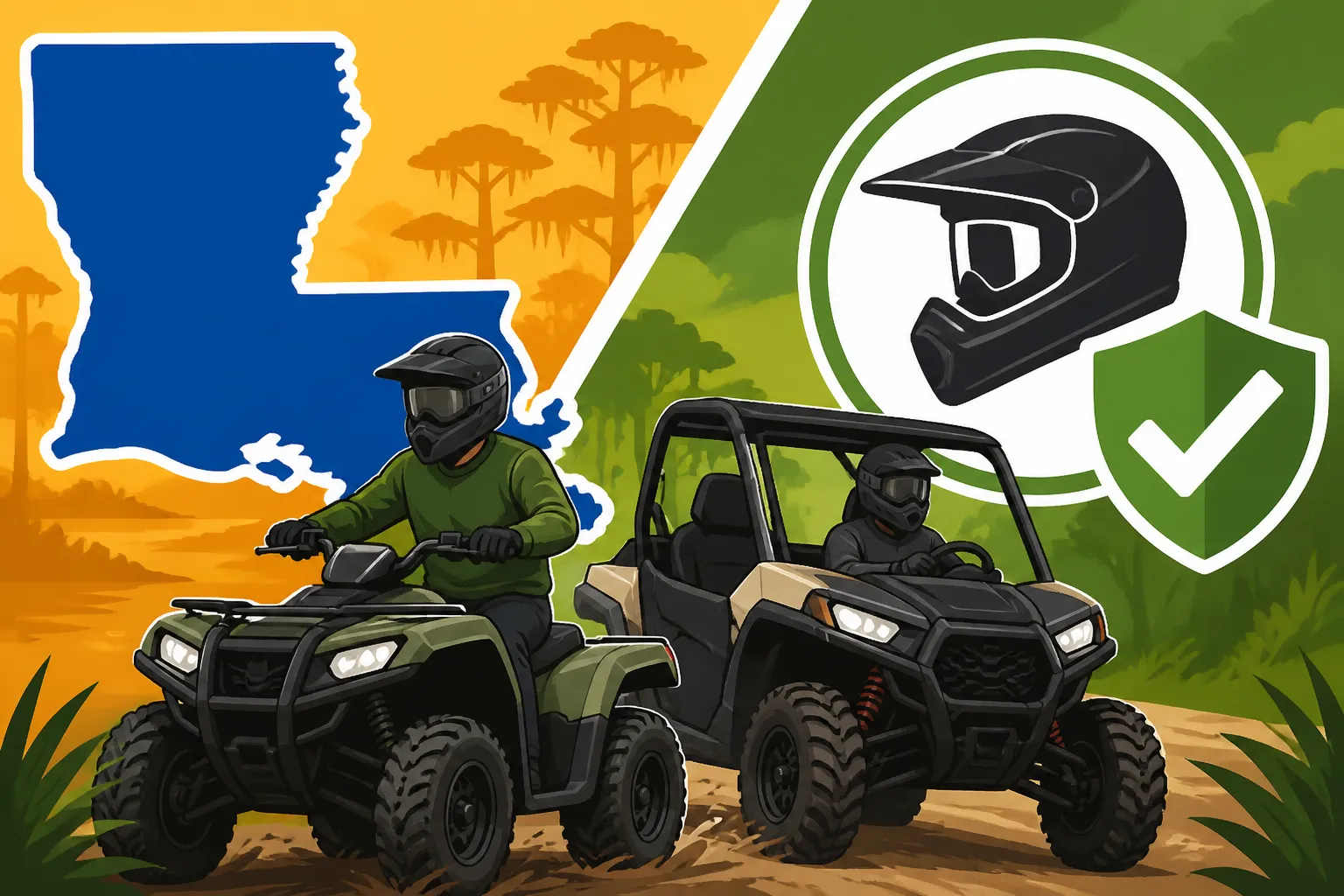
A helmet rule at a Louisiana ATV or UTV park can depend on the machine, the rider, and the part of the property where you plan to ride. A park may require helmets even when a rider expects an exception, and rules can differ between parks. Here’s how to check what applies, choose suitable gear, and avoid being turned away at the gate.
Why helmet rules vary between Louisiana private parks
A private riding park sets conditions for using its property. That means there isn’t one helmet policy you can assume applies at every Louisiana mud park or riding area. One operator may require helmets for everyone on every machine; another may set different rules for ATVs and UTVs, or for children and passengers. The park’s current written rules are the best starting point.
Park policies can also be stricter than what a rider believes the law requires. Treat admission requirements and legal requirements as separate questions: a park can make a helmet a condition of entry even if you think your planned ride falls outside a particular road or public-land rule. Conversely, meeting the park’s helmet policy does not automatically make a ride legal everywhere else.
Before you load the trailer, check the park’s official rule page or contact the operator. Look for details about:
- Whether helmets are required on ATVs, dirt bikes, and UTVs.
- Whether every rider and passenger must wear one.
- Whether rules differ by age or vehicle type.
- What kind of helmet is accepted, including any required safety label.
- Whether goggles, eye protection, or other gear must be worn with it.
- Whether a helmet must remain on while riding, including in slow-speed areas.
- Whether a helmet rule applies on trails, in designated areas, or across the entire property.
A broad statement such as “helmets recommended” may not answer whether the park will permit a rider without one. If the wording is unclear, ask the operator directly and keep the answer with your trip information. Park rules can change, and a social media post or an old screenshot may not reflect the current policy.
For a closer look at how private operators set entry and conduct conditions, see Louisiana Private Park Waivers and Rules. Helmet policies are only one part of that broader set of requirements; parks may also have separate rules for age, passengers, alcohol, camping, and riding after dark.
What the rule can mean for ATVs, UTVs, children, and passengers
Do not assume an open-sided UTV is exempt from a helmet requirement. Some parks treat an ATV and a UTV differently; others apply a helmet rule to all off-road machines. A roof, windshield, doors, or roll-over protection structure does not tell you what that specific operator requires.
The same caution applies to passengers. A park might require a helmet for the driver and every passenger, regardless of age or seating position. It may also limit who can ride in a particular vehicle or require riders to use its installed restraints. Confirm both the helmet policy and the passenger policy before bringing extra riders. Passenger Rules at a Private Mud Park covers the separate passenger questions worth checking.
| Situation | What to verify with the park |
|---|---|
| Adult riding an ATV | Whether helmets are mandatory and what types are accepted |
| Child riding an ATV | Helmet policy, minimum age, supervision, and any additional protective gear |
| UTV driver | Whether a helmet is required in addition to the vehicle’s restraints |
| UTV passenger | Whether the passenger may ride in that seat and what helmet and restraint rules apply |
| Night riding | Whether the same helmet policy applies after dark, along with lighting and other rules |
| A rider bringing their own helmet | Whether the helmet’s type, condition, and safety label meet park requirements |
For children, verify the park’s age rules separately from its helmet rule. A helmet does not make a child eligible to ride if the park has a minimum age, supervision requirement, or vehicle-specific restriction. Check Louisiana Private Park Age Minimums before making plans, and ask whether the rules apply to riding as a passenger as well as operating a machine.
For UTV use, ask whether the park requires helmets for every occupant or only for certain vehicles or situations. Also confirm how the helmet fits with the UTV’s seat belt, seat, head restraint, and other safety equipment. Follow the vehicle manufacturer’s instructions and the park’s directions; do not modify restraints or safety equipment to accommodate a helmet.
If a trip includes riding after dark, confirm the park’s night-riding rules as well. A helmet policy may stay the same, but the operator can impose additional conditions for visibility, lighting, routes, or operating hours. Night Riding Inside a Private Mud Park explains why this deserves a separate check.
Choosing and preparing a helmet the park will accept
A helmet that looks sturdy is not necessarily one the operator accepts. Ask the park what it means by an approved helmet and whether a particular certification label is required. Check the label and the helmet maker’s guidance rather than relying only on a product description or a seller’s claim.
Fit matters. A helmet should sit level, feel secure, and stay in position when fastened. It should not press painfully in one spot or move freely around the head. If it is loose, damaged, or missing parts, it may not offer the protection it was designed to provide—and a park may decline to accept it. A helmet that has been in a crash should be evaluated or replaced according to its manufacturer’s instructions, even if visible damage is limited.
For ATV and dirt-bike riding, eye protection is another practical consideration. Dust, mud, insects, and branches can make it difficult to see clearly. Confirm whether the park requires goggles or another form of eye protection, and choose gear that works with the helmet. Do not assume a face shield or windshield meets the operator’s requirement unless the rules say so.
UTV riders should pay attention to fit around the seat and head restraint. A helmet should not prevent a rider from sitting correctly, using the belt, or following the vehicle’s safety instructions. If a helmet contacts the restraint in a way that makes the seating position uncomfortable or unstable, ask the vehicle maker or a qualified dealer about compatibility before riding.
If you shop through Amazon or another marketplace, verify the manufacturer, model, size, certification label, return conditions, and seller details before ordering. Listings can use broad phrases such as “off-road helmet” without making clear whether a particular park will accept that helmet. The park’s written requirement—not the product category—is the deciding point for admission.
Pack the helmet where it will stay clean and undamaged during transport. Keep straps, padding, and any required goggles together. If several people are riding, label helmets by rider so nobody has to guess which one fits. Bringing a spare can help if a helmet is damaged or does not fit the rider who was expected to use it, but a spare does not replace checking the park’s requirements.
How to confirm the rule before you travel
A quick check before departure can prevent a frustrating arrival. Use the park’s own current materials where possible, and contact staff if the wording leaves room for interpretation. Have the machine details and rider ages ready so the answer is specific.
- Identify the park and the machines. Make a list of the ATVs, UTVs, or other off-road vehicles in your group, along with the number and ages of riders.
- Read the helmet rule in context. Check whether it applies to all machines, all riders, passengers, and all riding areas.
- Ask what “approved” means. If a rule requires an approved or certified helmet, ask which label or standard the park expects and whether it accepts the helmet you plan to bring.
- Confirm related rules. Ask about eye protection, child supervision, passenger eligibility, night riding, and any required restraints.
- Check again before the trip. If you booked far in advance, revisit the park’s current rules or call before loading. Keep a screenshot or written note of the policy, but follow any updated instructions from park staff when you arrive.
Be clear when asking. “Are helmets required?” might not settle the question if you are bringing a UTV with passengers or a child on an ATV. A more useful question is: “Does every rider and passenger in our ATVs and UTVs need a helmet, and what labels or types do you accept?” If there are different rules for children, ask about each rider’s age and role.
At the gate, follow staff instructions and posted signs. If a helmet does not meet the park’s standard, do not argue based on a general online description or assume the rule is optional. Ask whether the park has a compliant helmet available, whether another rider can use the machine, or whether the group needs to reschedule.
Finally, remember that a private park’s rules apply to its property, not automatically to a public road or public riding area. If your route includes travel beyond the park, check the applicable rules for that location separately. A park-approved helmet is useful protective gear, but it does not replace checking the requirements for every part of the trip.
Disclaimer
This article is for general informational purposes only and does not constitute professional advice. Laws, prices and regulations vary by location and change over time. Consult a qualified professional for guidance on your specific situation.