Filling Out a Self-Clearing Permit at the Gate
A self-clearing permit station can look simple, but a rushed or incomplete form may leave you unsure whether you followed the WMA’s entry rules. The process is straightforward when you check the site instructions first, fill out the permit before starting your visit, and keep the right portion with you. Here’s how to handle the form and avoid treating it as permission to ride anywhere.
What a self-clearing permit does
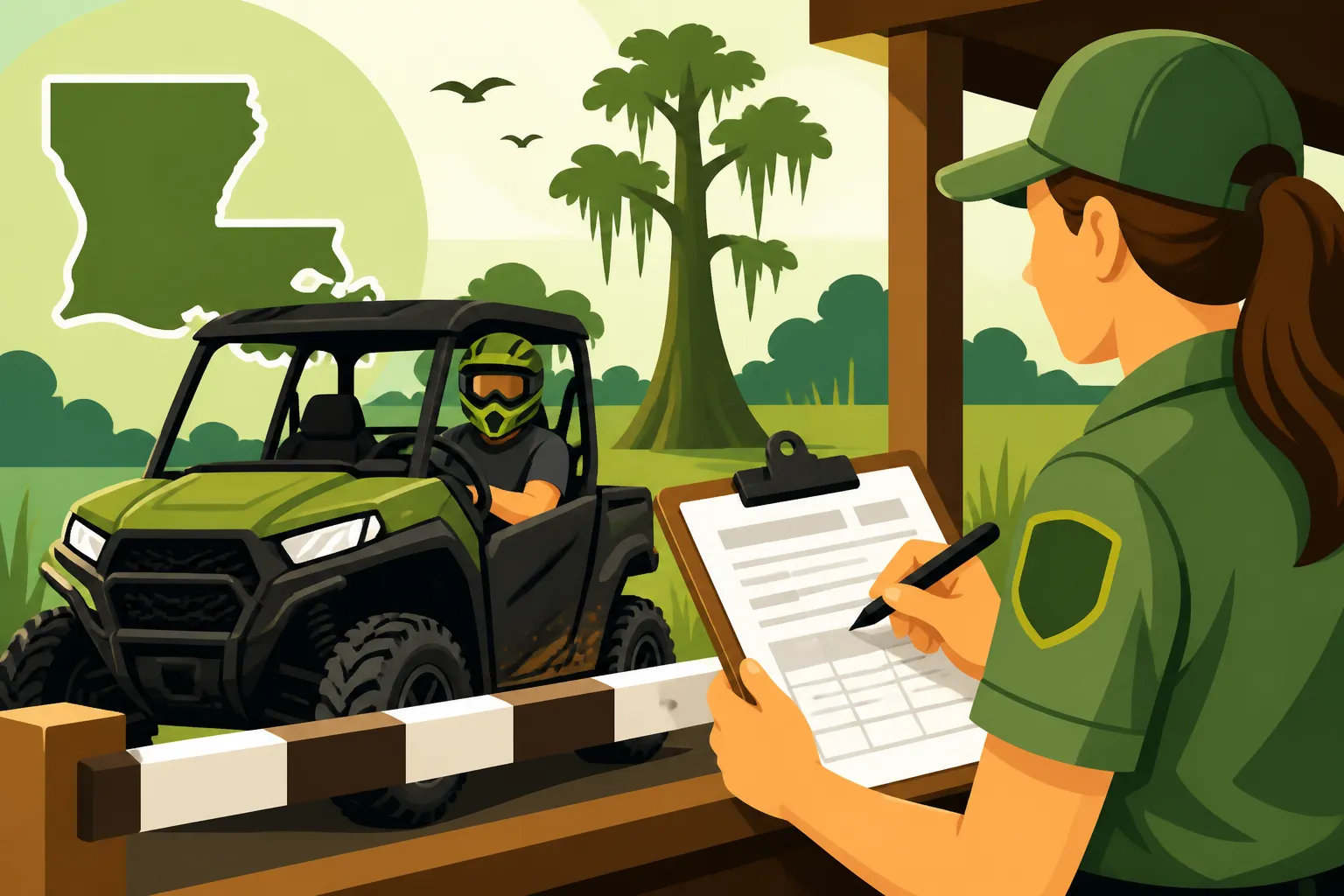
A self-clearing permit is a way for a wildlife management area to record visits when staff may not be present at the entrance. Depending on the WMA and the activity, visitors may be required to complete a permit at a station before entering. The form and posted instructions tell you what information to provide and what to do with each part.
Requirements are not necessarily identical across every WMA. Check the rules for the specific area you plan to visit, including whether a permit is required for your activity and whether the station has special directions. [Louisiana WMA Permit Requirements] covers the broader permit question, while Why Louisiana WMAs Need a Self-Clearing Permit explains why an area may use a self-clearing system.
A completed permit is not a general pass to use every road or trail. It does not replace a required access permit, forest pass, off-road decal, or other authorization. Nor does it change the area’s limits on vehicle type, trail access, hours, seasons, or equipment. Before you unload, check the rules for your intended activity and machine. For ATV restrictions, see Louisiana WMA Riding Rules for Quads; for side-by-sides, see Louisiana WMA Riding Rules for UTVs.
The station is best treated as part of your pre-ride routine, not as a formality to complete after you have already started. If the posted instructions are unclear, do not guess about what to write or where to leave the form. Read the notice carefully, and contact the managing office if you cannot determine the right procedure.
Before you reach the permit station
A little preparation can save time at an unmanned entrance. Bring the information the form may ask for and know what you plan to do on the WMA. The exact fields can differ, so use the form in front of you rather than assuming every station has the same layout.
Before leaving home, check:
- Whether the WMA requires a self-clearing permit for your planned activity.
- Whether the area is open to motorized access on the day you intend to visit.
- Which routes are open to your machine and whether you need a separate permit or pass.
- Any seasonal closure, operating-hour limit, vehicle restriction, or parking rule.
- Whether the station is at your chosen entrance and whether you need to bring your own writing tool.
A current map and the WMA’s posted rules matter just as much as the permit. A station at the entrance does not mean every trail beyond it is open. Reading a WMA Map Before You Unload can help you distinguish designated routes from areas where riding is not allowed. In general, only marked routes authorized for motorized use should be treated as rideable; see Only Marked WMA Trails Are Open to Quads.
If you expect to visit more than one area, do not assume a permit completed at one entrance covers another WMA. Confirm the instructions for each location. Likewise, do not assume a self-clearing permit is interchangeable with a separate forest-use pass. The rules for a WMA and a national forest trail system can be different, even when both areas are open to outdoor recreation.
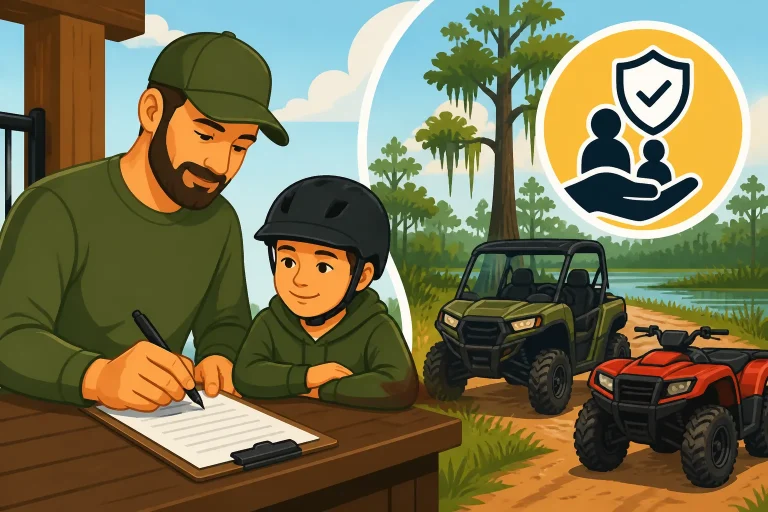
It also helps to decide who is responsible for the paperwork before arriving with a group. Have one person read the posted directions and complete the form, then make sure the rest of the group understands any limits that apply. If riders split up, everyone should know the permitted routes, access restrictions, and where the group plans to meet again.
How to fill out the permit at the gate
Follow the printed form and the directions posted at that particular station. If a field is missing, unclear, or not applicable, do not invent an answer. Ask the managing office how to proceed when possible.
- Stop before entering the area. Park safely at the station without blocking the entrance or other visitors. Complete the required steps before proceeding past the permit point.
- Read the entire notice. Look for directions about who must complete the form, which section to retain, and where to place any other portion. Instructions posted at the station take priority over assumptions based on a different WMA.
- Select the correct activity or permit type. If the form offers choices, mark the one that matches what you are actually doing. Do not choose a hunting, fishing, or other category simply because it appears familiar if it does not fit your visit.
- Enter the requested information clearly. Write legibly and answer the fields that apply. The form may request details such as identifying information, visit date, party size, or activity, but follow the actual form rather than relying on a standard list.
- Check the information before separating the form. Confirm that the date and other entries are correct, and make sure the form is complete. A wrong date or unclear entry can defeat the purpose of recording the visit.
- Put each portion where the directions say. Some self-clearing systems have a part for the station and a part for the visitor to retain. Do not leave the entire form in the box if the instructions tell you to keep a portion, and do not take a portion away if it is supposed to be deposited.
- Keep your portion as directed. Carry it with you or store it in the place specified by the posted rules. If it must remain available during your visit, make sure it is accessible rather than buried under gear.
- Make sure everyone in your party knows the rules. A permit completed by one person does not authorize riders to leave designated routes or ignore vehicle limits. Share the relevant restrictions before the group sets off.
If the station has no forms, the box is damaged, or the directions are missing, pause before entering. Do not assume that a blank slip of paper or a photo of the entrance sign satisfies the requirement. Use posted contact information or call the appropriate office to ask what visitors should do when the permit system is unavailable.
For more detail on the sequence, see [Louisiana Self-Clearing Permit Steps]. The practical point is simple: complete the process at the entrance, follow the station’s instructions for every part of the form, and keep any required portion with you.
What to keep, and what the permit does not cover
A self-clearing permit may have a section for the station and another for the visitor. The exact arrangement depends on the form. Follow the printed directions about which part goes into the permit box and which part stays with you. If the form does not explain what to do with a section, ask rather than guessing.
Keep the portion you are instructed to retain in a safe, accessible place during the visit. A small waterproof document sleeve can help protect paper from rain, mud, and wet gear; an inexpensive pouch from a retailer such as Amazon may be useful, but a sealed bag you already own can serve the same basic purpose. Whatever you use, do not let a protective cover make the permit difficult to retrieve if you need to show it.
A self-clearing permit should not be confused with:
- A trail-use authorization. You still need to follow the WMA’s route designations and vehicle restrictions.
- A general public-land pass. A separate access or recreation pass may be required for some locations or activities.
- An ATV or UTV title or decal. A permit at a WMA entrance does not replace Louisiana machine paperwork. For the difference between ownership paperwork and riding requirements, see Louisiana ORV Decals and Titles Explained.
- Permission to use closed areas. Seasonal closures, temporary restrictions, and posted notices still apply.
- Permission to camp or park overnight. Parking and overnight-use rules are separate; check Louisiana WMA Overnight Parking Rules before leaving a vehicle or machine.
The permit also does not override restrictions on machine size, tires, weight, or operating hours. Check the current rules for the specific WMA and machine you plan to bring. A quad that is allowed on one trail may not meet another area’s requirements. A side-by-side may be subject to different limits from a smaller ATV. These distinctions are one reason to read the area-specific information before loading your trailer.
Finally, completing a permit does not grant permission to ride on private property, unmarked roads, or routes that are closed to motorized use. If signs, a map, or a closure notice conflict with what you expected, stop and verify the route before proceeding.
Common mistakes and how to avoid them
Most problems at a permit station come from rushing or assuming the form is the same everywhere. A quick review before you leave the entrance helps avoid these errors:
- Filling it out after you have started the visit. If the rules require a permit before entry, complete it first.
- Leaving the wrong portion in the box. Check the station’s directions before separating or depositing the form.
- Writing an estimated or incorrect date. Confirm the date and correct any mistake before leaving the station.
- Assuming one person’s form covers every visitor. Follow the form’s instructions about whether it applies to an individual, a party, or a particular activity.
- Treating the permit as a trail pass. Confirm that the route is open to your machine and activity.
- Relying on old information. Rules and access conditions can change. Check official area information and signs at the entrance before you ride.
- Ignoring seasonal restrictions. A WMA may restrict motorized access during part of the year or under certain conditions. See Louisiana WMA Seasonal Riding Ban and verify the specific area’s current notice.
- Leaving the retained portion behind. If visitors are told to keep part of the permit, carry it as instructed throughout the visit.
If you notice an error after completing the form, do not alter it in a way that makes the entry confusing. Ask staff or the managing office how to correct it. If no one is available at the gate, use the contact information posted for the area and explain what happened.
If a trail is closed, the permit station is out of order, or the signs are inconsistent, the safest choice is to pause and get clarification rather than continue on an assumption. A short delay at the entrance is better than riding a route that is not open to your machine.
Frequently Asked Questions
Does every Louisiana WMA use a self-clearing permit?
No. Permit requirements and procedures can vary by area and activity. Check the rules for the WMA you plan to visit and follow the posted instructions at its entrance.
Do I keep the whole permit?
Not necessarily. Some forms direct visitors to deposit one part and retain another. Follow the specific form and station directions, and keep any portion you are told to carry.
Does completing the permit mean I can ride any trail?
No. It does not override designated-route rules, vehicle restrictions, seasonal closures, or other posted conditions. Confirm that your machine and planned route are allowed.
What should I do if the permit box is missing or empty?
Do not assume the requirement has been waived. Check the posted contact information or contact the managing office for directions before entering.
Disclaimer
This article is for general informational purposes only and does not constitute professional advice. Laws, prices and regulations vary by location and change over time. Consult a qualified professional for guidance on your specific situation.