Louisiana Trail Volunteer Days
Trail volunteer days are a practical way to help keep Louisiana’s riding areas safer and more enjoyable, but it can be hard to know who organizes them, what work is appropriate, or whether a trail is open. This guide explains how to find legitimate work parties, prepare for one, and contribute without damaging trails or stepping into a restricted area.
Where to find Louisiana trail volunteer days
Start with the land manager or trail organization
Volunteer opportunities may be organized by a public land manager, a riding club, a nonprofit, or a private park. The right contact depends on where you want to help. Trails in Kisatchie National Forest, for example, are different from privately operated riding areas: each has its own rules, access procedures, and authority over trail work.
Look for announcements from the organization responsible for the property rather than relying only on a social media post that has been shared several times. Ask who is leading the work, where volunteers should meet, whether registration is required, and what tasks are planned. A genuine work day should have a clear location and organizer, plus instructions about tools, safety, and access.
If you are interested in a particular trail system, check its official information before making the drive. Trail access can change because of weather, maintenance, seasonal restrictions, or land-management decisions. Reviewing [Louisiana Forest Trail Status Pages] and [Checking a Trail Status Page First] can help you avoid arriving at a closed trailhead or assuming that a volunteer event means the whole riding area is open.
Ask local riders and clubs
Local ATV clubs can be useful sources of information because members may know which groups coordinate trail upkeep and community work days. Joining or contacting a club does not mean you have to own a particular machine or commit to every activity. It can simply give you a way to ask who is responsible for a trail and how volunteers can help.
When you reach out, be specific: name the trail or riding area, explain whether you want to do hands-on work or help with planning, and ask what training or equipment is needed. [Louisiana ATV Clubs Worth Joining] is a useful starting point for finding riding communities to ask. You can also ask at a permitted group ride, while respecting the property rules and avoiding work on trails without approval.
Do not assume a familiar-looking path is open to public riding or volunteer maintenance. A track may cross private land, a protected area, or a route reserved for another use. If the land manager has not approved work, stick to the official volunteer plan rather than clearing brush, moving signs, or creating a shortcut on your own.
What volunteers may do and what to confirm first
Common trail-day tasks
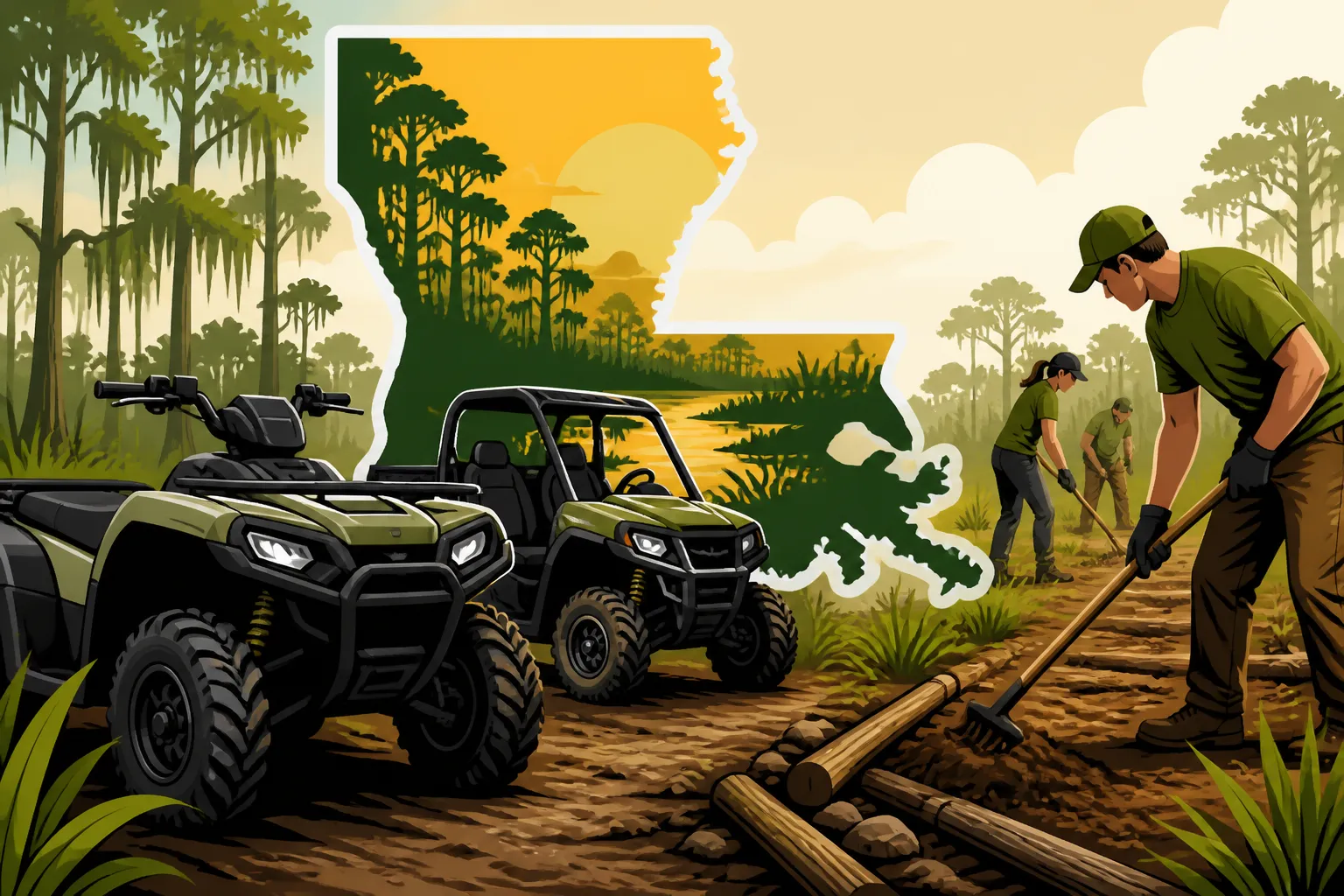
A trail work day might involve picking up litter, clearing small debris, checking signs, reporting erosion, or helping with an organized maintenance project. The actual work varies with the trail, land manager, weather, and available equipment. Some projects may require trained operators or staff to handle machinery, hazardous trees, bridges, drainage structures, or other technical work.
A volunteer’s most valuable contribution is often careful, supervised work rather than dramatic trail changes. For instance, collecting trash around a trailhead or reporting a washed-out section can help the organizer address a problem safely. Cutting a new route around mud, widening a narrow trail, or moving a marker without permission can create drainage problems, damage habitat, or confuse riders.
Before the event, ask what tasks are approved and what you should leave alone. If you find a downed tree, exposed wire, damaged bridge, or unstable bank, report it to the work leader instead of trying to fix it yourself. Trail maintenance can involve hazards that are not obvious from the ground, especially after heavy rain or storms.
Confirm access, tools, and safety expectations
A volunteer event is not automatically permission to ride every route on the property. Ask where volunteers can park, whether machines are allowed, and whether a separate pass, permit, or self-clearing permit applies. Public-land riding requirements may be different from requirements for a private park, and event instructions do not necessarily replace the land manager’s normal rules.
Find out whether the organizer supplies tools or expects participants to bring them. Do not bring powered cutting equipment or use it unless the event leader has specifically authorized it and explained the safety process. Wear sturdy footwear, gloves, eye protection when appropriate, and clothing suited to heat, insects, mud, and changing weather. Bring drinking water and any personal medications you may need.
Use the table below as a quick checklist before you commit:
| Question to ask | Why it matters |
|---|---|
| Who is organizing the work day? | Confirms that the work is authorized and gives you a contact for instructions. |
| Where is the meeting point? | Trailheads and access roads can be confusing, especially in wooded areas. |
| What tasks are planned? | Helps you decide whether the work matches your skills and comfort level. |
| What tools and protective gear should I bring? | Prevents bringing unsuitable equipment or arriving unprepared. |
| Are permits or access fees required? | Volunteer status may not remove normal entry requirements. |
| Is riding allowed during or after the work? | A work day does not necessarily include permission to ride. |
| What is the weather or cancellation plan? | Rain, heat, or storm damage can change the plan quickly. |
Preparing for a volunteer day in Louisiana
Plan for weather, terrain, and communication
Louisiana conditions can make a modest outdoor task more demanding than it sounds. Heat and humidity can build quickly, while wet ground may be slippery or unstable. Wear clothes that protect you from brush and insects without making it difficult to stay cool. Pack water, snacks, sunscreen, and insect repellent, and tell someone where you will be if you are attending alone.
Cell service can be unreliable in wooded areas. Save the meeting details and organizer’s contact information before leaving home. A map can help you understand the general area, but it is not a substitute for the event leader’s directions or the official trail map. Some riders use onX Offroad to review their route and mark a meeting point; check the land manager’s materials as well, since a mapping app should not be treated as the final authority on closures or access.
If the work site is in or near Kisatchie National Forest, follow the instructions for the specific trail and access point. A route shown on a map may not be open to motorized use, and a trailhead may have separate rules. [Louisiana Trail Closures and Seasons] can help explain why checking seasonal access matters before you plan a trip.
Use your machine only when the event permits it
It is tempting to bring an ATV or UTV because you are volunteering at a riding area. But not every project needs a machine, and some events may prohibit riding except for authorized work vehicles. Ask first whether you can bring your machine, where it can be operated, and whether it must remain parked during the work.
When a machine is allowed, follow the organizer’s route and speed instructions. Avoid riding around barriers, through active work zones, or on wet ground just because the surface looks passable. Repeatedly riding soft edges to get around a muddy spot can widen the trail and worsen erosion. If you are uncertain, stop and ask the work leader.
A navigation app such as onX Offroad can be helpful for orienting yourself before you arrive, but use it as a planning aid, not a permission slip. Confirm the approved access route and any restrictions with the event organizer or land manager. For broader preparation, [Louisiana Group Ride Planning] offers related guidance on coordinating travel and expectations with other riders.
How to be a helpful volunteer and protect trail access
Follow the work plan and communicate problems
Show up at the requested time, sign in if required, and listen to the safety briefing. The leader may divide volunteers into small groups or assign a specific section of trail. Stay with your group, follow the agreed work limits, and let the leader know if you need to leave early or change tasks.
If you notice damage outside the assigned area, document its location and tell the organizer. A photo and a clear description can be more useful than an unapproved repair. For example, “water is cutting across the trail near the marked junction” gives the land manager a starting point, while a new trench or diversion made without approval may create further problems.
Be respectful of other visitors and nearby landowners. Keep noise down near campsites, pack out trash, and do not block access roads with vehicles or trailers. [Louisiana Trail Etiquette Locals Expect] covers the shared-use habits that matter on busy routes. After a work day, [Leaving a Kisatchie Trailhead the Way You Found It] is a helpful reminder that stewardship includes the parking area and trailhead, not just the riding surface.
Keep volunteering beyond one event
If you enjoy the work, ask the organizer how to hear about future opportunities. Some people are best suited to hands-on maintenance, while others can help with event check-in, trail-condition reports, outreach, or cleanup. Consistent, reliable help is often more useful than taking on a large task once and disappearing.
You can also support trail care by riding responsibly between volunteer days. Stay on authorized routes, respect closures, avoid creating bypasses around muddy sections, and report hazards through the proper channel. When sharing a trail map or location, make sure it does not encourage access to a closed route or land where permission is unclear. onX Offroad can help you keep personal notes about a route, but official maps and land-manager updates should guide access decisions.
The best volunteer day is not necessarily the one where the most dirt gets moved. It is the one where people do approved work safely, leave the site in better shape, and help preserve access for the next rider. Before you head out, confirm the organizer, location, task list, access rules, and weather plan. That simple preparation can save a frustrating trip and make your time genuinely useful.
Disclaimer
This article is for general informational purposes only and does not constitute professional advice. Laws, prices and regulations vary by location and change over time. Consult a qualified professional for guidance on your specific situation.