Louisiana Riding With a Group of Ten
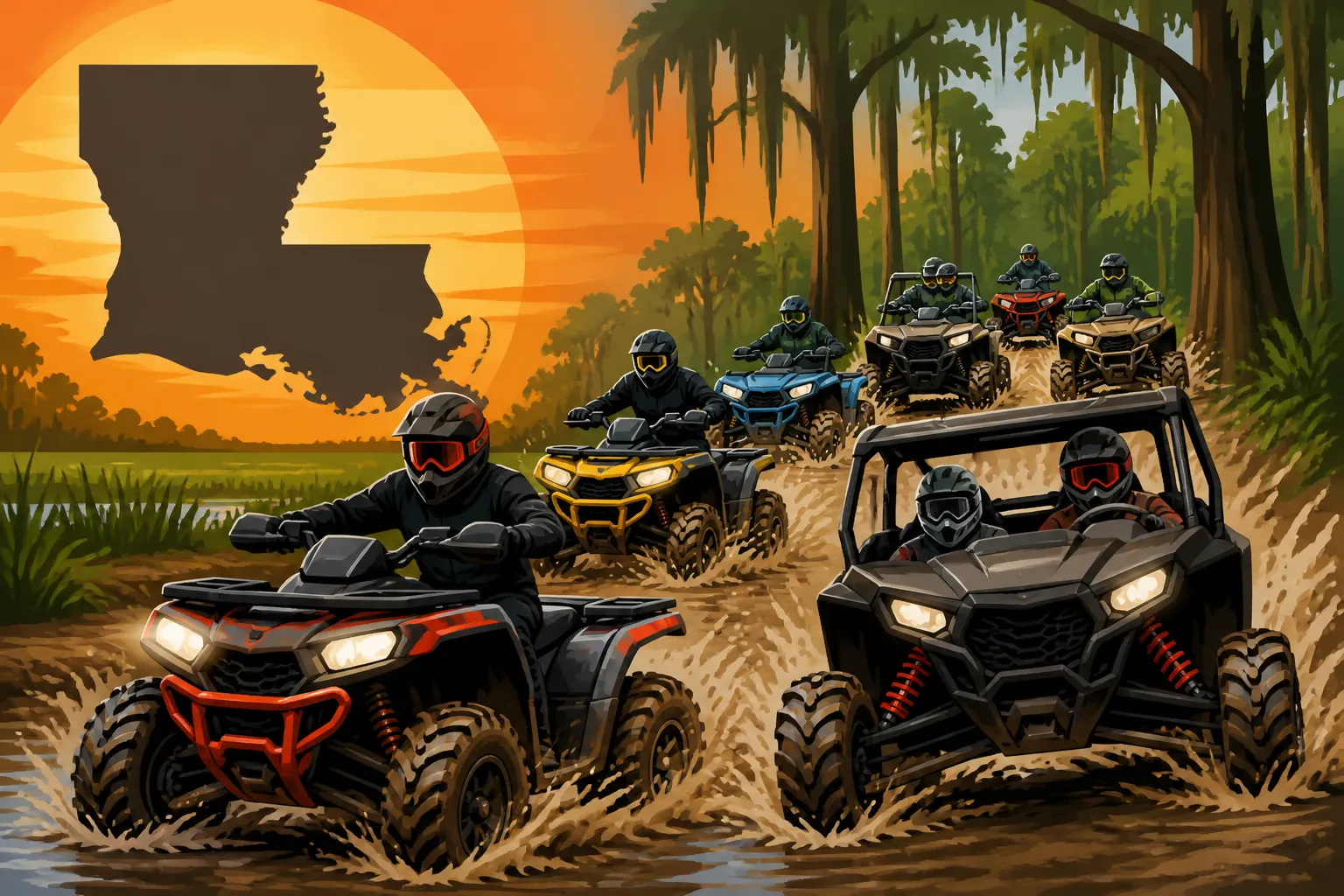
A ten-person ATV or UTV ride can feel like a rolling traffic jam when everyone arrives at once, unloads at different speeds, or discovers the trail is closed after the tow. This guide explains how to plan a Louisiana group ride that fits the riding area, keeps the convoy manageable, and gives everyone a clearer plan for permits, meeting points, communication, and changing conditions.
Choose a Louisiana riding area that can handle your group
Match the destination to your machines and riding style
“Ten riders” can mean ten separate ATVs, a mix of ATVs and side-by-sides, or several passengers riding in a few UTVs. That difference matters. A trail network that works for narrow, nimble quads may not suit wider machines, and a route with tight turns or rough sections can slow a mixed group considerably. Before settling on a destination, list the machines, approximate widths, and experience levels in your group.
Louisiana’s riding options vary. Public forest trail systems, including areas in Kisatchie National Forest, have their own access rules, seasonal conditions, and trail designations. Private parks such as Muddy Bottoms operate under park-specific rules and may have event schedules, admission arrangements, and site availability to consider. These are not interchangeable settings: a park’s event weekend may suit a large social group, while a public trail may require more independent planning and attention to posted restrictions.
Start with the destination’s own rules and information, rather than assuming that a group of ten is automatically allowed on every trail or at every event. Check whether the area permits your machine types, whether reservations or passes are needed, and whether there are restrictions on group size, parking, or riding hours. For public land, use official trail information and posted signs as your guide. [Louisiana Trails That Allow Side-by-Sides] can help you narrow the search if your group includes UTVs.
Check access, closures, and reservations before you tow
A map can show a trail network without telling you whether it is open on the day you plan to ride. Seasonal restrictions, maintenance, storm damage, and temporary closures can change what is usable. Check the relevant [Louisiana Forest Trail Status Pages] and review [Louisiana Trail Closures After a Storm] before loading machines. If you are headed to a private park, confirm its operating dates and reservation requirements directly; some riding areas are organized around specific event weekends rather than daily access.
For public trails, confirm whether each rider or vehicle needs a pass, permit, or other access document. The requirements can depend on the land and the kind of use, so do not assume that one person’s pass covers the whole convoy. For example, review the details for [Louisiana Kisatchie Day Use Passes] and the applicable land manager’s instructions before departure.
Parking is another make-or-break detail for a group of ten. Several trucks and trailers need room to unload without blocking other visitors, roads, or access points. Look for an established staging area and confirm that your convoy can fit. [Louisiana Trailheads With Trailer Parking] is a useful starting point, but it is still sensible to check the particular trailhead and arrive with a backup plan. If the area takes reservations, find out whether each vehicle, campsite, or riding party needs its own booking. [Louisiana Riding Areas That Take Reservations] can help you plan that part.
Organize ten riders before the day of the ride
Set a clear meeting plan and count vehicles, not just people
A group can have ten riders but a very different logistical footprint depending on how many machines, tow vehicles, and trailers are involved. Share the meeting location, arrival window, unloading order, and departure time in advance. A specific landmark or entrance is more useful than “meet near the trail,” especially when cell coverage is unreliable or several access roads look alike.
Ask each person to confirm what they are bringing and whether they have any needs that affect the ride: a youth rider, a new rider, a passenger, a machine with limited range, or a trailer that needs extra maneuvering room. If someone is running late, decide ahead of time whether the group will wait, start with a smaller party, or meet that rider at a separate location. That avoids the frustrating cycle of ten people waiting while one vehicle searches for the entrance.
Before leaving home, make sure every rider knows the destination and the backup plan. Send the trailhead name, a map pin, and a written route description if possible. An offline map in onX Offroad can help riders orient themselves when a signal drops, but it should be treated as a navigation aid—not as proof that a trail is open or that a route is permitted. Check posted signs and the land manager’s information on site.
Use a lead-and-sweep system and agree on regrouping points
With ten machines, the person at the front should not have to guess whether everyone made a turn. Choose a lead rider who knows the planned route and a sweep rider who stays behind the last machine. The sweep can help notice a breakdown or a rider who falls behind, while the lead can set a pace that does not leave less experienced riders scrambling to catch up.
Agree on simple group rules before the engines start. For example, riders can wait at marked intersections until the sweep arrives, avoid passing the lead, and stop in a safe pull-off if the line gets separated. Pick a few regrouping points in advance rather than stopping wherever the trail narrows. This keeps the group from blocking a junction or bunching up in a spot where other trail users need to pass.
A route saved in onX Offroad may help the lead and sweep share a general sense of the planned ride, but no app replaces a head count or direct communication. If the group splits, make sure both parties know the meeting point, the expected return time, and how to contact one another. [Louisiana Group Ride Planning] offers more ideas for coordinating a ride, while [Louisiana Trail Etiquette Locals Expect] is worth reviewing when your group shares routes with other riders or trail users.
| Planning item | What to agree on before departure | Why it helps a group of ten |
|---|---|---|
| Destination and access | Trailhead, entrance, passes, and operating rules | Prevents confusion about where the group can ride |
| Vehicle count | Number of machines, tow vehicles, and trailers | Helps estimate parking and unloading needs |
| Ride pace | Who leads, who sweeps, and how beginners fit in | Reduces separation and pressure to ride beyond comfort |
| Regrouping | Specific junctions or safe stopping areas | Keeps the group together without blocking narrow trails |
| Backup plan | Alternate route, meeting point, or cancellation decision | Makes closures and poor conditions easier to manage |
| Communication | Phone, radio, or agreed check-in procedure | Helps the group respond when riders lose sight of one another |
Keep the ride manageable on the trail
Consider splitting into smaller riding groups
Ten machines traveling as one long line can stretch out quickly, particularly when riders have different experience levels or machines handle differently. Splitting into two smaller groups may make it easier to manage pace, turns, and stops. This is a planning option, not permission to ignore a trail’s rules: check whether the riding area allows your group arrangement and keep each party within posted limits.
If you split, do it deliberately. Put a capable lead and sweep in each group, select a route both parties understand, and set a clear time and place to reunite. Avoid letting riders choose separate trails on the fly. A casual “we’ll meet back at the parking lot” can turn into a long search if one group takes a wrong turn, encounters a closure, or needs to stop for a mechanical problem.
A split also gives beginners room to ride at a comfortable pace without feeling rushed by experienced riders. Consider assigning people based on ability, machine type, or the kind of route they want. Keep the plan flexible, though: if conditions deteriorate or someone is uncomfortable, the group should be willing to shorten the route or turn back together. Review [Louisiana Trail Difficulty Ratings] while choosing a route that fits the least experienced rider, not just the most confident one.
Set expectations for trail etiquette and changing conditions
A large group has a bigger impact on shared trails. Keep machines spaced out, avoid crowding other riders, and move aside where it is safe when another party needs to pass. At a stop, pull well clear of intersections and narrow sections rather than filling the trail with parked machines. Be especially considerate around hikers, horses, campsites, and other non-motorized users where they are present and permitted.
Louisiana weather can make a familiar route feel very different. Rain may leave low areas soft, obscure ruts, or make a crossing harder to judge. A route that seemed straightforward on a dry day might become a poor choice for a mixed group after heavy rain. Check [Louisiana Trail Conditions After Rain], and be prepared to turn around rather than push through a section that risks damaging the trail or stranding a machine. onX Offroad can be useful for keeping track of a planned route, but conditions on the ground and official closures take priority.
Before riding, agree that no one will pressure another person to take an obstacle or water crossing they are not comfortable with. Ten people can create a lot of social momentum, and it is easy for someone to follow the crowd despite having doubts. Make it normal to speak up, stop, and reassess. A shorter ride that ends with everyone and every machine back safely is better than a long route that forces the group into a situation it did not plan for.
Prepare for breakdowns, separation, and the return trip
Carry a basic group plan for communication and emergencies
Cell service may be inconsistent in wooded or remote riding areas. Do not rely on a group text as the only way to coordinate once you leave the staging area. Agree on a check-in plan, make sure everyone knows the meeting point, and decide what the group will do if a rider cannot be reached. A paper map or a route saved for offline use can help with orientation, but riders should still follow signs, land rules, and safe navigation practices.
At minimum, identify who has a first-aid kit, basic tools, and supplies suited to the machines in the group. Ask riders to bring water, weather-appropriate clothing, and any personal medication they may need. In warm, humid conditions, a long delay beside a disabled machine can become uncomfortable quickly, even if the trail ride itself was manageable. The lead and sweep should know who is carrying key supplies and how to contact emergency services from the area.
Set a firm turnaround time. Groups often underestimate how long it takes to get ten machines moving, pause for photos, help with a repair, or wait for a slower rider. A turnaround time leaves a margin for loading before dark and reduces the temptation to rush on the way back. If the route is unfamiliar, build extra time into the plan and let someone outside the ride know the destination and expected return window.
Make unloading and departure part of the plan
The ride is not over when the convoy reaches the trailhead again. Keep the loading area orderly, make sure no machine or person has been left behind, and do a quick check for damaged equipment or lost belongings before vehicles pull out. If the group is using multiple trailers, decide who is loading where so the staging area does not become congested.
Give the group a final head count before leaving. If someone is taking a different route home, confirm that plan directly rather than assuming they are following the convoy. When a machine has a problem, decide whether it can be transported safely before anyone departs. A little patience at the end can prevent an exhausting search or a second trip back to the trailhead.
For the next ride, note what worked and what did not: whether the parking area fit the convoy, whether the route suited the least experienced rider, and whether the planned pace allowed enough time. Those details make the next group outing easier to organize. With a clear destination, realistic route, and a plan for staying together, ten riders can enjoy Louisiana’s riding areas without making the day feel like crowd control.
Disclaimer
This article is for general informational purposes only and does not constitute professional advice. Laws, prices and regulations vary by location and change over time. Consult a qualified professional for guidance on your specific situation.