Louisiana Campgrounds Next to a Riding Area
When you plan an ATV weekend in Louisiana, a campground that looks close on a map may still leave you with a long tow, a locked gate, or no legal route from camp to trail. This guide explains where to look, how to compare private parks with forest riding areas, and what to confirm before you book or unload.
How to choose a campground beside a Louisiana riding area
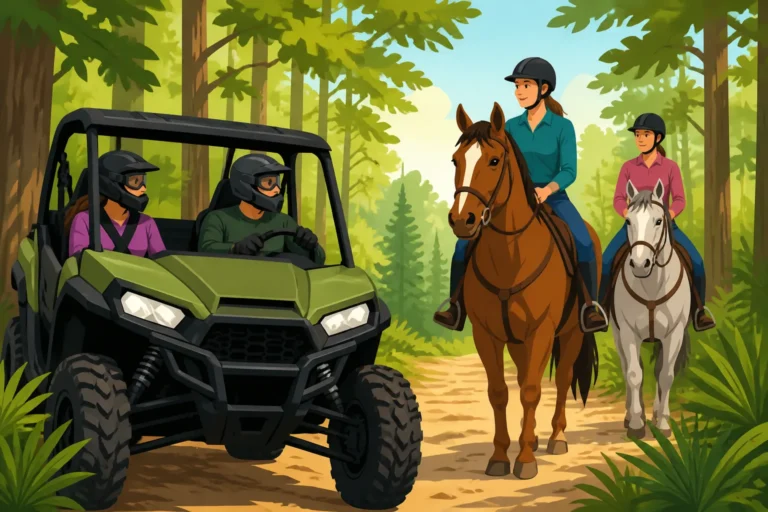
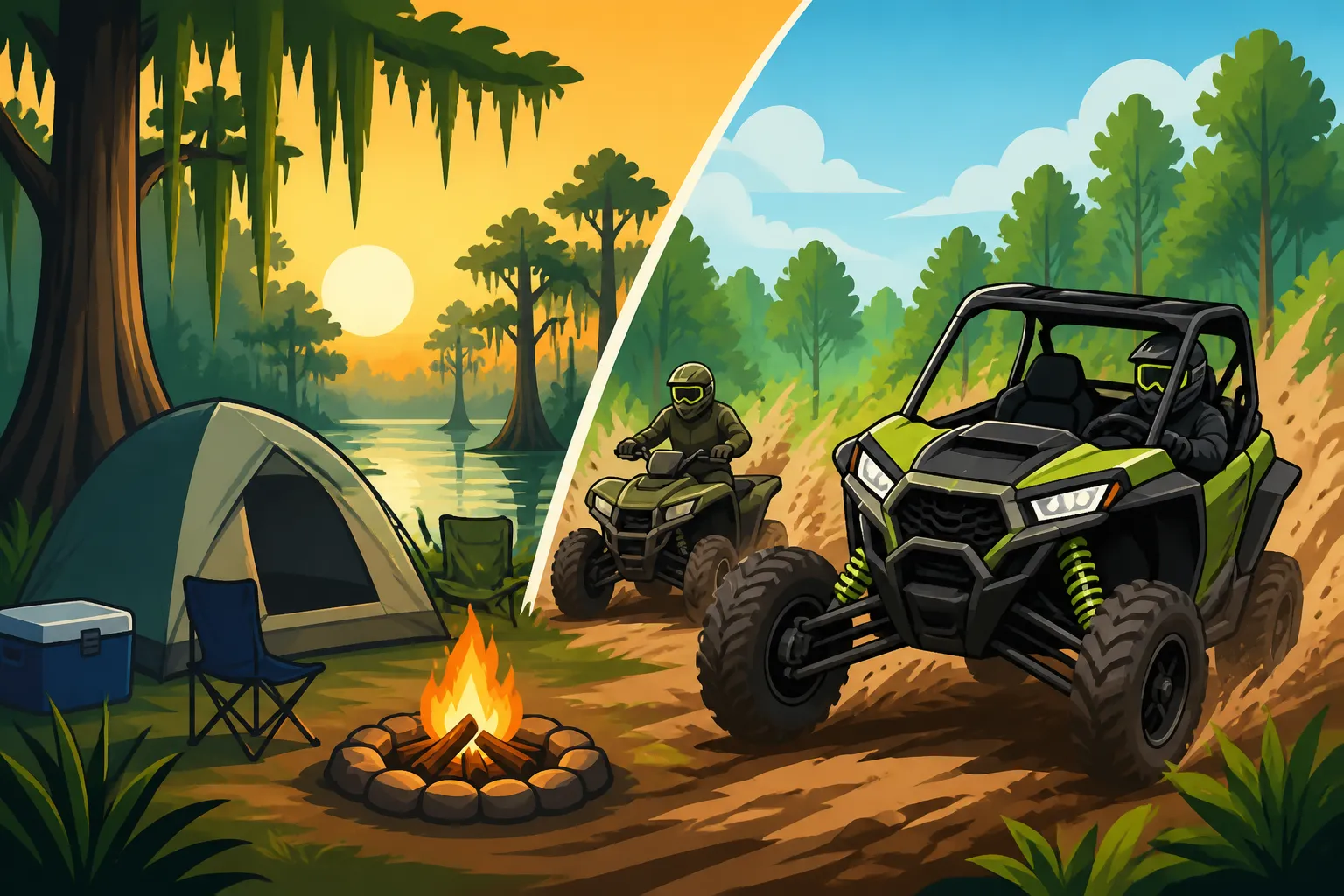
“Next to” can mean very different things in practice. At a private ATV park, camping may be part of the riding destination. Near a public trail in a national forest, a campground might be a separate recreation site that requires you to trailer your machine to the trailhead. Knowing which setup you’re booking can prevent a frustrating first morning.
On-site camping versus a nearby campground
On-site camping is usually the simplest choice if you want to ride without repeatedly loading and unloading. Some private parks combine trail access with camping options, so you can set up camp and follow the park’s rules for getting to the riding area. Muddy Bottoms near Sarepta is one Louisiana example to investigate; check its current event calendar, available camping types, and access rules before making plans. [Muddy Bottoms ATV Park in Louisiana]
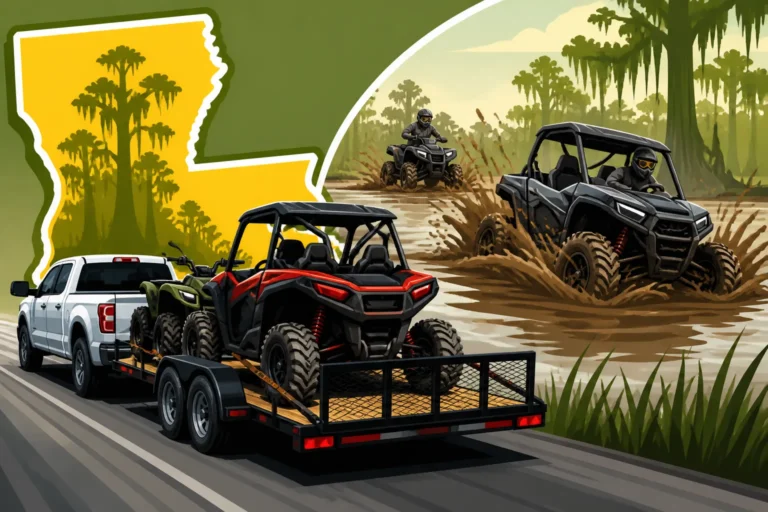
A nearby campground can work well when you’re riding a public trail system, but “nearby” doesn’t necessarily mean connected. You may need to haul your ATV or UTV between camp and the trailhead, and a road that looks convenient on a map may not be open to off-road machines. Confirm the route with the campground and the land manager rather than assuming you can ride between the two.
Think about what your group needs after a dusty or muddy day, too. An RV site, a cabin, and a basic tent site can make for very different weekends. If one person in your group wants electricity and a shower while someone else is happy with a tent, check whether your preferred options are at the same location and whether your machines can be parked securely nearby.
Private riding parks and event weekends
A private park can make camping and riding logistics easier, but the schedule matters. Some destinations operate around organized event weekends rather than offering open riding every day. Louisiana Mudfest near Colfax is an example to check for event dates, camping arrangements, and park rules before towing. [Louisiana Mudfest and Event Weekends]
Ask what your admission or reservation allows: riding access, overnight stays, passenger access, and use of shared facilities may be handled separately. Also check whether there are rules for generators, pets, quiet hours, campfires, or riding after dark. A group arriving with children, a dog, or a large RV should settle those details before choosing a site.
Private parks set their own operating rules, and conditions can change around events or weather. Read the park’s own instructions and ask direct questions if anything is unclear. [Louisiana Private Park Waivers and Rules] A campground reservation by itself should not be treated as confirmation that a machine can ride on every road or trail in the area.
Public forest trails and camping nearby
Louisiana’s Kisatchie National Forest has designated OHV riding opportunities, but camping and trail access are separate parts of the plan. Check which trail system you intend to ride, where its legal access points are, and what overnight options are actually available in that area. [Kisatchie National Forest OHV Trails in Louisiana]
For public land, don’t assume that an attractive clearing, trailhead parking area, or forest road is an approved campsite. Look for a designated campground or confirm the applicable camping rules with the land manager. You may also need a pass or permit for the riding area, and the requirements for camping may differ from the requirements for operating an OHV.
| Trip setup | What may be convenient | What to confirm before you go |
|---|---|---|
| Private park with on-site camping | Camp and riding area may be part of one destination | Operating dates, reservation details, machine access, and park rules |
| Public forest trail with a nearby campground | Access to public trails and established camping may suit a longer trip | Whether camping is permitted, how far the trailhead is, and whether you must trailer |
| Campground in a nearby town | More lodging choices and services may be available | Legal route to the riding area, machine storage, and trailer parking |
| Event-based riding park | Organized riding and camping may be available together | Event dates, admission requirements, campsite availability, and event-specific rules |
Louisiana riding areas to consider for a camping trip
The right destination depends on the kind of ride you want. Some riders want a private park where camping is part of the experience; others would rather camp near a forest trail and ride only on marked routes. These options involve different schedules, access rules, and levels of planning.
Muddy Bottoms near Sarepta
Muddy Bottoms is a private recreation destination to consider if you want to combine riding with an overnight stay. Its setting in north Louisiana makes it a practical starting point for riders looking for a destination-style weekend rather than a short outing. Before booking, confirm what camping choices are available for your planned visit and whether riding is open on those dates.
The details that make the difference are often the small ones: where trailers can be parked, whether the campsite is near the riding area, how check-in works, and what you need to do before a machine enters the trails. If your group is arriving in separate vehicles or bringing a large trailer, ask about site access and parking rather than relying on a general map.
Louisiana Mudfest near Colfax
Louisiana Mudfest is another private-park option, especially for riders planning around an event weekend. An event can offer a lively group atmosphere, but it also means dates, admission arrangements, and campsite availability deserve extra attention. Don’t assume that a quiet weekday visit will offer the same riding or camping setup as a scheduled event.
Before committing, confirm whether your chosen campsite is included with your plans or requires a separate reservation, and ask how the park handles weather-related changes. It’s also sensible to review the rules for passengers, children, pets, and overnight equipment in advance. [Louisiana Trails With Camping]
Kisatchie National Forest trail areas
Kisatchie is a different kind of trip: public forest riding depends on designated routes, land-use rules, and trail conditions. The trail you have in mind may not be close to the campground you prefer, so treat the campsite and the ride as two separate map points until you confirm the connection. [Louisiana Trailheads With Trailer Parking]
Use the relevant forest information to confirm which routes are open and whether the machine you’re bringing is allowed. Do not assume that every forest road is an OHV trail or that a campground gives you permission to ride from camp. Check for trail closures and seasonal restrictions before leaving home. [Louisiana Trail Closures and Seasons]
Plan the trip before you reserve a site
A little checking before you pay or hitch up can save a lot of aggravation. Louisiana weather, event schedules, trail access, and campground rules can all affect the trip. Confirm the essentials with the people responsible for the site and riding area, then keep the details handy on travel day.
Verify dates, access, and campsite details
Start with the riding area’s official information, then contact the campground if you still have questions. Confirm that the riding area will be open during your visit, whether overnight camping is available, and whether you need a separate reservation or permit. If the park uses event dates, make sure your planned arrival and departure fit its schedule.
Ask what “camping” means at the site you’re considering. A listing may describe RV sites, tent camping, cabins, or another arrangement, but availability and rules can differ by location and event. Find out whether there is room for your tow vehicle and trailer, whether the campsite has the hookups or facilities your group expects, and how far you’ll need to move your machine to ride.
It helps to write down the answers rather than relying on a hurried phone conversation. Keep confirmation details, access directions, check-in instructions, and any rules about machines together. If you arrive after dark or with a tired group, having those details ready can make the difference between settling in and making a series of stressful calls.
Check maps and trail status separately
Use a map to understand distances, but verify access with the land manager or park. Mapping tools such as onX Offroad can help you visualize nearby roads and trail networks while planning, but a line on a map is not proof that a route is open to OHVs or that riding between a campground and a trailhead is permitted. Treat it as a planning aid, then confirm the actual rules.
Check the trail status close to departure, especially after heavy rain or storms. A route can be muddy, damaged, seasonally closed, or temporarily unavailable even if your campsite remains open. [Checking a Trail Status Page First] If you’re headed to a forest area, identify the official trailhead and legal parking area before you tow. [Louisiana Trail Conditions After Rain]
On the day of the ride, follow posted signs and stay on authorized routes. This matters on both public and private land: riding beyond the marked area can create safety problems, damage sensitive ground, or put you on property where you don’t have permission. Keep the land manager’s contact details accessible in case a gate, closure, or detour changes your plan.
Match the campsite to your group and machine
A site that works for a small sport quad may be awkward for a long trailer, a four-seat UTV, or a family bringing several machines. Consider the turning space, parking arrangement, surface, and distance to the riding area. If you’re bringing a UTV, ask specifically about width or vehicle restrictions rather than assuming that every campsite or trail accommodates it.
Think through the daily routine. Where will muddy machines be parked? Is there a place to keep riding gear out of the sleeping area? Does your group need access to drinking water, food, fuel, or a wash area? These may sound like small details at home, but they become important after hours in Louisiana heat and mud.
For a group trip, agree on basic expectations before arrival: who is bringing tools, who has the reservation information, where everyone will meet, and what the plan is if the trail closes. If people are bringing their own machines, check that each one meets the park’s requirements and that each rider understands the site’s rules.
A practical checklist for a smoother weekend
A good campground-and-trail combination is not just about distance. It’s about knowing that the campsite is available, the ride is open, and your group can get from one to the other legally and safely. Use this checklist while comparing destinations and again before departure.
Before you book
- Choose the riding area first, then identify campgrounds that serve that specific destination.
- Confirm the riding and camping dates directly with the park or campground.
- Ask whether camping is on-site or whether you’ll need to tow between camp and trail access.
- Confirm how reservations, admission, and any required passes or permits work.
- Check the rules for trailers, UTVs, passengers, pets, fires, generators, and quiet hours.
- Make sure the campsite can accommodate your vehicle, trailer, and group.
Before you leave home
- Check the riding area’s status and any closures or seasonal restrictions.
- Save directions to the campsite, legal trailhead, and designated parking area.
- Make sure your machine is ready for the terrain and that your group has suitable safety gear.
- Pack the reservation details, permits, and contact information you may need at check-in.
- Agree on a backup plan in case weather or a closure changes the ride.
If you’re deciding between private parks and public forest trails, start with the trip style you actually want. A private destination can simplify the ride-and-camp arrangement, while a forest trip may offer a different kind of experience but require more checking around trail access and camping. Either way, confirm the details before you tow; a few careful questions can spare your group a wasted drive.
Disclaimer
This article is for general informational purposes only and does not constitute professional advice. Laws, prices and regulations vary by location and change over time. Consult a qualified professional for guidance on your specific situation.