Sandstone’s Winter Closure in Louisiana
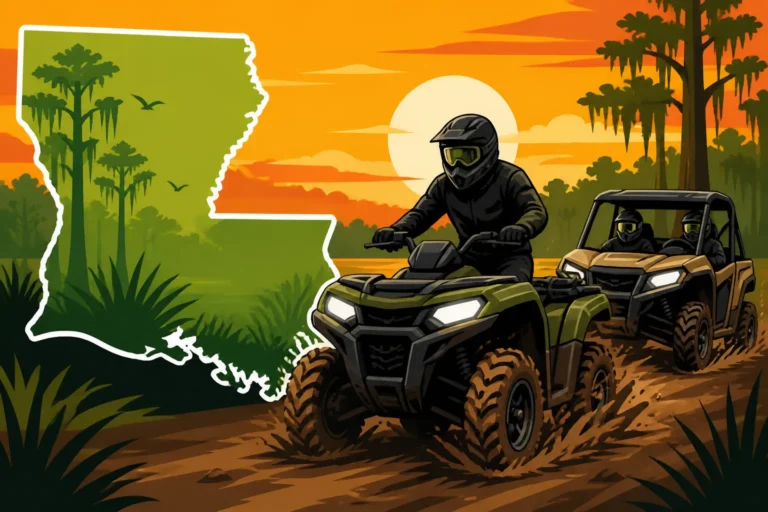
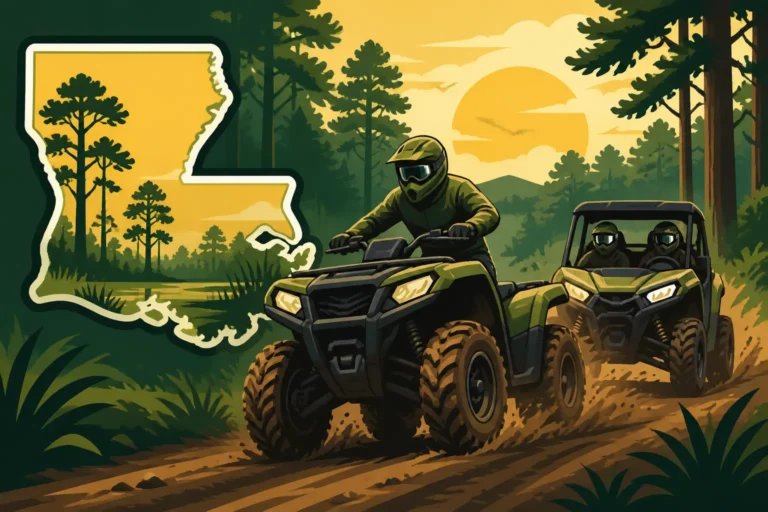
A winter ride in Louisiana can look inviting after a dry stretch, but Sandstone’s seasonal closure means an open-looking trail is not necessarily an open trail. This guide explains when motorized riding is restricted, why the closure matters, how to check conditions and access information, and how to plan a trip to the Kisatchie National Forest trail without arriving at a closed gate.
Understanding Sandstone’s winter closure
When the seasonal closure applies
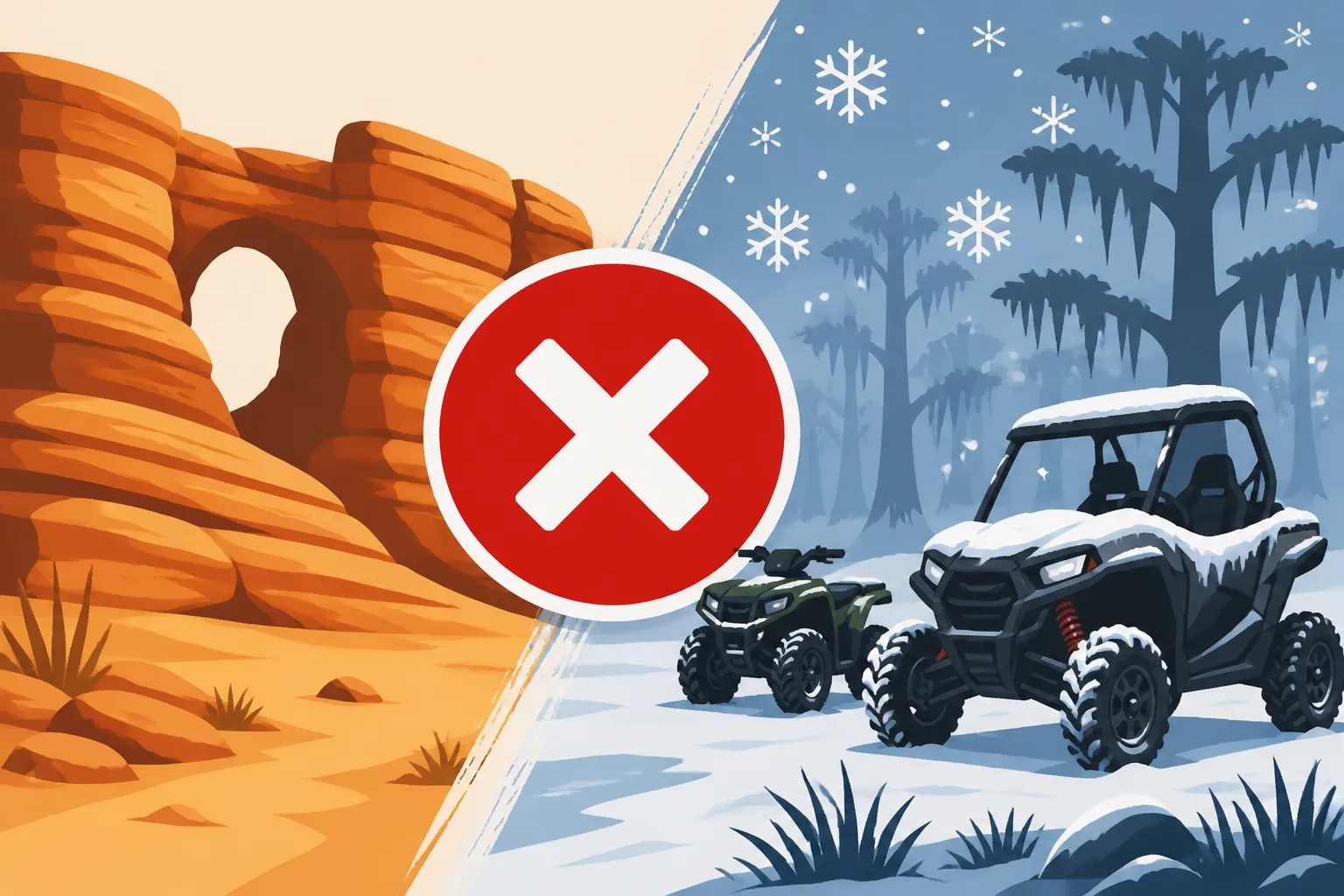
Sandstone’s motorized trail closure generally runs from January through April, with OHV access opening again on May 1. That means the restriction extends beyond the coldest part of winter and into spring. A sunny February afternoon or a pleasant April weekend does not change the seasonal schedule: motorized riding remains closed during that period.
It is easy to mix up “winter closure” with a rule that applies only when temperatures are low. At Sandstone, the calendar matters. Before planning a ride, check the relevant forest and trail information for the closure dates and any additional notices. The guide to [Sandstone Trail Closes to Motors January Through April] explains the seasonal window, while [Sandstone Trail Opens to OHVs on May 1] covers the typical reopening date.
If you’re coordinating with friends, make sure everyone understands that “we’ll see how the weather looks” is not a substitute for checking whether the trail is open to motorized use. A dry weekend during the closure is still a closed weekend for riding.
Why a trail may close when the weather seems fine
A trail can be vulnerable even when the day feels pleasant. Repeated use, wet ground, and runoff can combine to damage the trail surface. Tires can cut ruts into soft areas, push soil off the riding line, and widen muddy sections as riders try to get around obstacles. Once damage spreads, the trail may need more work to recover.
Seasonal closures help protect the riding area and reduce avoidable wear during a sensitive part of the year. The ground may dry unevenly, too: one section can feel firm while a shaded hollow or low spot remains saturated. A few vehicles passing through can leave damage that takes far longer to repair than the time it took to make.
The point isn’t that every day between January and April will be wet. It’s that trail managers set a clear seasonal boundary rather than asking riders to judge conditions one patch of ground at a time. Respecting that closure helps preserve the trail for the riding season ahead.
What “closed to motors” means for riders
A closure to motorized use means you should not take an ATV, UTV, dirt bike, or other motorized vehicle onto the affected trail during the restricted period. Don’t assume that a gate left open, a lack of visible signage at one entrance, or tracks in the dirt mean riding is allowed. Access conditions can vary by entrance, and signs may be easy to miss.
It’s also worth separating Sandstone’s seasonal motor restriction from rules for other types of access. The closure language and land-manager notices determine what activities are allowed; don’t assume that a route is available to a particular user just because motorized riding is restricted. If the permitted use is unclear, check the official trail or forest information before setting out.
For additional context on the route and its scale, see [Sandstone's 36 Miles in Louisiana]. Knowing how much trail is available is useful for planning, but it does not override a closure notice or guarantee that every segment is open on a particular day.
Planning a Sandstone visit around the closure
Choose a date using the official status, not just the calendar
The May 1 reopening is a useful planning marker, but it should not be treated as a promise that every section will be ready under every condition. Trail access can be affected by rain, maintenance, or other posted restrictions. Check the latest trail status before you load the machines, especially if you are traveling from outside the area.
A practical routine is to check once while choosing a weekend and again shortly before leaving. If you’re making a longer trip, check the status on the morning you depart as well. A quick update can save hours of towing, fuel, and disappointment if a closure or access change has been posted.
Use [Checking a Trail Status Page First] as a reminder to verify the route directly, and review [Louisiana Trail Closures and Seasons] for the broader pattern of seasonal access limits. A map can help you understand where a trail goes; it cannot, by itself, confirm that the route is currently open.
Build a backup plan before you leave home
A backup plan is especially helpful when you’ve booked a campsite, arranged a group ride, or are hauling a machine across the state. Pick another legal riding option that fits your group’s needs, and confirm that it is open and suitable for your vehicles before treating it as a fallback. A nearby trail or park may have different rules, fees, vehicle limits, or access conditions.
For example, a family traveling with a youth rider might need a lower-stress alternative than a group looking for a long, challenging day. Someone hauling a wide side-by-side should confirm that the alternative allows that vehicle. A replacement destination is only useful if it works for the people and machines you’re bringing.
Don’t let sunk costs push you into riding a closed route. If your Sandstone date falls during the closure, change the destination or reschedule. [Louisiana ATV Trails: Where to Ride] and [Best Louisiana ATV Trails for Beginners] can help you explore other possibilities, but verify the rules for any alternative before you go.
Account for the trip, not just the ride
A Sandstone trip involves more than choosing a trail date. Think about where you’ll unload, how you’ll get there, whether you need overnight accommodations, and what you’ll do if conditions change. The route may be in a forest setting where cell coverage is limited, so save important details before leaving service.
If you plan to camp, check whether the campground you have in mind is open and appropriate for your trip dates. Trail access and camping access are separate questions; an available campsite does not mean the motorized trail is open. Browse [Louisiana Trails With Camping] for trip-planning ideas, then confirm details with the relevant site or land manager.
Give yourself a clear decision point: if the trail status is closed, or if the official information is unclear, don’t unload and ride while you try to sort it out. Pause, contact the appropriate office if possible, or switch to your confirmed backup plan. That small bit of restraint can prevent a frustrating day from turning into a compliance problem.
Checking maps, conditions, and access details
Use maps to orient yourself, not to overrule a closure
A map can help you understand trail layout, nearby roads, and the distance between access points. It can also help your group agree on a meeting location before cell service becomes unreliable. But a route appearing on a map does not prove it is open, and a track shown in a mapping app does not replace current land-manager information.
Apps such as onX Offroad can be useful for reviewing mapped routes and orienting yourself before a trip. Treat the app as one planning tool, not the final authority on seasonal access. Compare what you see with official trail information, posted signs, and any closure notices before riding.
Download or save the information you’ll need in advance. [Louisiana ATV Trail Map Downloads] can point you toward mapping resources, while [Carrying a Paper Map in the Forest] is a good reminder that a phone battery, signal, or app may not be dependable for the entire outing.
Check for rain-related restrictions and trail damage
Even after seasonal access resumes, recent rain can affect whether a ride makes sense. A trail may technically be open but still be muddy, soft, or subject to a temporary notice. That distinction matters: legal access does not automatically mean good riding conditions, and it certainly does not make it wise to push through a vulnerable section.
Before you leave, look for condition reports or closure notices and consider the recent weather. If heavy rain has fallen, give the trail time to drain and check for an update rather than relying on how dry your driveway looks. Forest roads, shaded areas, and low spots can hold water long after exposed ground has dried.
Read [Louisiana Trail Conditions After Rain] for more on making that call. When you’re on an open trail, stay on the designated route rather than widening it to avoid mud. If a section looks too soft to cross without rutting or tearing it up, turn around where it is safe to do so.
Keep a reliable navigation option available
Forested areas can make it harder to judge direction, especially if your group takes a wrong turn or separates. Before the trip, note your planned access point, where you expect to park or unload, and a few recognizable landmarks. Share the plan with someone who isn’t riding with you, particularly if your group will be out for much of the day.
onX Offroad may help riders review routes in advance and keep location information accessible when planning a ride. Still, don’t rely on one phone or one app as your only navigation option. Save maps for offline use when available, carry a paper map, and make sure at least one other person in the group knows how to use both.
Agree on a simple regrouping plan before starting. If one machine has a mechanical issue or a rider misses a turn, the group should know where to stop and how to reconnect. A little preparation feels unnecessary on a familiar trail—until someone’s battery dies or the group reaches a junction without agreeing which way to go.
| Before the trip | What to check | Why it matters |
|---|---|---|
| Choose a date | Seasonal closure and posted trail status | The calendar and official notices determine whether motorized use is allowed |
| Confirm conditions | Rain, maintenance, and temporary restrictions | An open trail may still be soft or subject to a notice |
| Plan your route | Access point, parking, and mapped trail layout | Helps your group avoid confusion and wasted travel |
| Prepare navigation | Saved maps, a paper map, and a regrouping plan | Cell service and phone batteries may be unreliable |
| Arrange a backup | Another confirmed riding destination or a rescheduled date | Keeps a closure from becoming a costly, last-minute scramble |
Riding responsibly when Sandstone is open
Stay on the designated trail
When motorized access is open, ride only where that access is allowed. Cutting a new line around mud, following an unmarked track, or using a forest road because it looks connected can put you in a restricted area and damage vegetation or soil. If a route is unclear, stop and check your map or the relevant posted information instead of guessing.
This matters most when a trail is wet. Riders sometimes try to avoid a muddy spot by steering around its edge. That can create a wider damaged area, and the next rider may do the same thing. If a section is unsafe or too soft, turn around rather than creating a new bypass.
Keep the group together without crowding the rider ahead. Leave enough space to stop safely and to respond if someone gets stuck or encounters an obstacle. Responsible riding protects the trail and makes the day easier for everyone sharing it.
Prepare your machine and your group
Before leaving home, check basic items such as tires, brakes, lights, fuel, and recovery equipment. Carry tools suited to your machines, drinking water, and a first-aid kit. If your group is riding in mud or remote forest conditions, agree on who has a winch or recovery strap and how you’ll use it safely.
Set expectations for the group before you start. Decide how often to stop, what to do if someone has a problem, and whether riders should wait at junctions. A new rider may need more time than the most experienced person in the group, and a child or passenger may have different comfort and safety needs. A patient pace usually makes for a better day than trying to keep up with the fastest machine.
Check trail rules and vehicle suitability before unloading. Public riding areas may have limits or requirements that differ from private parks, and one set of rules should not be assumed to apply everywhere. If a machine is unfamiliar to the group, make sure its operator is comfortable with the controls before heading onto the trail.
Leave the area as you found it
Pack out food wrappers, broken straps, and anything else brought along. Don’t leave trash at a trailhead or campsite, and don’t disturb signs, gates, or trail markers. If you see damage or a possible hazard, report it through the appropriate channel rather than trying to make an unauthorized repair.
Noise and courtesy matter, too. Keep speeds appropriate for the trail, ease off near other visitors, and give people and animals room. If you encounter another group on a narrow section, slow down and communicate clearly. A friendly pause can prevent a close call and keep the trail enjoyable for riders and non-riders alike.
Think beyond your own outing. The condition of a popular route depends on how thousands of small decisions add up: whether riders respect closures, stay on the marked trail, and avoid forcing a machine through fragile ground. Following the seasonal restriction is one of the simplest ways to help keep Sandstone available for future rides.
Common questions about Sandstone’s winter closure
Can I ride Sandstone during the closure if the trail is dry?
No. Dry weather does not cancel a seasonal closure. If motorized riding is closed during the January-through-April period, wait until access reopens and check for any additional notices before you go. Visible tire tracks or an open-looking entrance are not permission to ride.
If you’re unsure whether the notice applies to your planned route or type of vehicle, verify the information with the appropriate land manager. Do not assume that an access rule for one user group or trail segment automatically applies to another.
Does May 1 guarantee the whole trail is ready?
May 1 is the typical seasonal reopening marker for OHV access, but you should still check current trail status and conditions before traveling. A separate closure, maintenance work, or weather-related issue can affect access. Confirm details close to your departure date, and keep a backup plan in case the route is not available.
It’s also useful to check how recent rain might have affected the trail, even if no closure is posted. Respecting a temporary notice and avoiding soft sections helps protect the route after the seasonal restriction ends.
What should I do if I arrive and find a closure notice?
Don’t ride past a closed gate or sign. Read the notice carefully, note the affected area and any posted instructions, and choose your confirmed alternative or reschedule. If you need clarification, contact the relevant office rather than relying on a guess or advice from another visitor.
When you change plans, let the rest of your group know before anyone unloads. That keeps the decision consistent and avoids pressure to “just take a quick look.” A closed trail is a clear reason to stop, regroup, and ride somewhere that is confirmed open.
Disclaimer
This article is for general informational purposes only and does not constitute professional advice. Laws, prices and regulations vary by location and change over time. Consult a qualified professional for guidance on your specific situation.