Dust on a Gravel Parish Road
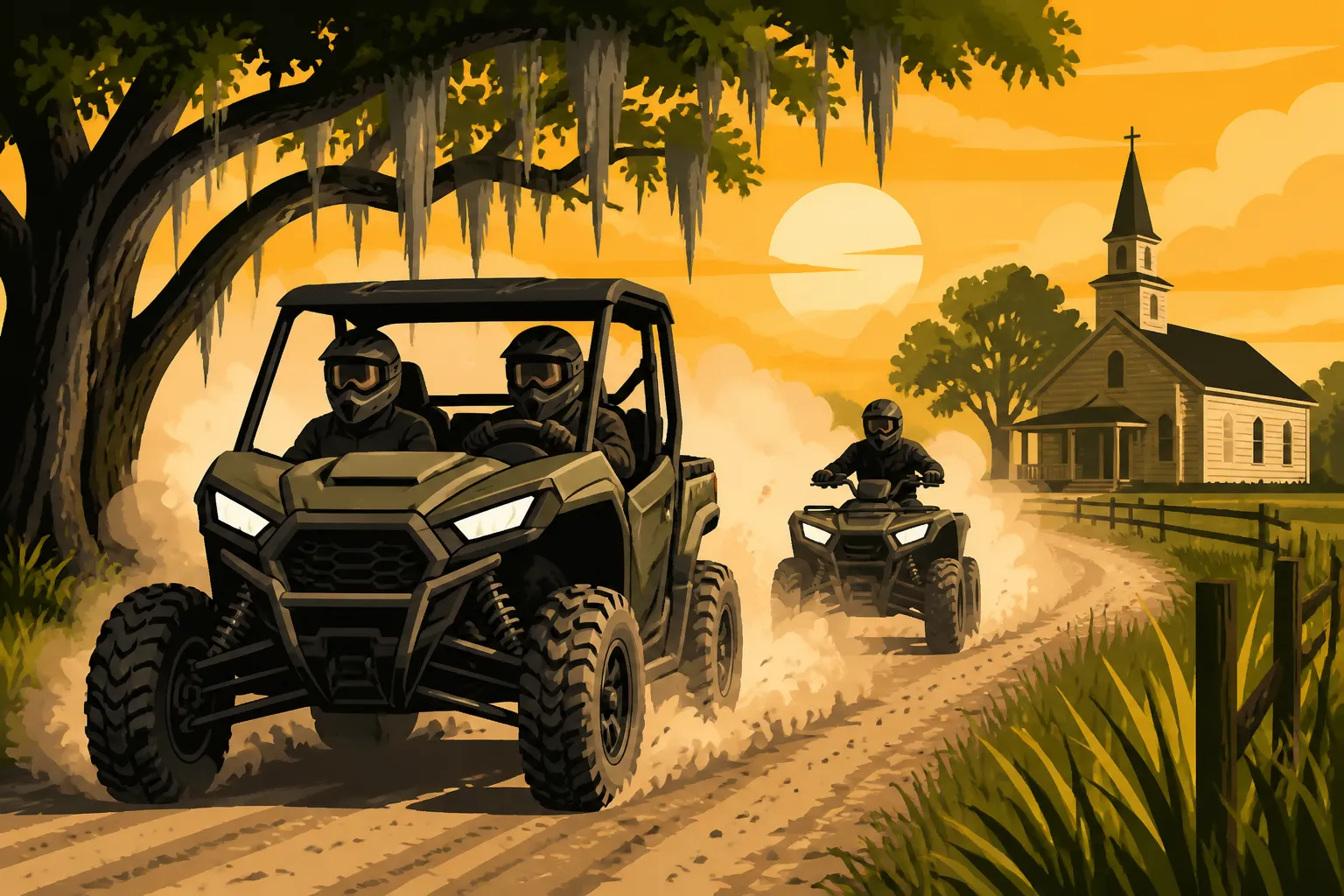
There's nothing quite like the feeling of hitting the open trail or a quiet parish road on your ATV or UTV, taking in the unique beauty of Louisiana. The sun on your face, the hum of the engine, the feeling of freedom – it's what we live for. But then, it happens: you hit a stretch of dry, unpaved road, and suddenly you're engulfed in a thick cloud of dust. It's not just annoying; it's a legitimate concern for visibility, your health, and frankly, for anyone else around you. This guide is all about tackling that pervasive problem of dust on Louisiana's gravel parish roads, offering practical advice, legal context, and neighborly wisdom to make your rides cleaner and safer for everyone.
Why Dust is Such a Big Deal on Louisiana Parish Roads
Let's be honest, dust isn't just a minor inconvenience when you're out riding your quad or side-by-side. Especially here in Louisiana, with our unique climate and the type of gravel roads that crisscross our rural parishes, dust can quickly escalate from an annoyance to a real hazard. It's a frustration many riders know all too well, and it's certainly something that residents living along these roads grapple with daily.
The Health and Safety Hazards of Dust
First and foremost, dust poses serious health and safety risks. When your tires kick up a massive cloud, it dramatically reduces visibility, not just for you but for any other vehicles, pedestrians, or even wildlife in the vicinity. Imagine cresting a small hill or rounding a bend on a dusty road and suddenly coming face-to-face with a slow-moving tractor or another ATV. That split second of impaired vision can be the difference between a close call and a serious accident. For us riders, it makes it incredibly difficult to see potholes, loose gravel, or other obstacles that could lead to a loss of control.
Beyond immediate safety, there are significant health implications. Prolonged exposure to airborne dust, especially the fine particulate matter, can irritate your respiratory system. We’re talking about everything from minor throat and eye irritation to more serious issues for individuals with asthma or other lung conditions. Breathing in that gritty cloud isn't just unpleasant; it can contribute to long-term health problems for frequent riders and those who live nearby. It's a silent pollutant that can sneak into your lungs and eyes without you even realizing the full extent of the damage until later.
Furthermore, dust can quickly clog air filters on your machine, leading to decreased performance and accelerated wear on your engine. Your ATV or UTV is an investment, and allowing it to suck in copious amounts of fine dust is like slowly grinding down its lifespan. The maintenance costs can add up if you're constantly having to clean or replace filters, not to mention the potential for more severe engine damage if the dust bypasses the filter entirely.
Environmental and Community Impact
The impact of excessive dust extends far beyond the immediate moment of your ride; it affects the entire community and the environment. Local residents whose homes line these gravel roads bear the brunt of it. Imagine trying to hang laundry out to dry, having a barbecue in your backyard, or simply opening a window on a beautiful day, only for it to be covered in a fresh layer of dust every time a vehicle, especially an off-road machine, passes by. It's an ongoing battle against grime, settling on their homes, vehicles, and gardens. This constant barrage can genuinely erode goodwill between riders and the communities they pass through.
Environmentally, dust can settle on vegetation, impacting plant health and growth. It can also contribute to localized air quality issues, especially in areas with frequent traffic or dry conditions. While it might seem minor on a per-vehicle basis, the cumulative effect of many machines stirring up dust over time can be quite significant. It’s a reminder that our recreation, while enjoyable, also carries a responsibility to be mindful of our surroundings and the people who call these areas home.
It's not uncommon for these consistent dust problems to lead to formal [Complaints That Reach a Parish Council]. Local residents have a right to enjoy their property without constant dust intrusion, and when this right is compromised, they often turn to local authorities for solutions. This can, in turn, lead to stricter regulations or increased scrutiny on how and where off-road vehicles are allowed to operate, which no rider wants to see happen.
Louisiana's Unique Conditions for Dust
Louisiana's climate and geography create specific challenges when it comes to dust. We experience long periods of heat and humidity, which might make you think dust wouldn't be as big a problem, but that's not always the case. After a rain, the roads can turn to thick mud, but once they dry out, the fine silty clay often found in our soil becomes a prime candidate for airborne particles. The consistent use of these roads by everything from logging trucks to passenger cars, and of course, ATVs and UTVs, keeps that dust churned up.
The composition of our gravel roads also plays a significant role. Many parish roads aren't paved with hard, compacted asphalt or concrete but are instead maintained with various grades of gravel, shell, or crushed limestone, often mixed with native soils. When these materials break down under traffic, they create a fine powder that is easily lifted into the air. Add to this the occasional drought conditions or just long stretches between significant rainfall, and you have a perfect recipe for dust clouds that hang in the air long after a vehicle has passed. The very materials that make up the rustic charm of our rural roads are also what make them such prolific dust producers.
Legal and Etiquette Considerations When Kicking Up Dust
Riding an ATV or UTV on a parish road in Louisiana comes with specific responsibilities, both legally and socially. While there might not be a direct "dust law" on the books, our actions, including the amount of dust we generate, can certainly fall under broader regulations and, more importantly, under the umbrella of common courtesy. Understanding these nuances is key to being a responsible rider and avoiding unnecessary trouble.
What Louisiana Law Says and Doesn't Say
Louisiana's statutes, particularly [Louisiana ATV Road Rules Under 32:299] and [Louisiana UTV Road Rules Under 32:299.3], primarily focus on where and how you can ride these machines on public roads, age requirements, licensing, and equipment. They address safety aspects like helmet use for ATVs, lighting, and turning signals for UTVs. What these laws generally don't explicitly state is a direct prohibition against creating excessive dust. However, that doesn't mean you're free to stir up a dust storm without consequence.
Consider this: reduced visibility due to dust could be interpreted as careless operation under general traffic laws. If a trooper or deputy observes you creating a dust cloud that severely impairs the vision of other drivers or creates a hazard, they could potentially issue a citation for reckless driving or even a general safety violation. Remember, [Louisiana Traffic Law Still Applies] to off-road vehicles when they are operating on designated public roads. Additionally, parishes and municipalities have the authority to enact their own local ordinances. It's always a good idea to perform [Louisiana Parish Ordinance Lookups] or [Louisiana Municipal Ordinance Lookups] for the specific area you plan to ride in, as some local governments might have general nuisance ordinances that could apply to dust, even if not specifically mentioning ATVs.
So, while there's no "dusting penalty" written word for word, your actions can certainly lead to legal issues if they create an unsafe environment. Furthermore, consistent dust complaints from residents to local law enforcement or the parish council can trigger increased patrols, stricter enforcement of existing rules, or even the implementation of new local ordinances that might restrict riding. The absence of a specific law doesn't equate to a free pass to disregard the impact of your riding.
Being a Good Neighbor on Rural Roads
Beyond legal obligations, there's the crucial aspect of being a good neighbor. Many rural parish roads are lined with homes, and the residents there have a right to peace, quiet, and a clean environment. Kicking up massive dust clouds not only impacts their property but can also affect their quality of life. Imagine if you lived on such a road and every time a machine passed, your windows rattled, and a layer of grit settled on everything. It quickly becomes an unbearable nuisance.
The core of being a good neighbor boils down to consideration and respect. When you see houses, slow down significantly. Reduce your speed to a crawl, even if the road appears empty, until you're well past the last dwelling. This simple act drastically reduces the amount of dust you generate. Think about how you'd want someone to drive past your own home. It’s about minimizing your footprint and showing that you're aware of your surroundings, not just focused on your own enjoyment. This mindful approach can go a long way in fostering positive relationships between riders and rural communities.
Maintaining a reasonable distance from other vehicles is also part of being a good neighbor and a safe rider. If you're riding in a group, spread out enough so that each rider isn't directly in the dust cloud of the rider in front of them. This improves visibility for everyone and reduces the cumulative dust impact on the environment. It's about collective responsibility and ensuring that our passion for riding doesn't become a burden for others.
Avoiding Complaints That Reach a Parish Council
As mentioned earlier, unchecked dust problems are a prime reason for citizens to reach out to local authorities. When repeated [Complaints That Reach a Parish Council] or local law enforcement escalate, it often leads to interventions that can impact all riders. These interventions might include more frequent [Louisiana Equipment Checks by Troopers], increased enforcement of existing laws like [Louisiana Penalties for Illegal Road Riding], or even discussions about further restricting ATV/UTV access on certain parish roads. No rider wants to see access curtailed simply because of preventable issues like dust.
The best way to avoid these scenarios is proactive self-regulation. By consciously reducing your speed, especially near homes, and being mindful of conditions, you contribute to a positive perception of off-road enthusiasts. Engaging with local communities, perhaps even participating in local road cleanup days or community events, can help build bridges. When residents see riders as responsible members of the community rather than just a source of noise and dust, they are less likely to complain and more likely to advocate for continued access. It's about demonstrating that we respect the privilege of riding on [Louisiana Rules for Riding a Parish Road].
It’s also helpful to always have your proper documentation readily available, like proof of ownership or any necessary permits. While not directly related to dust, demonstrating overall compliance and responsibility helps in any interaction with law enforcement or community members, should questions arise. Being prepared to explain where you're going and that you're following rules, such as carrying your papers as outlined in [Carrying Papers on a Parish Road], can defuse potential tension.
Practical Strategies for Managing Dust While Riding
Dealing with dust effectively requires a two-pronged approach: what you can do as a rider, and what you can do to your machine. It’s about being prepared and taking steps to minimize your personal exposure and the amount of dust you generate.
Rider-Focused Dust Mitigation
For riders, personal protective equipment (PPE) is your first line of defense against dust. A good quality full-face helmet with a sealed visor is paramount. Not only does it protect you in case of an impact, but it also keeps a significant amount of dust out of your eyes and off your face. Pair this with a comfortable pair of goggles if your helmet doesn't have a full visor, ensuring they seal well around your eyes to prevent fine particles from seeping in. There are many options available, from basic models to high-end anti-fog designs.
Beyond eye protection, consider a dust mask or bandana to cover your nose and mouth. This is especially crucial for preventing respiratory irritation. Specialized dust masks designed for off-road riding offer better filtration than a simple bandana and can make a huge difference in how you feel after a dusty ride. Some riders even opt for balaclavas that cover the entire head and neck, offering both sun protection and an additional barrier against airborne particles. Staying hydrated is also important, as it helps your body cope with dry air and potential irritation.
Choosing the right clothing also plays a small but significant role. Loose, breathable long-sleeve shirts and pants can help protect your skin from sun exposure and provide a minor barrier against dust settling directly on you. While you can't stop dust from getting on your clothes, wearing layers you can easily shed and shake off after a ride can make cleanup easier and prevent tracking excessive dust into your vehicle or home.
Machine-Focused Dust Control
Modifying your ATV or UTV can significantly reduce the amount of dust that reaches you and your passengers. For UTVs, adding a full windshield is one of the most effective measures. It creates a barrier that deflects the direct blast of dust and debris coming from the front. However, a windshield alone isn't enough; you'll also want to consider a rear panel or window. Without it, the vacuum effect created by the windshield can actually suck dust into the cab from the rear. Many riders also add side doors or full cab enclosures to create a more sealed environment, further reducing dust intrusion.
Companies like SuperATV offer a vast array of aftermarket accessories specifically designed for dust control. From full scratch-resistant Lexan windshields and rear panels to complete cab enclosures with soft or hard doors, they provide solutions for almost every make and model. Investing in these types of accessories can transform a dusty ride into a much more comfortable experience, letting you enjoy the scenery without constantly wiping your eyes or spitting out grit. They also offer fender extensions or mud flaps which, while primarily designed for mud, can also help contain some of the dust and debris thrown up by your own tires.
| Dust Mitigation Strategy | Rider Impact | Machine Impact | Key Accessories / Habits |
|---|---|---|---|
| Personal Protection | High (direct) | Low | Full-face helmet, goggles, dust mask/balaclava |
| Speed Reduction | Medium | Low | Conscious riding habit, particularly near homes |
| Windshields/Cab | High (direct) | Low | Full windshield, rear panel, side doors, full enclosure (e.g., from SuperATV) |
| Fender Extensions | Medium | Low | Mud flaps, wider fenders |
| Following Distance | High (indirect) | Low | Group riding etiquette |
| Road Dust Suppressants | High (indirect) | Low | Local parish initiatives (not rider responsibility) |
Best Riding Practices for Dust Reduction
Ultimately, how you ride has the biggest impact on dust generation. The most effective method is simply reducing your speed. The faster you go on a dry, unpaved road, the more aggressively your tires churn up dust. Slowing down, particularly near homes, other riders, or intersections, makes a noticeable difference. It’s a simple act that costs nothing but yields huge benefits in terms of comfort, safety, and community relations. It also gives you more time to react to unexpected obstacles or conditions, improving overall safety.
When riding in a group, maintain adequate following distances. Riding too close behind another machine means you're constantly enveloped in their dust cloud, impacting your visibility and respiratory health. Spreading out not only reduces this direct exposure but also allows the dust to settle more between machines, minimizing the overall effect on the trail or road. This practice is also crucial for safety, giving each rider enough space to brake or maneuver without colliding with the machine in front.
Consider the time of day and recent weather. Riding shortly after a rain will mean less dust, though you might encounter mud. Conversely, riding on a hot, dry, windy afternoon will produce the most dust. While you can't always pick your perfect riding conditions, being aware can help you prepare. If you know it's going to be a dusty day, double-check your PPE, ensure your UTV has its rear panel installed, and commit to lower speeds. By combining good personal protection, thoughtful machine modifications from reliable brands like SuperATV, and responsible riding habits, you can significantly mitigate the frustration of dust on those beautiful Louisiana gravel roads.
Road Maintenance and Community Solutions for Dust
While riders can do a lot to mitigate the dust they kick up, the responsibility for managing dust on public roads ultimately falls to local authorities. Parish councils and road departments often employ various strategies to keep dust at bay, and understanding these can help both riders and residents advocate for better conditions.
Common Dust Suppressants and Their Effectiveness
Parish road departments often use various methods to suppress dust on gravel roads. The most basic and temporary solution is simply watering the roads. A water truck will spray the surface, temporarily binding the dust particles. However, this is a short-lived fix, especially in hot, dry weather, and requires frequent reapplication, which can be costly and resource-intensive. It's often reserved for construction sites or areas with very high foot traffic rather than miles of rural roads.
More long-lasting solutions involve chemical dust suppressants. Calcium chloride is a popular choice due to its hygroscopic properties, meaning it absorbs moisture from the air and keeps the road surface damp. This helps bind the fine dust particles together, preventing them from becoming airborne. Other options include magnesium chloride or lignin sulfonate, a byproduct of the papermaking industry. These chemicals can be quite effective, often lasting for weeks or months, depending on traffic volume and weather conditions. However, they come with their own considerations, including cost, potential environmental impact, and the need for specialized application equipment.
The effectiveness of any dust suppressant depends heavily on the type of road material, traffic volume, and weather. A road primarily composed of fine silty clay might respond differently than one with more crushed stone. Frequent heavy truck traffic will wear down any application faster, requiring more frequent treatments. The goal for parish road crews is to find the most cost-effective and environmentally responsible solution that provides reasonable dust control for the community.
How Parish Councils Address Dust Concerns
When residents voice [Complaints That Reach a Parish Council] regarding dust, these concerns are typically reviewed by the council or the relevant public works department. The process often involves assessing the severity of the problem, identifying the specific roads affected, and evaluating potential solutions within the parish's budget and resources. Parish councils have a responsibility to maintain public infrastructure and address quality of life issues for their constituents.
Responses can range from increased watering schedules in problem areas to budgeting for chemical dust suppressant applications. Some parishes might opt for more long-term solutions, such as paving particularly problematic stretches of gravel road, though this is a much more expensive undertaking. The decision-making process usually involves balancing the cost of dust control measures against the number of complaints, traffic volume, and available funds. It’s not an overnight fix, and it often involves public hearings or discussions to gather community input.
It's also worth noting that some parish roads might be designated for specific types of use, or have unique rules. For instance, [Louisiana Signage on a Designated Road] might indicate specific speed limits or restrictions that indirectly help manage dust by controlling traffic flow and speed. Ultimately, the council's response aims to strike a balance between allowing public access and ensuring resident comfort and safety.
Advocating for Better Road Conditions
Both riders and residents have a voice in advocating for better road conditions. If you're a resident impacted by dust, reaching out to your parish council member or attending public works meetings can be an effective way to highlight the issue. Providing specific examples of the impact on your property or health can strengthen your case. Often, a collective voice from multiple residents holds more weight than individual complaints.
For ATV and UTV riders, this means engaging positively with local government and demonstrating responsible riding. When riders are seen as part of the solution rather than just the cause of the problem, they are more likely to be heard. Consider forming or joining local ATV/UTV clubs that can formally present concerns and offer solutions to parish councils. Perhaps your club could volunteer for road cleanup days, or even help educate other riders on best practices for dust reduction. Demonstrating a commitment to the community can open doors for dialogue about road improvements, including dust control.
Ultimately, maintaining passable and dust-controlled gravel roads is a shared interest. By understanding the challenges, practicing good etiquette, utilizing protective gear and machine modifications (like those from SuperATV), and actively engaging with local authorities, we can all contribute to a better, cleaner riding experience on Louisiana's beautiful parish roads.
Disclaimer
This article is for general informational purposes only and does not constitute professional advice. Laws, prices and regulations vary by location and change over time. Consult a qualified professional for guidance on your specific situation.