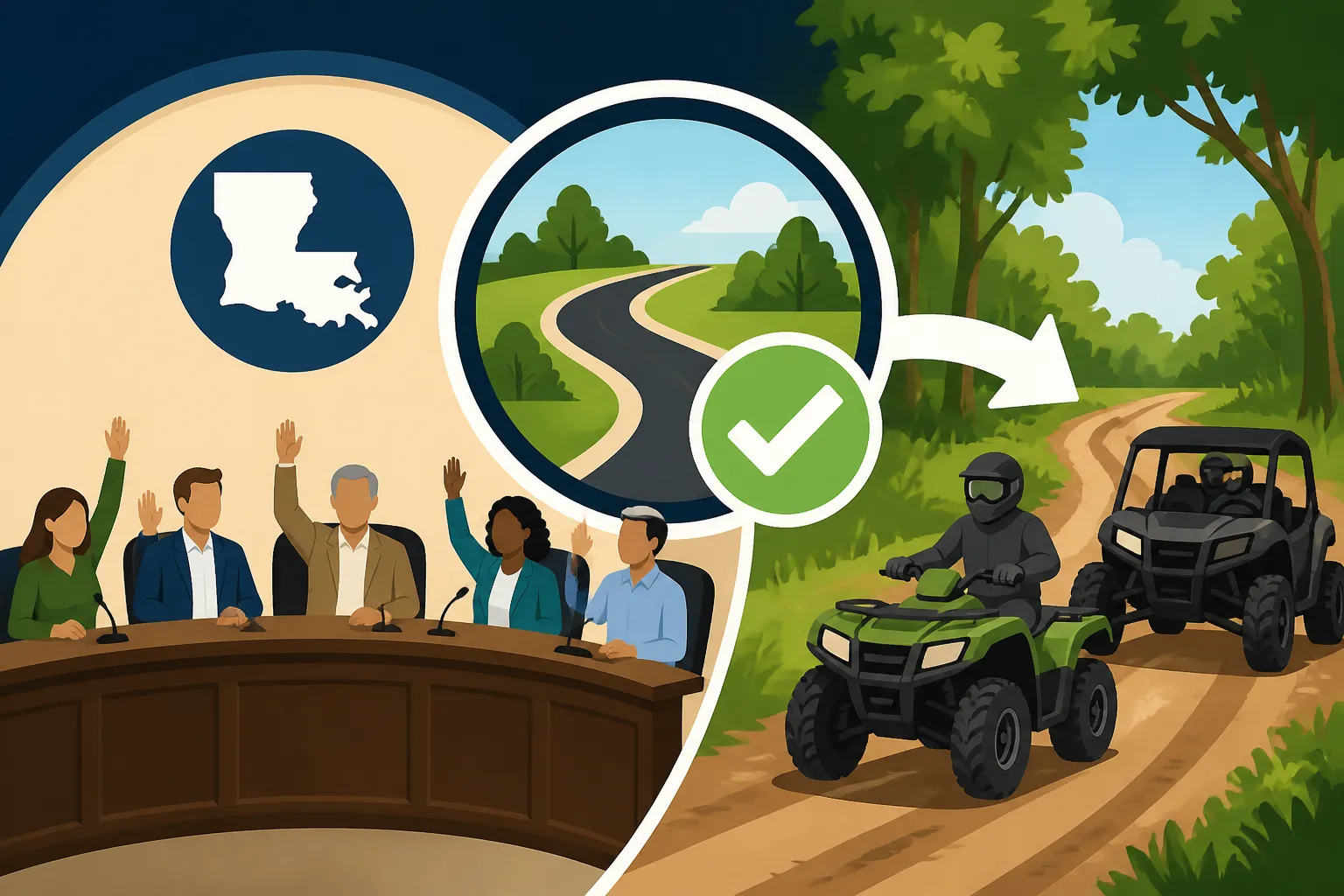
How a Parish Council Votes to Designate a Road
It's incredibly frustrating when you invest in a UTV, eager to use it for everything from hauling feed on your property to quick trips down a quiet parish road to visit a neighbor, only to be met with a wall of confusion about what's actually legal. The rules for riding off-road machines on public roads in Louisiana can feel like a tangled mess of "can I?" and "can't I?", leaving many riders hesitant or even inadvertently breaking the law. This guide is here to untangle that knot, specifically focusing on how your local parish council can, and often does, make certain roads street-legal for UTVs, giving you a clear path forward and helping you understand the process from advocacy to enforcement.
The Road Ahead: Understanding Louisiana's UTV Statutes
For years, many of us in Louisiana who love our UTVs felt like we were navigating a legal minefield when it came to public roads. The state legislature, recognizing the growing popularity and utility of these machines, eventually stepped in to provide a framework. But here's the kicker: while the state law set the stage, it largely put the power in the hands of our local parish governments to decide where and how UTVs could actually be ridden on parish roads. This means that while there's a statewide allowance, the real permission slip often comes from your local parish council. It's a system that can feel a bit fragmented, depending on whether you're in a parish that has embraced UTV use or one that's still on the fence.
Why Parish-Level Designation Matters So Much for UTV Owners
Imagine this: you live in a rural area, and your UTV is a workhorse. It hauls tools, checks fences, and helps with chores. But that convenient two-mile stretch of parish road separating your property from a friend's farm or the nearest feed store is technically off-limits. That's where parish-level designation becomes a game-changer. It’s the difference between having to trailer your machine for short distances or being able to hop on and go, much like you would in a pickup truck, albeit with specific restrictions. The state legislature laid the groundwork, saying, "Yes, UTVs can be on public roads under certain conditions," but it's the parish council that fills in the blanks, deciding which roads, under what circumstances, are given the green light. Without that local designation, even if your machine meets all the equipment requirements, it simply isn't legal on those roads. This local control means that [Louisiana UTV Street Legal Rules by Parish] can vary dramatically, which is why understanding your parish's specific process is paramount.
The State Law That Paved the Way for Local Action
Before we dive into how a parish council acts, it's crucial to understand the foundation they're building upon. The ability for parishes to designate roads didn't just appear out of nowhere. It came from specific state legislation. Initially, [Louisiana's 2015 UTV Statute] was enacted, creating a pathway for UTVs to operate on certain public roadways. This was a monumental shift, acknowledging the role these machines play in our rural and recreational lives. Later, further refinements and clarifications were made through [Louisiana's 2022 UTV Amendment], which helped solidify the regulations and responsibilities for both riders and local governments. These state laws outline the general requirements for UTVs to be considered "street legal," such as having working headlights, taillights, brake lights, a horn, a rearview mirror, and often, specific tire and width restrictions. They also typically specify age requirements for drivers, often demanding that [Louisiana UTV Drivers to Be 21] and possess a valid Class E driver's license. But even with these statewide equipment and driver stipulations, the actual act of opening up specific roads to UTV traffic rests squarely with the parish council.
Navigating the Parish Council: A Step-by-Step Guide to Designation
So, you’re convinced your parish needs designated UTV roads. Great! But how do you actually make that happen? It’s not about just showing up at a council meeting and making a plea; it’s a process that requires preparation, persistence, and an understanding of local government. This journey can feel daunting, but breaking it down into manageable steps makes it much clearer.
Initial Advocacy and Building Community Engagement
Before any formal vote happens, the seed of an idea needs to be planted and nurtured. This is where community engagement truly shines.
- Gathering Your Allies: Start by talking to your neighbors, fellow riders, farmers, and anyone else who would benefit from UTV road access. Find out who shares your frustration and vision. A single voice can be ignored, but a chorus is harder to dismiss.
- Contacting Your Council Members: Reach out to your parish council representatives directly. Many people forget that these individuals are elected to serve you. Schedule a meeting, send an email, or call their office. Explain why this is important to your community. Highlight the practical uses of UTVs for agriculture, access to hunting camps, local commerce, or simply for safe, recreational travel within designated areas. Emphasize safety and the economic benefits for local businesses like hardware stores or gas stations that would see increased traffic from UTV users. You might even compile a list of local businesses that could benefit or offer support.
- Presenting Your Case with Data: While anecdotal stories are powerful, hard data can be even more persuasive. Can you show how many UTV owners reside in the parish? Are there specific areas where designated roads would significantly improve safety by getting UTVs off busier highways? Perhaps you can point to neighboring parishes that have successfully designated roads and haven't seen a spike in accidents. Companies like SuperATV, for instance, have a wealth of information on UTV accessories and modifications that improve safety and compliance, which you can use to show that riders are serious about safe operation. Show them that riders are willing to equip their machines properly.
- Drafting a Petition: A well-organized petition, clearly stating the request for UTV road designation and signed by a significant number of parish residents, can demonstrate broad community support. This isn’t just a piece of paper; it’s a tangible representation of your collective voice.
Drafting the Ordinance: The Legal Nuts and Bolts
Once you’ve got some momentum and initial interest from council members, the conversation will shift to drafting the actual ordinance. This is where the legal language comes into play, and it’s critical to get it right.
- Working with the Parish Attorney: Typically, a parish council will rely on its legal counsel – the parish attorney – to draft the specific wording of an ordinance. This ensures it complies with state law (like [Louisiana UTV Road Rules Under 32:299.3]), doesn't conflict with existing local regulations, and is legally sound. You can contribute by providing input on what you believe the ordinance should cover, such as specific roads or areas you want included.
- Key Elements of a UTV Ordinance: A good ordinance will clearly define:
- Designated Roads: Which specific parish roads or sections of roads are open to UTVs. This might be a list of road names or a geographic area.
- Hours of Operation: Often, UTV use might be restricted to daylight hours or specific times.
- Speed Limits: UTVs typically have lower speed limits than cars on designated roads.
- Equipment Requirements: Reiterate the state's requirements for lights, mirrors, brakes, horn, and potentially add local stipulations. This is where aftermarket parts from providers like SuperATV can be vital, ensuring your machine meets or exceeds these standards for safe road use.
- Driver Requirements: Age, license type (e.g., [What a Class E License Lets You Do]), and proof of insurance (e.g., [Louisiana Insurance Proof on Demand]).
- Penalties for Non-Compliance: What happens if someone breaks the rules?
- Review and Refinement: The draft ordinance will likely go through several rounds of review and revision before it’s ready for a vote. Stay engaged in this process, offering feedback and ensuring that the final language truly serves the community’s needs while adhering to safety and legal standards.
Public Hearings and Council Voting: Making Your Voice Heard
This is often the most visible and nerve-wracking part of the process – the public forum where decisions are made.
- Public Hearings: Your Opportunity to Speak: Before a final vote, parish councils are usually required to hold one or more public hearings. This is your chance, and the chance of your supporters, to formally address the council.
- Prepare Your Statement: Keep it concise, respectful, and focused. Reiterate the benefits, address potential concerns, and show strong community support. Practice what you’ll say.
- Show Up in Numbers: The visual impact of a room full of UTV enthusiasts and concerned citizens speaks volumes. It shows the council that this issue matters to a significant portion of their constituents.
- Listen to Concerns: Be prepared to hear opposition. Traffic safety, noise, and environmental impact are common worries. Having thoughtful, well-researched responses can go a long way.
- The Council Vote: After the public hearings, the ordinance will be put to a vote. This is where all the hard work of advocacy and engagement comes to fruition. A majority vote is typically required for the ordinance to pass.
- Official Enactment: Once passed, the ordinance becomes law in that parish. It will specify when it goes into effect.
Signs, Enforcement, and Rider Responsibilities
Passing the ordinance is a huge step, but it's not the end of the journey. For the designation to be effective and safe, there are subsequent steps and ongoing responsibilities.
- Posting Signage: The state law generally requires that parishes actually designate and sign the roads. [Louisiana Parishes Must Designate and Sign Roads] makes it clear: if a road isn't properly marked with official signage indicating UTV access, it's likely still off-limits. These signs inform both UTV riders and other motorists about the designated status of the road. Without [Louisiana Signage on a Designated Road], riders are often left guessing, which can lead to confusion and potential legal trouble.
- Enforcement by Law Enforcement: Once roads are designated, local law enforcement (parish deputies, state troopers) will be responsible for enforcing the ordinance. This means riders must adhere to all stated rules: speed limits, hours of operation, and having all required safety equipment. [Louisiana Equipment Checks by Troopers] are a real possibility, so always ensure your UTV is compliant.
- Your Responsibilities as a Rider: This is critical. Just because a road is designated doesn't mean it's a free-for-all.
- Know the Rules: Read and understand the specific parish ordinance. Don't assume.
- Equip Your Machine: Ensure your UTV meets all the requirements for road use, both state and local. This includes proper lighting, mirrors, and, importantly, [Louisiana UTV Insurance Minimums]. Many riders turn to reputable brands like SuperATV for high-quality accessories that help them meet these requirements, from LED light bars to mirrors and turn signal kits.
- Obey Traffic Laws: UTVs on designated roads are subject to the same traffic laws as cars. This includes obeying stop signs, speed limits, and yielding the right of way.
- Carry Required Documentation: Always have your driver's license, proof of insurance, and any other required documents with you when riding on public roads. [Louisiana Insurance Proof on Demand] is a thing, and it's best to be prepared.
- Be a Responsible Ambassador: Every time you ride responsibly on a designated road, you're helping to build a positive reputation for UTV riders. Reckless behavior, on the other hand, can lead to stricter regulations or even the repeal of existing ordinances, which would be a huge setback for the entire community.
Navigating Challenges and Ensuring Long-Term Success
The path to UTV road designation isn't always smooth. There can be bumps and detours, and even after an ordinance is passed, ongoing vigilance and cooperation are essential.
Overcoming Opposition and Addressing Concerns
It's common for local initiatives like this to face opposition. Concerns often revolve around:
- Safety: Other motorists or residents might worry about UTVs on public roads, fearing accidents or unsafe driving.
- How to Address It: Emphasize the safety equipment required, the lower speed limits, and the age and license requirements for drivers. Highlight the responsible driving habits of the majority of UTV owners. Perhaps even propose a local UTV safety course.
- Noise: Concerns about engine noise can be a factor, especially in residential areas.
- How to Address It: Point to existing noise ordinances that UTVs would still need to follow. Many modern UTVs are much quieter than older models, especially when driven responsibly at lower speeds.
- Environmental Impact: While less common for road designation, some might raise environmental concerns.
- How to Address It: Reiterate that this is for designated paved or gravel roads, not for off-roading in sensitive areas. The goal is regulated access, not uncontrolled riding.
- Lack of Understanding: Sometimes, opposition simply stems from a lack of familiarity with UTVs and their legitimate uses.
- How to Address It: Education is key. Share information, invite council members to see UTVs in action (safely, of course), and explain how they're used by farmers, hunters, and landowners.
Sustaining the Program and Planning for Future Amendments
An ordinance isn't set in stone. As community needs evolve or unforeseen issues arise, the parish council might revisit the rules.
- Monitoring and Feedback: After designation, it's wise for the UTV community to continue monitoring how the ordinance is working. Are there specific roads that are proving problematic? Are there others that should be added? Gather feedback from riders and residents.
- Working with Law Enforcement: Maintain an open line of communication with local law enforcement. Their experience on the ground can provide valuable insights into what's working well and what might need adjustment.
- Proposing Amendments: If changes are needed, you might need to go through a similar advocacy process to propose amendments to the existing ordinance. This could involve adding new roads, adjusting speed limits, or clarifying specific rules. This ongoing dialogue ensures the ordinance remains effective and fair.
Understanding Local Nuances and Special Restrictions
It’s crucial to remember that Louisiana is a diverse state, and what applies in one parish might not apply in another.
- Parish-Specific Ordinances: Always, always check your specific parish's ordinances. What's legal in Webster Parish might be completely different in Rapides Parish. [Louisiana Parish Ordinance Lookups] are an invaluable tool for this. Don't rely on what a friend in another parish tells you.
- Orleans Parish Exemption: One significant nuance to be aware of is that [Orleans Parish Is Exempt From Louisiana's ATV Statute] entirely. This means the state law allowing for parish designation doesn't apply there at all, and UTVs simply cannot be made street-legal in Orleans Parish through this mechanism. This highlights the importance of checking the specific rules for your location.
- Road Types: Even within a designated parish, the ordinance might specify particular types of roads (e.g., secondary roads, gravel roads, roads below a certain speed limit) rather than all parish roads. Make sure you understand these distinctions.
By understanding the process, engaging with your community and local government, and committing to responsible riding, you can play a crucial role in expanding safe and legal access for UTVs on Louisiana's parish roads. It takes effort, but the payoff of being able to legally and safely operate your UTV on those important local routes is definitely worth it.
Disclaimer
This article is for general informational purposes only and does not constitute professional advice. Laws, prices and regulations vary by location and change over time. Consult a qualified professional for guidance on your specific situation.