Louisiana Rules for a Visiting Arkansas Rider
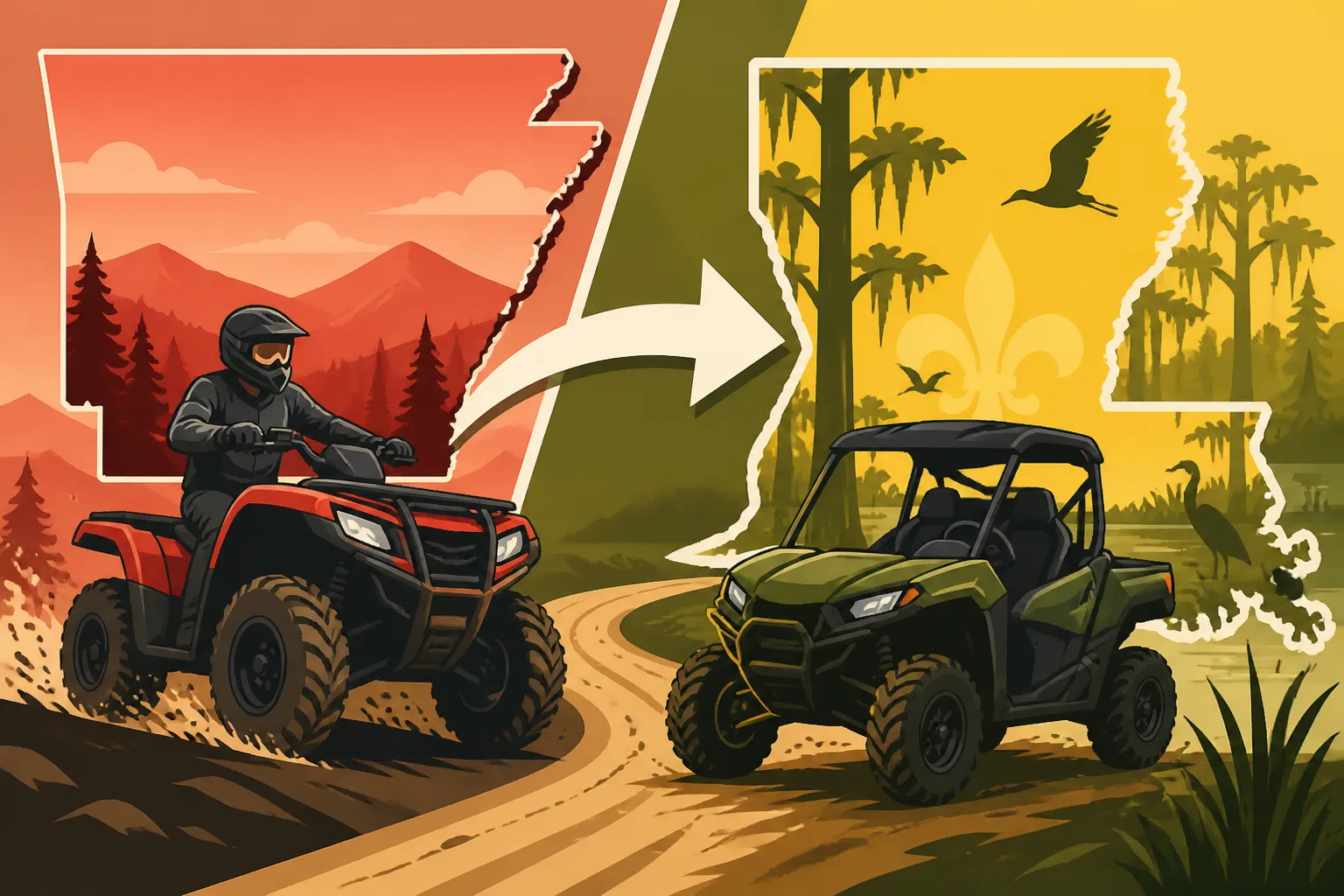
Hey fellow off-road enthusiasts! Planning a trip from Arkansas to Louisiana with your trusty ATV or UTV? That's awesome! There’s nothing quite like exploring the bayous, timberlands, or mud parks of the Pelican State. But let's be real: navigating different state laws can be a real headache. What’s perfectly legal back home in Arkansas might land you a ticket here in Louisiana. This guide is going to walk you through exactly what an Arkansas rider needs to know to stay on the right side of the law, ensuring your Louisiana adventure is filled with good times, not legal woes.
Understanding Louisiana's Core Road Rules for ATVs and UTVs
When you cross the state line into Louisiana, it’s like entering a whole new rulebook, especially when it comes to riding your off-road machine on public roads. Arkansas might have certain allowances, but Louisiana's approach is generally much more restrictive. It’s not about being difficult; it’s about safety and maintaining clear distinctions between dedicated off-road fun and public transportation. Getting this straight from the start will save you a lot of grief.
The Fundamental "Off-Road Only" Principle
The bedrock principle in Louisiana is that ATVs and UTVs are designed for off-road use and should generally stay off public roads. This isn't just a suggestion; it's enshrined in state law. Unlike some states where a quick hop onto a paved road might be overlooked, Louisiana takes this seriously. Think of your quad or side-by-side as a specialized tool for trails, fields, and private property, not a substitute for a car or truck on the highway. This means no cruising down the main drag of a small town, no shortcuts on state routes, and definitely no interstates. Even if you've got your machine kitted out with street-legal accessories like mirrors and turn signals – perhaps even with some robust aftermarket parts from a brand like SuperATV – it doesn't automatically make it legal for public roads here. The state law simply doesn't recognize them as road-worthy vehicles in most contexts. [Louisiana ATV Road Rules Under 32:299] lays out the specifics for ATVs, while [Louisiana UTV Road Rules Under 32:299.3] addresses side-by-sides. Understanding this core principle is the first and most important step for any visiting rider.
The Limited Exceptions for Road Use (Farm Use & Designated Roads)
While the general rule is "off-road only," Louisiana does carve out a couple of very specific exceptions. These aren't loopholes to exploit, but rather narrow allowances designed for practical purposes, primarily within the agricultural community.
One significant exception is for agricultural purposes. If you're using your ATV or UTV for farming operations, you might be able to ride it on the shoulder of a public road, but only for a very limited distance – typically within a [Louisiana's 5-Mile Farm Radius] of the farm. This isn't a pass to joyride; it's strictly for farm-related tasks like moving between fields or checking livestock. You’ll need to carry an affidavit proving its farm-only use, and even then, you're restricted to the shoulder and specific times of day.
The other exception, particularly for UTVs, involves parish and municipal designation. Local governing bodies (parishes or cities) have the authority to designate certain roads or streets as permissible for UTV use. This is entirely up to them, and they are required to put up clear signage indicating these designated areas. This means what's legal in one parish or town might be strictly prohibited just across the line. You absolutely cannot assume that because you saw a UTV on a road in one place, it's okay everywhere else. [Louisiana Parish Ordinance Lookups] are your best friend here; you need to do your homework before you ever unload your machine. These designated roads are very much the exception, not the rule, and they come with their own set of rules, including age restrictions for drivers and mandatory insurance.
Equipment Requirements Even on the Shoulder
Even when you're operating under one of Louisiana's narrow exceptions for road use, your machine isn't exempt from basic safety and equipment requirements. If you're riding the shoulder for farm use, for instance, you'll still need appropriate lighting, especially if there's any chance you'll be out at dawn or dusk. This might include headlights, taillights, and even turn signals, depending on the specific local ordinance or the time of day. While Louisiana doesn't generally require specialized street-legal conversion kits for off-road machines, common sense, and local rules will dictate what's necessary to be visible and safe. Beyond the basics, consider adding reflective tape or a bright flag, particularly if your machine is a darker color or if you're frequently sharing roads with larger agricultural equipment or fast-moving traffic. These aren't just recommendations; they’re often unspoken expectations for safe operation, and a state trooper or local deputy will be looking for them if you're on a public thoroughfare.
What Changes (and Doesn't) for an Arkansas Rider in Louisiana
Bringing your machine from out of state adds another layer of complexity. You might be perfectly compliant with Arkansas's laws, but Louisiana has its own set of administrative requirements. This section will clarify what you need to consider regarding your home state's paperwork and how it translates (or doesn't) into Louisiana's regulatory framework. The main takeaway is that while your Arkansas title and registration are recognized for ownership, they don't give you a free pass on Louisiana's strict road use rules.
Decals and Titles: Your Home State Paperwork
First off, let's talk paperwork. Your Arkansas title and registration are valid documents of ownership, and Louisiana recognizes them. You won't need to get a Louisiana title or registration just to bring your machine into the state for recreational riding on private land or designated trails. Your Arkansas license plate (if applicable) and title prove you own the machine, which is crucial if you ever run into a situation where ownership needs to be verified.
However, Louisiana does have its own ORV decal system. This decal is primarily for identification and funding off-road programs, and it's generally required for ATVs and UTVs used on state-managed lands, like parts of the Kisatchie National Forest or certain wildlife management areas (WMAs). The good news for visiting riders is that [Louisiana Rules for an Out-of-State Machine] typically allow out-of-state decals to be recognized, provided your home state has a similar reciprocal agreement. It's always a good idea to double-check this before you arrive, but generally, if your machine is properly registered and decaled in Arkansas, you're usually covered for off-road use in Louisiana's public riding areas. Just remember, this decal does not grant you permission to ride on public roads.
Driver's License and Age Requirements Across State Lines
This is a big one, especially for UTVs. In Louisiana, if you're operating a UTV on any road designated for their use, the driver generally needs to be at least 21 years old and possess a valid Class E (standard car) driver's license. [Louisiana Requires UTV Drivers to Be 21] is a non-negotiable rule. While Arkansas might have different age requirements for UTV operation, once you're on a public road in Louisiana, you're subject to Louisiana law. For ATVs, the state's statutes prohibit anyone under 16 from operating an ATV on a public road. This means if you have a younger rider in your group who's used to driving their UTV or ATV on rural Arkansas roads, they might be breaking the law if they do the same in Louisiana, even on an approved shoulder. Always make sure the driver meets Louisiana's age and licensing requirements if you plan to utilize any of the limited road-use exceptions. This is one area where SuperATV's focus on accessories for adult riders aligns with Louisiana's regulations.
The Burden of Knowing Local Ordinances
As mentioned, Louisiana allows parishes and municipalities to designate roads for UTV use. This creates a patchwork of rules that can be incredibly confusing for even long-time residents, let alone visitors. The burden of knowing whether a specific road is designated for UTV use falls squarely on you, the rider. You can't just follow another UTV and assume it's legal; they might be local residents with special permits, or they might be breaking the law themselves. Before you head out, you need to contact the specific parish or municipal office where you plan to ride and ask about their ordinances. Some parishes might have clear maps or online resources, while others might require a phone call to the sheriff's office or parish council. This due diligence is critical, because ignorance of the law is never a valid defense if you're pulled over. [Louisiana Rules for a Visiting Texas Rider] covers similar ground for our neighbors to the west, highlighting that this responsibility applies to all out-of-state visitors.
Common Pitfalls and Key Differences for Arkansas Riders
Even with a good understanding of Louisiana’s general rules, there are specific areas where Arkansas riders often get tripped up. These differences can range from nuanced interpretations of "farm use" to outright prohibitions that simply don't exist in the same way back home. Being forewarned about these common pitfalls can save you from an unexpected citation or worse.
The Farm Exemption: Broader Than You Might Think (But Still Limited)
Arkansas has its own provisions for agricultural use, but Louisiana’s can feel a bit different. While the [Louisiana's 5-Mile Farm Radius] for shoulder riding is a specific rule, the overall concept of "farm use" is quite broad within that context. It's not just about planting and harvesting; it can include checking fences, moving irrigation equipment, or transporting small tools. The key, however, is that this activity must be directly related to an active agricultural operation, and you still need to be operating within those strict limitations. It's not a free pass to drive your UTV to the nearest convenience store just because you have a small garden at your hunting camp. If you’re not actively farming or working within the parameters of an existing farm, this exemption doesn't apply to you. And remember, even if you meet the farm exemption criteria, you're still typically limited to the shoulder, and only when necessary. This is a crucial distinction that many Arkansas riders, used to more expansive rural road allowances, might misunderstand.
Louisiana's Strict Levee Riding Bans
This is a major difference you absolutely must understand. In Louisiana, riding an ATV or UTV on public levees is generally prohibited. [Louisiana Levee Riding Is Prohibited] for a good reason: levees are critical infrastructure for flood control, and any damage to them can have catastrophic consequences. While you might have private landowner permission to ride on specific levees that cross private property, you cannot assume public levees are fair game. This includes many of the picturesque levee systems that crisscross the state, particularly along major rivers and bayous. The penalties for levee trespass can be severe, involving hefty fines and even impoundment of your machine. Before even thinking about riding near a levee, make sure you have explicit, written permission from the levee district or landowner, and understand that many are simply off-limits, no matter what. This is a common point of confusion for riders from states without such extensive levee systems.
What a Louisiana Trooper Can Ask to See
If you are stopped by a Louisiana State Trooper or a local sheriff's deputy while operating your ATV or UTV on a public road, be prepared to provide certain documentation. They will, first and foremost, want to see your driver's license (if you're operating a UTV on a designated road). They'll also likely ask for proof of ownership for your machine – your Arkansas title or registration is fine for this. If you are claiming a farm exemption, be ready to present the agricultural affidavit. Finally, if you're on a designated road, [Louisiana Insurance Proof on Demand] is mandatory for UTVs. While liability insurance isn't required for purely off-road use, it absolutely is for road-legal UTV operation. It's a good practice to have all your paperwork easily accessible, perhaps in a waterproof bag, even when riding off-road, just in case. Remember, a polite and cooperative attitude goes a long way. [What a Louisiana State Trooper Can Ask to See] details the various items they might request.
Preparing for Your Louisiana Ride
A little preparation goes a long way in ensuring your Louisiana ATV or UTV adventure is smooth and enjoyable. Don't leave things to chance; a few calls and some careful packing can make all the difference between a great trip and one filled with stress and unexpected costs. Thinking ahead about your route, documentation, and the specifics of Louisiana's legal landscape will allow you to relax and fully immerse yourself in the riding experience.
Planning Your Route and Checking Local Ordinances
The most crucial preparation step for any Arkansas rider planning to hit the roads (even shoulders) in Louisiana is meticulous route planning. You need to identify exactly where you intend to ride, especially if any portion involves public roads. This means looking at maps, understanding parish lines, and then contacting the relevant parish or municipal offices. Don't rely on word-of-mouth or outdated online forums. A quick call to the local sheriff's department or parish clerk can clarify which roads, if any, are designated for UTV use, or if there are specific rules for farm-related shoulder riding in that area. Remember, just because a trail system has a designated trailhead off a highway doesn't mean you can ride your machine to the trailhead on that highway. Many riding areas require you to trailer your machine to the staging area. Also, for mud parks or private riding areas, always check their specific rules and regulations beforehand; many have their own set of age limits, helmet requirements, and equipment restrictions.
Recommended Gear and Documentation
Beyond the legal necessities, consider what gear will make your Louisiana riding experience better and safer. The climate here can be hot and humid, so proper hydration, breathable clothing, and bug spray are a must. Helmets are generally recommended for all riders and often required for youth, even if not universally mandated for adults on private land. For any road use, visibility is key, so consider reflective vests or brightly colored gear.
As for documentation, always carry your valid Arkansas driver's license, your machine's proof of ownership (title or registration), and if you’re riding a UTV on a designated road, your insurance card. If you're relying on a farm exemption, keep that affidavit handy. Having these easily accessible and protected from the elements (a Ziploc bag in your glove box or saddlebag works wonders) will save you time and potential hassle if you encounter law enforcement. Some riders even print out the relevant Louisiana statutes or parish ordinances they've confirmed, just in case they need to refer to them. Think about equipping your machine with reliable accessories from a company like SuperATV, such as durable storage boxes, to keep your documents safe and dry, or a good winch for those moments off the beaten path.
Understanding Penalties for Non-Compliance
It's vital to be aware of the potential consequences if you don't adhere to Louisiana's ATV and UTV road rules. Penalties can range from a simple warning to significant fines, impoundment of your machine, and even court appearances. [Louisiana Penalties for Illegal Road Riding] can vary depending on the severity of the offense and the specific statute violated. For instance, operating a UTV on a non-designated road could result in a citation, while riding on a public levee can lead to much harsher penalties due to the critical nature of the infrastructure. If your machine is impounded, getting it back involves towing fees, storage fees, and administrative charges, which can quickly add up and ruin your trip budget. The goal of this guide isn't to scare you, but to inform you, so you can make educated decisions and enjoy your visit without any unwelcome surprises from law enforcement.
Here's a quick overview of key differences to keep in mind:
| Feature | Arkansas (General) | Louisiana (General) | Key Takeaway for Visitors |
|---|---|---|---|
| Road Use Policy | Some allowances, varies by county/city | Generally Off-Road Only | Assume public roads are forbidden unless specifically designated or farm-exempt. |
| UTV Driver Age | Varies, often 16+ with license | 21+ with Class E license for road use | Much stricter for UTVs on public roads. |
| ATV Driver Age | Varies | 16+ for public road use, otherwise varies | Ensure young riders know the limitations. |
| Levee Riding | Some allowances, often private access | Generally Prohibited on Public Levees | DO NOT ride public levees without explicit permission. |
| Designated Roads | Common for UTVs/ATVs in some areas | Specific Parish/Municipal Ordinances | Must verify road designation with local authorities beforehand. |
| State Decal for Trails | State-specific registration/tag | Louisiana ORV Decal (reciprocal for out-of-state) | Your AR decal usually covers off-road trail use. |
| Insurance for Road Use | Varies | Mandatory for UTVs on designated roads | Carry proof of insurance if using a UTV on an approved road. |
| Farm Use on Roads | Often broader allowances | Strict [Louisiana's 5-Mile Farm Radius] & affidavit required | Very specific, not a general bypass for road riding. |
Disclaimer
This article is for general informational purposes only and does not constitute professional advice. Laws, prices and regulations vary by location and change over time. Consult a qualified professional for guidance on your specific situation.