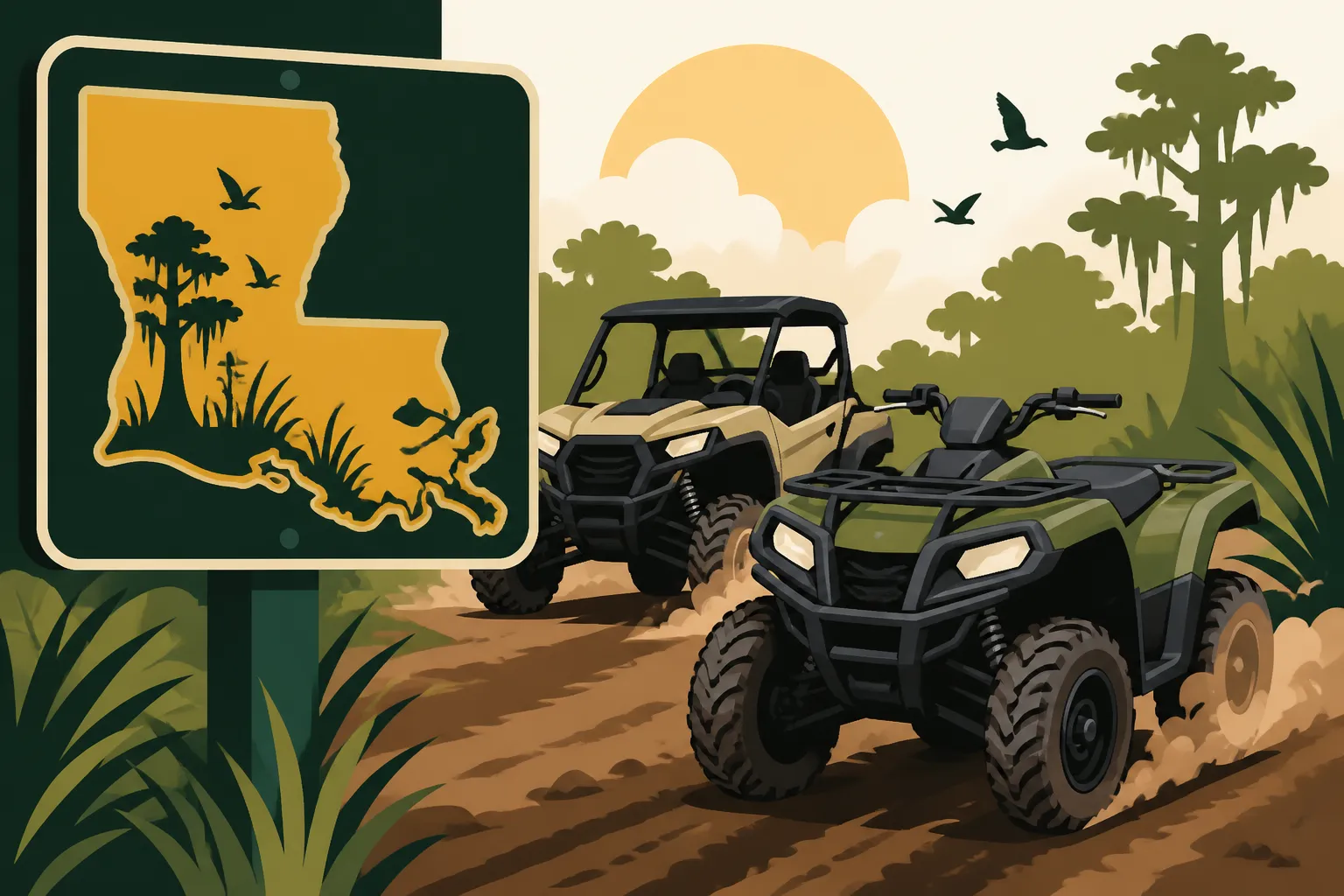
Louisiana Signage on a Designated Road
One of the most common frustrations I hear from fellow riders in Louisiana is trying to figure out where we can actually take our UTVs on public roads. It's not like the state has a blanket "yes" or "no" for every road out there, and that ambiguity can lead to real headaches, not to mention expensive tickets. Nobody wants to spend their hard-earned money on a great side-by-side, only to get cited for riding it perfectly legally on what they thought was a designated road. The truth is, the key to staying on the right side of the law often comes down to specific local ordinances and, critically, the signage that’s supposed to guide us. This guide is here to cut through that confusion, explaining exactly what signage to look for on designated roads in Louisiana and what that means for your ride.
The Foundation: Louisiana's UTV Road Laws and Local Authority
It’s easy to feel like you’re trying to hit a moving target when it comes to riding UTVs on public roads here in Louisiana. You hear stories, you see others doing it, but understanding the actual law feels like a deep dive into legal jargon. The core issue for many of us is that while there’s a state law, it delegates a lot of the actual decision-making power to our local parishes and municipalities. This means that a road that’s perfectly legal to ride in one parish might land you a hefty fine just across the parish line. It's enough to make you wonder if it's even worth the trouble, but with a little understanding, you can navigate these waters with confidence.
Why Local Designations Matter
The state of Louisiana has specific laws governing the use of utility terrain vehicles (UTVs) on public roads, primarily found in [Louisiana UTV Road Rules Under 32:299.3]. However, this statute doesn't just throw open the gates to every road in the state. Instead, it carefully carves out an exception, allowing individual parishes and municipalities the authority to designate certain roads or streets for UTV use. Think of it like a choose-your-own-adventure book, but with legal consequences. Without this local designation, a UTV is generally prohibited from operating on public roads, shoulders, or highways, with only a few very specific, limited exceptions (like crossing a road safely and directly).
This delegation of power to local governments can certainly be a source of frustration for riders. You might have a favorite riding spot, only to find that the county road leading to it isn't designated. Or you might live in a rural area where UTVs feel like a natural fit for getting around, but your parish hasn't taken the necessary steps to make it legal. It's not about the state saying "no" outright, but rather putting the onus on your local elected officials to say "yes" through a formal process. This process ensures that local communities can decide what makes sense for their specific traffic patterns, safety concerns, and resident needs, but it also means you, the rider, have to be extra vigilant about checking local rules.
The Role of Ordinance and Resolution
So, how exactly does a parish or municipality go about designating a road for UTV use? It’s not as simple as a handshake agreement or a verbal OK from a council member. The law requires a formal act by the local governing body. For parishes, this typically involves the police jury or parish council passing an official ordinance. For municipalities – your towns and cities – it would be a resolution or ordinance passed by the city council or similar governing board. This means that the decision to open a road for UTVs goes through a public process, often involving discussions, public hearings, and ultimately, a vote.
This formal process is crucial because it creates a clear, documented legal basis for UTV access. It’s what distinguishes a legally designated road from one that someone just thinks is okay to ride. If you ever find yourself needing to prove that you were on a legal road, pointing to a specific ordinance or resolution is far more compelling than simply saying, "I saw a sign." Understanding [How a Parish Council Votes to Designate a Road] can help you appreciate the effort that goes into creating these legal riding opportunities. These ordinances or resolutions will typically list the specific roads or portions of roads that are open to UTVs, and they often include details about operating hours, speed limits, and other specific conditions that riders must follow.
Understanding the Specific Signage Requirements
Once a parish or municipality has gone through the formal steps of designating a road for UTV use, the next crucial step – and the one that directly impacts you as a rider – is putting up clear, visible signage. Without proper signage, even a legally designated road can become a trap for unsuspecting riders. The signs are there to communicate these local decisions to everyone, from the UTV operator to the law enforcement officer. It’s a vital piece of the puzzle that often gets overlooked or misunderstood, leading to unnecessary confusion and citations.
What the Law Says About Designated Road Signs
Louisiana state law is quite clear: parishes and municipalities must "post appropriate signage" on any roads or streets that have been designated for UTV use. While the statute doesn't provide a precise blueprint for what "appropriate signage" looks like (e.g., exact dimensions, font, color), the intent is undeniably about clarity and visibility. These signs are meant to be unmistakable indicators that you are entering or operating within an area where UTVs are permitted on the public roadway. They aren't meant to be hidden or ambiguous; they should be easy to see and understand for anyone traveling on that road.
Think about it from a common-sense perspective: if you're a visitor to a parish, how would you know which roads are legal without clear signs? You wouldn't. Therefore, the signs should ideally be placed at the entry points of these designated road segments, or at regular intervals along longer stretches, to ensure that riders are consistently informed. [The Sign a Parish Has to Put Up First] might be a simple white sign with black lettering stating "UTV Route" or "Designated Off-Road Vehicle Road," possibly with a specific ordinance number or additional conditions listed. The lack of such a sign should immediately raise a red flag, prompting you to assume that UTV operation on that particular road is not permitted.
What You Should Look For as a Rider
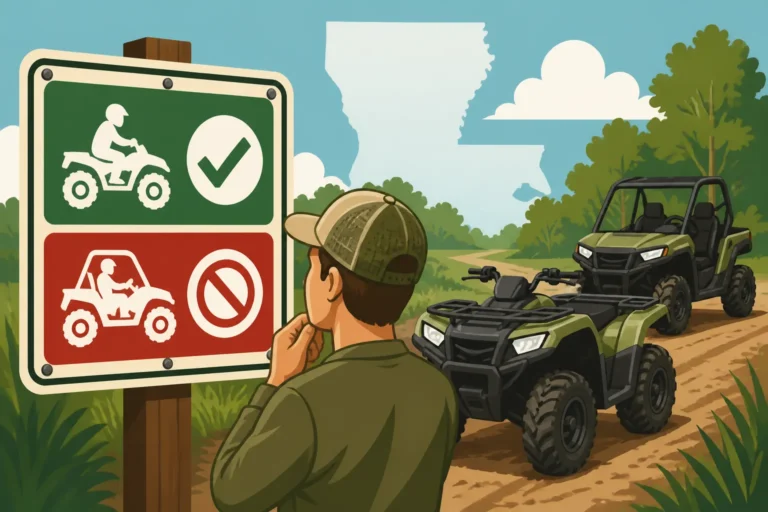
As a UTV rider, your responsibility is to actively look for these signs. Don't assume. Don't guess. When you're approaching what you believe might be a designated UTV road, keep your eyes peeled for official markers. Typically, these signs will be similar to other traffic signs in terms of construction and placement. They might be white rectangular signs with black lettering, clearly stating "UTV ROUTE" or "DESIGNATED OFF-ROAD VEHICLE ROAD." Sometimes, you might see green signs, similar to street names, specifically indicating a designated UTV trail or route.
It's important to remember that a small, faded sign tucked behind a bush isn't really "appropriate signage." The signs should be legible, in good repair, and placed where they can be seen by drivers and riders alike. If you don't see clear, official signage, err on the side of caution. An absence of a sign almost always means the road is not designated, even if you’ve heard otherwise or seen someone else riding there. And while you're focused on spotting those crucial signs, it's also a good idea to ensure your UTV is equipped for maximum visibility to others. Products from SuperATV, like their DOT-approved side mirrors or bright LED light bars, aren't just for trail riding; they can significantly help you spot road signs and make sure other drivers see you, adding an extra layer of safety and confidence to your ride on those designated routes.
Navigating Designated Roads and Avoiding Penalties
So, you’ve found a designated road, complete with official signage. Great! But the journey to legal road riding doesn't end there. Just because a road is designated for UTVs doesn't mean you can throw caution to the wind or ignore all other traffic laws. There are still crucial responsibilities and equipment requirements that you, as the operator, must meet. Failing to understand these additional stipulations can quickly turn a legal ride into a costly citation, even on a properly signed road.
Beyond the Sign: Other UTV Road Requirements
Even on a clearly designated and signed road, operating a UTV in Louisiana comes with several other important legal requirements that riders often overlook. It's not just about finding the right sign; it's about being prepared for a legal and safe ride. First and foremost, you need to meet the age requirement. In Louisiana, you must be at least [Louisiana Requires UTV Drivers to Be 21] years old to operate a UTV on public roads. This isn't a suggestion; it's a strict legal mandate. Additionally, you need to hold a valid driver's license, specifically a Class E license, as per [Louisiana Requires a Class E License]. This means no provisional licenses, no learners' permits for road use.
Beyond driver qualifications, your UTV itself must be equipped to meet certain standards. This typically includes working headlights, taillights, brake lights, turn signals, and mirrors. You also need to carry proof of insurance that meets the minimum liability requirements, as outlined in [Louisiana UTV Insurance Minimums]. These equipment and insurance rules are not optional extras; they are fundamental to legal road use. If you’re looking to get your UTV street-legal ready, SuperATV offers comprehensive street-legal kits that bundle many of these necessary components, from turn signal kits to horns, making it easier to ensure your machine meets all the legal requirements before you hit those designated roads. It’s far better to be prepared than to face an unexpected stop by a trooper who’s checking for compliance.
Consequences of Riding Undesignated Roads
The temptation to take a shortcut on an undesignated road, or to assume a road is okay just because it looks like a country lane, can have severe consequences. Riding a UTV on a public road that has not been officially designated and properly signed is against the law in Louisiana. The penalties can range from significant fines to the impoundment of your machine. Imagine the frustration of having your UTV towed away and then having to pay fines, impoundment fees, and storage costs, all for a simple mistake or a moment of carelessness.
Law enforcement officers in rural areas are often very familiar with the local ordinances regarding UTV use, and they are usually on the lookout for violations. A simple traffic stop can quickly escalate if you're found operating your UTV illegally on an undesignated road. Understanding [Louisiana Penalties for Illegal Road Riding] is crucial, as is being aware of the potential [Louisiana Ticket Costs for Road Riding]. These aren't minor infractions; they are taken seriously to ensure public safety and to maintain order on our roads. Always remember that ultimately, the responsibility to know where you can legally ride rests squarely on your shoulders.
How to Find Designated Roads
Given the parish-by-parish and municipality-by-municipality nature of UTV road designations, finding out where you can ride requires a bit of homework. There isn't a single statewide map or database (oh, if only it were that easy!). The best place to start is with the local authorities themselves. Check the official websites of the parish police jury or parish council, or the municipal council for towns and cities. Many will publish their ordinances online. Look specifically for terms like "UTV ordinance," "off-road vehicle designation," or "Chapter 32, Section 299.3."
Don't hesitate to call the local clerk of court's office or even the local sheriff's department in the area you plan to ride. They often have the most up-to-date information regarding which roads are designated. You can also explore resources like [Louisiana Parish Ordinance Lookups] and [Louisiana Municipal Ordinance Lookups]. Remember, just because you see another UTV on a road doesn't automatically mean it's legal. They might be breaking the law, or they might have specific agricultural exemptions that don't apply to you. Doing your own due diligence is the only way to protect yourself and your machine.
Here's a quick reference table to help you keep track of what to look for and what to remember when considering riding your UTV on a Louisiana public road:
| Aspect | What to Look For/Check | What Else Is Still Required (Even on Designated Roads) |
|---|---|---|
| Road Designation | Clear, official signage (e.g., "UTV Route," "Designated Off-Road Vehicle Road"). Absence means not designated. | Formal local ordinance/resolution by parish/municipality. |
| Operator | No specific sign, but check your age and license. | Minimum age of 21 years old. Valid Class E driver's license. |
| Vehicle Equipment | No specific sign, but ensure your UTV is properly equipped. | Headlights, taillights, brake lights, turn signals, horn, mirrors (DOT approved). |
| Insurance | No physical sign, but always carry proof. | Proof of minimum liability insurance coverage. |
| Legal Information | Look for specific ordinance numbers on signs or check local government websites. | Research parish/municipal ordinances. Consult [Louisiana UTV Street Legal Rules by Parish]. |
| Safety Compliance | Signs often imply a safe riding environment, but vigilance is key. | Adherence to speed limits, traffic laws, and other road rules. Be aware of [Louisiana Equipment Checks by Troopers]. |
Disclaimer
This article is for general informational purposes only and does not constitute professional advice. Laws, prices and regulations vary by location and change over time. Consult a qualified professional for guidance on your specific situation.