Louisiana Insurance Proof on Demand
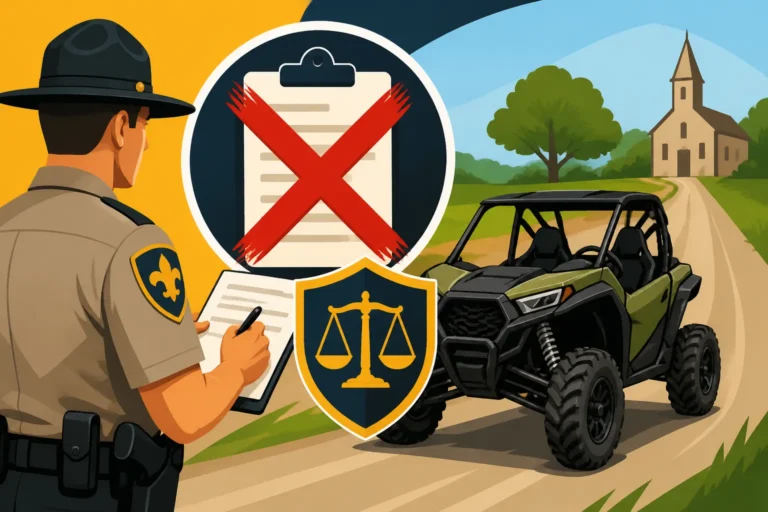
Picture this: you're enjoying a peaceful ride on your ATV or UTV, perhaps cruising a designated parish road, when blue lights flash. The officer asks for proof of insurance. For many Louisiana riders, this can be a moment of confusion or panic, especially if you didn't think your off-road machine needed it. This guide will unravel the complexities of "Louisiana Insurance Proof on Demand" and ensure you're always prepared.
The Unexpected Demand: When and Why Louisiana Troopers Ask for Proof
It’s a scenario that can catch even the most seasoned riders off guard: getting stopped while on your ATV or UTV and being asked to produce proof of insurance. You might be thinking, "But it's an off-road machine! Why would I need insurance for it, and why would an officer ask for it?" The truth is, while many off-road activities might not strictly require insurance in the way a street vehicle does, there are very specific circumstances in Louisiana where you absolutely need it, and law enforcement is well within its rights to demand proof. The key often lies in where you are riding and how you are using your machine.
Routine Stops and Random Checks
Just like with cars, Louisiana law enforcement officers, be they State Troopers, parish deputies, or municipal police, can conduct routine traffic stops. If you are operating an ATV or UTV on a public road or highway where its use is permitted—which, as we know, is a tightly regulated situation in Louisiana—then all the rules of the road can apply, including the requirement for insurance. It might feel like a "random check," but if you're on a public thoroughfare, even a designated parish road, you're fair game.
Imagine you're driving your side-by-side to a hunting camp down a gravel parish road that your local council has, against all odds, officially designated for UTV use. You've got your [Louisiana UTV Road Rules Under 32:299.3] memorized, you're adhering to the speed limit, and you’re riding responsibly. But an officer pulls you over, perhaps to check for helmet use, proper lighting, or to ensure you're not exceeding passenger limits. During this stop, asking for proof of insurance is a perfectly normal and legal part of their duty. If you can't produce it, you could be facing more than just a warning.
Incidental Road Use and Designated Roads
Louisiana's statutes make very clear distinctions about where and how ATVs and UTVs can operate on public roads. Generally, these machines are not considered street-legal. However, there are specific, limited exceptions, such as crossing a road incidentally or using a shoulder to access private property, especially for agricultural purposes, or riding on parish-designated roads for UTVs. These exceptions, while helpful, don’t always exempt you from insurance requirements.
Even if you’re only using the shoulder of a road to get from one field to another, as permitted under the agricultural exemption, an officer might still pull you over to verify your intent and ensure you meet all the criteria for that exemption, which often includes having the proper affidavit. This is where topics like [Louisiana Rules for Riding a Shoulder] become incredibly relevant. If your agricultural use extends onto a public road, even the shoulder, the expectation of insurance proof can arise. Similarly, if your parish has designated certain roads for UTVs, you must comply with all traffic laws on those roads, including insurance. This isn't just a suggestion; it's a legal obligation that comes with the privilege of road access.
The Consequences of Not Having It
The frustration of being stopped and potentially ticketed for something you didn't realize was required is immense. But the consequences of not having proof of insurance on demand when required go beyond just a simple ticket. Just like with a car, operating an ATV or UTV on public roads without the mandated insurance can lead to significant fines, impoundment of your machine, and even points on your driver's license. The immediate hassle of dealing with a citation at the side of a rural road is only the beginning.
Consider the potential scenario: you're stopped, you don't have insurance, and your machine is impounded. Now you're facing towing fees, storage fees, court costs, and a substantial fine—all just to get your beloved machine back, let alone the penalty for the actual offense. These are the kinds of financial headaches that can quickly sour your entire riding season. Knowing the rules about [Louisiana Penalties for Illegal Road Riding] is crucial, but having the proper documentation for insurance can prevent many of these headaches in the first place.
Understanding Louisiana's Insurance Requirements for ATVs and UTVs
It's easy to assume that because an ATV or UTV is "off-road," it automatically doesn't need insurance. This is a common misconception, and it's one that can land Louisiana riders in a heap of trouble. The reality is that Louisiana law draws a very specific line in the sand, and that line is usually where the dirt road ends and the public pavement or shoulder begins. Understanding these nuances is essential for staying legal and protected.
The Core Rule: Road Use Triggers Insurance
Louisiana Revised Statute 32:299 (for ATVs) and 32:299.3 (for UTVs) are the bedrock of what's often referred to as "street legal" use—though it's usually just "road legal" in very limited circumstances. These statutes, while generally prohibiting ATVs and UTVs from public roads, carve out specific exceptions. Critically, when those exceptions do allow for road use, they often come with a mandatory insurance requirement. This isn't unique to Louisiana; many states adopt similar stances: if you're on public land or a public right-of-way, you need to be insured, just like any other vehicle.
Think about it this way: if your machine could cause damage to public property or injury to another person while operating on a public road, the state wants to ensure there's financial protection in place. This isn't about covering your machine for a broken axle on a trail; it's about covering your liability if something goes wrong on a public access route. This is why when you're on a parish road that's been designated for UTV use, or even just making a brief [Louisiana Rules for Crossing a Highway], you need to be able to show that you're insured.
What "Road Use" Really Means in Louisiana
The definition of "road use" can be surprisingly broad in the eyes of the law, especially when it comes to off-road machines. It's not just about driving down the middle of a highway. In Louisiana, "road use" can include riding on the shoulder, crossing a paved road, or traveling on a public dirt or gravel road that is maintained by the parish or state. Many riders assume that because a road isn't paved, it's fair game for an uninsured off-road vehicle. This is a dangerous assumption.
For example, a parish might have a network of unpaved roads leading to hunting camps or agricultural fields. If that road is publicly maintained and accessible, it's a public road. If you're riding your quad on such a road, even if it feels very "off-road" to you, it falls under the jurisdiction of traffic laws and, therefore, insurance requirements. This is where local ordinances become incredibly important; checking [Louisiana Parish Ordinance Lookups] is always a smart move to understand what’s permissible in your specific riding area. If a parish says UTVs can use specific roads, they will also require the UTV to meet specific requirements, and insurance is almost always one of them.
The Farm Exemption and Its Limits
Louisiana does offer an important exemption for ATVs and UTVs used exclusively for agricultural purposes. This can be a huge relief for farmers who rely on these machines daily. However, even this exemption has very clear boundaries and often still comes with some responsibilities, even if it doesn't always mandate full insurance coverage for all road use scenarios.
The farm exemption typically allows for limited road use, such as traversing across a highway or operating on the shoulder of a road to get from one farm property to another, all within a certain radius. You'll often need to carry a [Louisiana Farm Affidavits for Road Use] to prove your agricultural intent. While these exemptions might seem like a get-out-of-jail-free card for insurance, it’s not always the case, especially concerning liability. Even if your specific scenario for farm-related road use doesn't require full liability insurance, any accident involving other vehicles or property on a public road would fall under standard liability rules. It’s always prudent to discuss this specific use with your insurance provider to ensure you have adequate coverage, even if the state statute gives you some leeway.
What Kind of Insurance Policy Do You Actually Need?
When it comes to insuring your ATV or UTV for those times you might encounter public roads in Louisiana, it's not a one-size-fits-all situation. Just like insuring a car, there are different levels of coverage, and what you choose can depend on your specific needs, the value of your machine, and how you plan to use it. Understanding the basics will help you make an informed decision and ensure you're compliant when that officer asks for proof.
Minimum Liability Coverage for Road Use
If you're going to be operating your ATV or UTV on public roads or rights-of-way in Louisiana, even under the limited exceptions, you'll generally need at least the state's minimum liability coverage. This type of insurance doesn't protect your machine; it protects you financially if you're at fault in an accident that causes injury to another person or damage to someone else's property. This is the bare minimum that most states require for any vehicle operating on public roads, and your ATV or UTV is no exception when it crosses that line.
These minimums are typically expressed as a set of three numbers, like "15/30/25," which refers to coverage limits for bodily injury per person, bodily injury per accident, and property damage. While the exact figures aren't stated here, you can find the current [Louisiana UTV Insurance Minimums] by checking with the OMV or an insurance provider. Having this coverage means that if you accidentally hit a mailbox while crossing a road, or if someone is injured because of your road use, your insurance helps cover those costs, preventing you from potentially losing your assets in a lawsuit.
Beyond the Basics: Comprehensive and Collision
While liability insurance is often the legal minimum for road use, many riders opt for more robust coverage, especially given the investment these machines represent. Comprehensive and collision coverage are two common additions that protect your ATV or UTV itself, regardless of who is at fault or whether the incident happens on a public road or a private trail.
Collision coverage pays for damages to your machine if it collides with another vehicle or object, or if it rolls over. This is particularly valuable given the nature of off-road riding, where spills and bumps are common. Comprehensive coverage protects against non-collision events, such as theft, vandalism, fire, or damage from natural disasters like hurricanes, which are certainly a concern in Louisiana. If you've got a high-dollar side-by-side that you've poured money into, perhaps with aftermarket parts or upgrades, these coverages offer peace of mind whether it’s parked in your shed or navigating a tough trail at Muddy Bottoms ATV Park. It’s about protecting your investment.
Insuring a Modified Machine
Many Louisiana riders love to customize their ATVs and UTVs. Whether it's for deeper mud, better performance, or just a unique look, modifications are a big part of the culture. However, if you've invested significantly in aftermarket parts and accessories, it's crucial to ensure your insurance policy actually covers these additions. Standard policies might only cover the machine as it came from the factory, leaving your expensive upgrades unprotected.
When you're adding lift kits, custom wheels, performance exhausts, or even a heavy-duty winch from a reputable brand like SuperATV, make sure to inform your insurance provider. Many insurers offer "accessories coverage" or specific endorsements that can be added to your policy to cover these modifications. If you don't declare these changes and an incident occurs, you might find that the claim only covers the stock value of your machine, leaving you out of pocket for all those hard-earned upgrades. Don't let your investment in quality parts, like those from SuperATV, go uninsured.
How to Carry Proof of Insurance Effectively (and Legally)
Okay, so you understand why you need insurance for certain types of ATV and UTV use in Louisiana. Now comes the practical part: how do you carry proof of that insurance so it's readily available when an officer asks for it? This isn't just about having a policy; it's about being able to present acceptable evidence on demand. Getting this wrong can be just as problematic as not having insurance at all.
Digital vs. Physical Cards
In today's digital age, many states, including Louisiana, now accept electronic proof of insurance. This means you can often show your insurance card on your smartphone or another electronic device. This can be incredibly convenient, as most riders carry their phones with them. However, relying solely on digital proof comes with its own considerations, especially in the rugged environments where ATVs and UTVs thrive.
While a digital card on your phone is usually acceptable, always have a backup plan. What if your phone battery dies? What if it gets wet, muddy, or damaged during a ride? What if you're in an area with no cell service and the app needs to load? It's often a good idea to still carry a physical copy of your insurance card. A laminated card tucked into a waterproof bag in your storage box or wallet is a reliable alternative that doesn't depend on battery life or signal strength.
Keeping Your Proof Accessible and Safe
The key to "proof on demand" is being able to produce it quickly and safely. Fumbling around for five minutes while an officer waits patiently (or perhaps not so patiently) isn't ideal. Your proof of insurance, whether digital or physical, should be kept in a secure yet easily accessible location on your person or your machine.
Many riders opt for a small, waterproof pouch that attaches to the handlebars, an accessible storage compartment, or even a zippered pocket in their riding gear. Make sure it's protected from the elements – dust, mud, and water are the enemies of paper documents and electronics. If you're riding with a buddy and you're the one legally responsible for the machine, make sure you're the one carrying the proof. A little foresight here can save a lot of stress during a stop. Remember, part of the process during [Louisiana Equipment Checks by Troopers] often involves verifying documentation.
What if Your Proof is Lost or Damaged?
Life happens, and sometimes documents get lost, damaged, or become illegible. If your physical insurance card goes missing or gets ruined, don't panic. The first step is to contact your insurance provider immediately. Most companies can email you a new digital copy almost instantly or mail a replacement card within a few business days.
In the interim, if you know you'll be riding on roads where insurance is required, you might be able to print out a temporary copy from your insurer's website, or at least have a clear understanding of your policy number and agent's contact information. While an officer might accept verbal confirmation and a promise to send proof later, it's always at their discretion, and having something tangible, even if just a policy number written down, is better than nothing. Avoid riding on regulated roads until you have valid, reproducible proof. This is also why having [Louisiana Sales Tax Proof at the Counter] and other vital documents well-organized is a good habit for any responsible machine owner.
Navigating the Law: What Officers Can and Cannot Do
Being stopped by law enforcement can be an intimidating experience, especially if you're unsure of the specific laws governing ATVs and UTVs in Louisiana. Understanding your rights and the officer's authority can help you remain calm, cooperative, and ensure the interaction proceeds smoothly. It’s not just about having the insurance; it’s about how you handle the situation.
Understanding Your Rights During a Stop
When an officer pulls you over while riding your ATV or UTV on a public road or right-of-way, remember that you have rights, just as you would in a car. You have the right to remain silent and the right to refuse a search without a warrant, though this doesn't apply to simply producing documents like your driver's license, registration (if applicable), and proof of insurance. The best approach is always to be polite, cooperative, and provide the requested documents promptly.
Clearly state your name, present your identification, and offer your proof of insurance and any other relevant permits, such as a farm affidavit. If you have questions about why you were stopped, you can ask, but always do so respectfully. Arguing or being confrontational rarely helps the situation and can escalate a minor issue into a more serious one. Knowing the specific rules for [Louisiana ATV Road Rules Under 32:299] and [Louisiana UTV Road Rules Under 32:299.3] can help you understand the context of the stop.
The Role of Parish and Municipal Ordinances
It’s easy to think that state law covers everything, but when it comes to ATVs and UTVs, local ordinances play a huge role, especially concerning road access and, by extension, insurance requirements. While state law sets the general framework, individual parishes and municipalities in Louisiana have the authority to designate specific roads for UTV use or even enact their own regulations. This is why a UTV might be allowed on roads in one parish but strictly forbidden in a neighboring one.
These local rules often come with their own set of requirements, which can include mandatory insurance. A parish council that votes to designate certain streets for UTVs will invariably require those UTVs to be insured, just like any other vehicle on their roads. Always check [Louisiana Parish Ordinance Lookups] or municipal websites for the specific areas you plan to ride. What might be legal and insured for road use in rural Sabine Parish could lead to a ticket in a more densely populated area without proper research.
Disputes and Challenging a Citation
If you believe you were unfairly cited for not having proof of insurance, or if you had insurance but couldn't produce the physical proof at the time of the stop, you generally have avenues to dispute the citation. This typically involves appearing in court on the date specified on your ticket. It’s your opportunity to present your side of the story and any evidence you have.
If you had insurance but just didn't have the proof on hand, obtaining a valid proof of insurance from your provider for the date and time of the citation can often get the charge dismissed or reduced. However, you'll likely still face court costs or a small administrative fee. If you genuinely believe you were operating within an exemption (like a specific farm use scenario) and were wrongly cited for an insurance violation, gather all your documentation, including affidavits and any relevant maps or local ordinances, and present them clearly to the judge. Understanding the specifics around [Louisiana Rules for Riding a Shoulder] and its exceptions can be vital here.
Common Misconceptions About ATV/UTV Insurance in Louisiana
The world of ATV and UTV insurance is rife with misunderstandings, especially in a state like Louisiana with its unique blend of agricultural use, recreational riding, and sometimes vague rules about public road access. These misconceptions can lead to costly mistakes and legal trouble, so let's clear up some of the most persistent myths.
"It's Only for Cars" – Debunking the Myth
One of the biggest misconceptions is that insurance is solely for "street-legal" vehicles like cars, trucks, and motorcycles. Many riders operate under the belief that because their ATV or UTV is designed for off-road use, it's exempt from insurance requirements, regardless of where they're riding. This couldn't be further from the truth, particularly in Louisiana.
As we've discussed, the moment your ATV or UTV touches a public road, shoulder, or right-of-way where its operation is allowed under specific exceptions (like designated parish roads or agricultural use), it often falls under the same insurance regulations as any other vehicle. The "off-road" designation applies to its primary purpose and design, not necessarily to its insurance status when crossing into public access areas. Whether it's a nimble sport quad or a heavy-duty side-by-side accessorized with gear from SuperATV, if it's on a public road, it may need to be insured.
"My Homeowner's Policy Covers It" – Why This Is Often Wrong
Another very common pitfall is the assumption that your homeowner's insurance policy will automatically cover your ATV or UTV. While some homeowner's policies might offer very limited coverage for ATVs used exclusively on your property, this coverage is typically minimal, often excludes liability for accidents, and almost never extends to incidents that occur off your private land or on public roads.
Think about the difference: homeowner's insurance is designed to protect your home and personal property within your property boundaries. It's not designed to cover the liability risks associated with operating a motor vehicle, especially one that ventures onto public roads or even off-site trails. If you cause an accident on a public road while riding your uninsured UTV, your homeowner's policy will almost certainly deny any claims related to bodily injury or property damage to others. Always verify directly with your insurance agent if your specific homeowner's policy offers any coverage for your ATV or UTV, and understand its severe limitations before relying on it for crucial liability protection.
The Difference Between Trail Permits and Insurance
Many riders confuse trail use permits or forest passes with insurance. For instance, if you ride in Kisatchie National Forest, you might purchase a [Louisiana Forest Pass Cost] or need a [Louisiana WMA Access Permits] for designated Wildlife Management Areas. These permits grant you access to specific riding areas and help fund trail maintenance. However, they are not insurance policies.
A permit allows you to be on the land; insurance protects you financially in case of an accident. You can have a valid trail permit and still be uninsured. Conversely, you can have a robust insurance policy but still be fined for riding on a WMA without the proper access permit. These are two distinct requirements. Always ensure you have both the necessary permits for the land you're riding on and the appropriate insurance coverage for any public road use or for protecting your investment, especially if you're navigating complex regulations and terrain.
Best Practices for Louisiana Riders
Staying on the right side of the law and ensuring you're protected while enjoying your ATV or UTV in Louisiana is all about proactive planning and awareness. It’s not just about avoiding a ticket; it’s about responsible ownership and safe riding. By adopting a few key best practices, you can minimize headaches and maximize your enjoyment.
Reviewing Your Policy Annually
Just like with your car insurance, your ATV or UTV policy isn't something you should just "set and forget." Laws change, your circumstances change, and the value of your machine might change. It’s a good practice to review your insurance policy annually with your agent.
This annual check-in allows you to ensure your coverage limits are still adequate, especially if you've added new accessories, made significant modifications (perhaps with parts from SuperATV), or if the value of your machine has appreciated or depreciated. You can also discuss any changes in your riding habits—for example, if you now plan to use your UTV more frequently on designated parish roads, you'll want to confirm your liability coverage is robust enough for that specific use. Don't wait until you're stopped by an officer or, worse, involved in an accident to discover you're underinsured.
Documenting Your Machine's Features and Modifications
When you purchase or significantly modify your ATV or UTV, thorough documentation is your best friend. This includes keeping a detailed record of your machine's VIN, make, model, year, and any factory options. More importantly, create a list of all aftermarket additions, along with receipts if possible. This is particularly vital for those custom parts and accessories.
If you've installed a new lift kit, heavy-duty suspension, custom lighting, or a high-performance exhaust system from a brand like SuperATV, make a note of it. Take photos of your machine, especially showcasing these modifications. In the event of a theft or a major claim, having this detailed documentation can significantly streamline the claims process and ensure you're fairly compensated for the true value of your machine, including all your upgrades. It makes it much easier to prove what you had.
Planning Your Rides: Road Use vs. Off-Road Areas
The simplest way to avoid issues with "Louisiana Insurance Proof on Demand" is to meticulously plan your rides, differentiating clearly between dedicated off-road trails and any potential road use. For instance, if you're heading to a private park like Louisiana Mudfest, your primary concern is their rules and waivers, not typically state road insurance. But if your route involves even a short stretch of public road to get there, that's where the rules change.
Before you load up your trailer or even just pull out of your driveway, think about your route. Will you be crossing any public roads? Will you be riding on a designated parish road? Are you transporting your machine on a public highway to get to a trail system, or actually riding it on a public road? This forethought can save you a lot of hassle. If road use is involved, ensure you have your proof of insurance handy and that your policy covers that specific type of use. Always remember that even brief, incidental use of a public road can trigger the requirement to show [Louisiana Insurance Proof on Demand].
Table: Scenarios Requiring Insurance Proof on Demand
Here's a quick look at common Louisiana riding scenarios and whether you'll likely need to produce proof of insurance if stopped by law enforcement.
| Scenario | Location Type | Insurance Proof Likely Needed? | Reasoning |
|---|---|---|---|
| Riding on a designated Parish UTV road | Public Roadway (Local Ordinance) | Yes | Treated like a street-legal vehicle for that road section; liability required. |
| Using road shoulder for farm access (5-mile radius) | Public Road Shoulder (State Statute) | Yes (for liability) | Although an exemption, liability for public road use often applies. |
| Crossing a paved public road | Public Roadway (State Statute) | Yes | Incidental crossings are road use; liability is key. |
| Riding within a private mud park | Private Property (Park Rules) | No (but highly recommended) | Park waivers cover some risk, but personal liability/machine damage is your own. |
| Riding on a WMA designated trail | Public Land (State Agency) | No (permit needed) | Requires a permit for access, not specific road-use insurance. |
| Riding on your own private land | Private Property | No (but recommended) | Only homeowner's policy might apply; specific ATV/UTV policy is better. |
| Riding on a pipeline right-of-way | Private/Leased Land | No (permission needed) | Requires landowner permission; not a public road. |
| Riding to a camp down a dirt public road | Public Roadway (Parish/State) | Yes | If public and maintained, it falls under road use rules. |
| Riding across a levee road | Public/Private Levee (State Law) | Yes (if allowed, usually not) | Levee riding generally prohibited; if allowed, insurance likely applies. |
Disclaimer
This article is for general informational purposes only and does not constitute professional advice. Laws, prices and regulations vary by location and change over time. Consult a qualified professional for guidance on your specific situation.