Louisiana Levee Riding Is Prohibited
Oh, the allure of those long, winding levees stretching across our beautiful Louisiana landscape! It's an image that pops into many an off-road rider's head: miles of open space, scenic views, and what seems like a perfect pathway for an ATV or UTV. But here’s the cold, hard truth that often catches folks off guard and leads to a heap of frustration: riding on Louisiana levees is generally prohibited, and ignoring that rule can lead to significant headaches, fines, and even having your beloved machine impounded. This guide is here to clear up the confusion, explain why these rules are in place, and help you find legitimate, enjoyable places to ride your ATV or UTV safely and legally in the Pelican State.
Why Levee Riding is Such a Big Deal in Louisiana
It’s easy to look at a levee – that raised embankment designed to prevent flooding – and think it’s just another dirt road, ripe for a good cruise on your quad or side-by-side. But for authorities and local residents, levees are a critical piece of infrastructure, and their integrity is paramount. This creates a big disconnect between what a rider sees and what the law dictates.
The Allure of Levees for Riders
Let's be honest, the appeal is undeniable. You've got this incredible network of elevated paths, often with fantastic vistas of rivers, bayous, and farmlands. They offer what feels like endless miles of open trail, far from traffic and the hustle and bustle of city life. For someone looking for a long, unobstructed ride, especially in areas where designated trails are scarce, a levee can seem like a dream come true. You might imagine cruising along, taking in the scenery, perhaps even spotting some wildlife, all while enjoying the power of your machine. It feels like freedom, like exploring uncharted territory, even when it’s been there for decades.
Many riders, especially those new to the area or new to the sport, might not even realize that these seemingly open paths are anything but. They see local trucks driving on them, maintenance vehicles, and sometimes even other recreational users who are also, unwittingly or not, breaking the rules. This visual cue can create a false sense of permission, leading many to believe that if others are doing it, it must be okay. It’s a common misconception, and one that lands many riders in trouble.
The Core Prohibition: What the Law Says
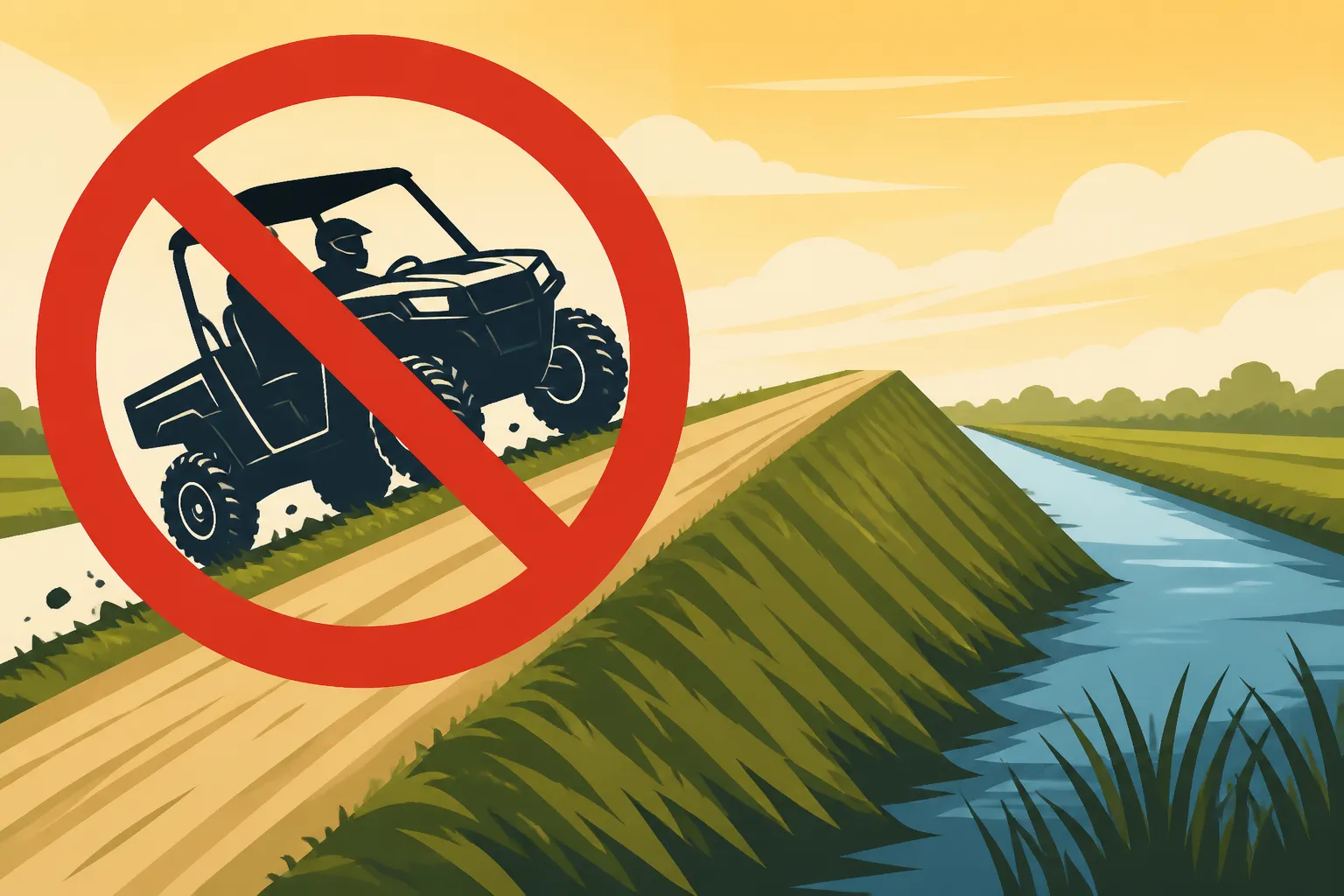
Here’s the plain and simple truth: Louisiana Revised Statute 32:299.1 specifically addresses riding motor vehicles on levees, and it generally prohibits it. The law is quite clear that it's illegal to drive or operate "any motor vehicle, whether registered or unregistered, on any levee crown, levee right-of-way, or batture," unless specific conditions are met. This isn't some obscure, rarely enforced rule; it's a critical component of state law designed to protect vital flood control infrastructure. It's not just about ATVs and UTVs either; it covers all motor vehicles, meaning your truck or car can't just drive up there for a joyride either.
The statute makes an exception for "law enforcement, levee district personnel, persons engaged in construction or maintenance, and persons engaged in agricultural purposes," but even then, it's typically limited to specific, authorized activities. For the average recreational ATV or UTV rider, this means the answer is almost always a resounding "no." It’s designed to prevent casual traffic from compromising the levee’s structural integrity, which is especially important in a state so vulnerable to flooding. The consequences are real, and ignorance of the law is rarely an acceptable defense when you're facing a fine or even a seized machine. [Louisiana Levee Trespass Penalties] can be severe, so it's vital to understand this.
Who Manages Louisiana's Levees
Understanding who's in charge of these massive earthworks helps clarify why the rules are so strict. In Louisiana, levees are typically managed by various levee districts, which are governmental bodies established to maintain and oversee flood control infrastructure within specific geographic regions. These districts are responsible for the inspection, maintenance, and repair of the levees under their jurisdiction. They take their role very seriously, and rightfully so, as the safety and livelihoods of countless Louisianans depend on these structures.
Each levee district operates under the authority granted by the state and is empowered to enforce regulations to protect the levees. This means that a levee you encounter might be under the watchful eye of the Pontchartrain Levee District, the Red River Waterway Commission, or any number of other local or regional authorities. These bodies have jurisdiction over not just the levee crown (the top part you'd ride on) but also the levee right-of-way and the batture (the land between the levee and the river). Their primary concern is flood protection, and any activity that could potentially compromise the levee's stability or hinder their maintenance efforts is strictly prohibited. So, when you see a sign that says "No Unauthorized Vehicles," they truly mean it. If you're wondering [Who Really Owns the Top of a Levee], it's typically under the control of these levee districts, and they set the rules.
Understanding the Specific Statutes
When we talk about whether you can ride on a levee, we're not just talking about unwritten rules or local customs. There are specific state laws in place, and understanding them is crucial for any ATV or UTV owner in Louisiana. These statutes are designed to protect the integrity of our flood control system, which is undeniably critical for the state.
Louisiana Revised Statute 32:299.1
This is the big one. Louisiana Revised Statute 32:299.1 is the primary law that prohibits the operation of motor vehicles on levees. It explicitly states that "no person shall drive or operate any motor vehicle, whether registered or unregistered, on any levee crown, levee right-of-way, or batture." This means your ATV, UTV, dirt bike, or even your truck cannot legally be on these structures unless you fall under one of the very narrow exceptions.
The law isn't ambiguous; it's a direct ban for general recreational use. The intent behind this statute is clear: to prevent damage to the levee itself, maintain accessibility for official use (like emergency repairs or inspections), and ensure public safety. A levee's composition can be compromised by the constant traffic of heavy vehicles or even the repeated churning of tires, leading to erosion or structural weaknesses that could have catastrophic consequences during a flood event. This statute applies statewide, so whether you're near the Mississippi River, the Red River, or a smaller bayou, the general prohibition remains. A state trooper or sheriff's deputy has every right to enforce this law, and they often do. [What a Louisiana State Trooper Can Ask to See] will definitely include proof that you are authorized to be where you are.
Levee District Permissions: The Exception to the Rule
While the general rule is "no riding," there are rare instances where specific permission might be granted. This isn't a loophole for recreational riders, but rather an allowance for those whose work or property genuinely requires levee access. The statute allows for exceptions for "law enforcement, levee district personnel, persons engaged in construction or maintenance, and persons engaged in agricultural purposes."
If you happen to be a landowner whose property abuts a levee and you need to cross it for legitimate agricultural purposes (like accessing fields for planting or harvesting), you might be able to obtain a permit from the local levee district. However, this is usually a formal process requiring an application, proof of need, and often a signed agreement. It's not a casual "ask a buddy" scenario. Furthermore, any permission granted is almost always for specific, necessary access, not for general recreational riding. You wouldn't, for example, get a permit to take your side-by-side out for a joyride every weekend. This is also where you might see things like [Louisiana Agricultural Affidavits for an ATV] being used to justify legitimate farm-related travel, but that's for agricultural use, not recreation. If you think you might qualify for an exception, your first step should always be to contact the specific levee district that manages the levee in question and inquire about their formal permitting process. Expect it to be rigorous and specific. [Louisiana Levee District Permissions] are not easily come by.
Consequences of Unauthorized Riding
Let's not sugarcoat it: the penalties for riding an ATV or UTV on a levee without authorization can be significant. This isn't just a slap on the wrist. Violators can face substantial fines, and your machine could even be impounded. The exact cost of the fine can vary, but it's typically not a cheap lesson. Imagine being pulled over, receiving a ticket that costs hundreds of dollars, and then having to pay towing and storage fees to get your machine back. That can quickly turn a fun outing into a very expensive regret.
Beyond the immediate financial hit, there’s also the potential for property damage charges if your machine is found to have caused any wear and tear to the levee itself. Given the critical role levees play, authorities are often very strict about prosecuting these violations to deter others. It’s not uncommon for local law enforcement, parish deputies, or state troopers to patrol these areas, especially during peak riding seasons, precisely because they know the temptation exists. They are well aware of the state laws and the importance of preserving the levees. So, while it might seem like an open, inviting path, it's truly a risk not worth taking. These penalties are designed to be a strong deterrent, reinforcing the message that [Louisiana Levee Riding Is Prohibited] for unauthorized individuals.
The Greater Context: ATV and UTV Road Use in Louisiana
Understanding that levees are generally off-limits is a crucial first step, but it's equally important to grasp the broader rules governing where ATVs and UTVs can (and cannot) be operated on public roads and highways in Louisiana. This is an area where confusion abounds, and misinterpreting the law can lead to tickets just as easily as riding on a levee.
Designated Parish Roads: Where You Can Ride
The good news is that Louisiana law does provide a pathway for UTVs (and in some very limited instances, ATVs) to be ridden on public roads, but it comes with significant caveats. Specifically, Louisiana Revised Statute 32:299.3 allows parishes and municipalities to pass ordinances designating certain roads or streets for UTV use. This means it's not a blanket "yes" across the state; it's a decision made at the local level.
If a parish or municipality designates a road for UTV use, they are also required to post appropriate signage indicating that UTVs are permitted. Without that sign, you generally cannot ride your UTV on that road, even if you think it's a quiet, back-country lane. This is why you often see riders checking parish ordinances and looking for specific signage before venturing out. It's also important to note that even on designated roads, there are usually specific operating requirements, such as a minimum age for the driver (typically 21 for UTVs on public roads), insurance requirements, and adherence to all traffic laws. For ATVs, the rules are even stricter, generally prohibiting their operation on public roads unless specifically exempted for agricultural purposes. Always check with the local parish or municipality where you plan to ride. [Louisiana UTV Street Legal Rules by Parish] can vary wildly, so do your homework!
Farm-Related Exemptions: The 5-Mile Radius Rule
Here's where things get a bit more nuanced, especially for those living and working in rural areas. Louisiana law does provide limited exceptions for the operation of ATVs and UTVs on certain public roads, but only when directly related to farming or agricultural purposes. This is often referred to as the "farm exemption" or the "5-mile radius rule."
Under Louisiana Revised Statute 32:299 (which covers ATVs) and 32:299.3 (for UTVs), these machines can sometimes be operated on the shoulders of public roads, or even cross public roads, if they are being used for legitimate agricultural operations. The key here is "legitimate agricultural operations." This is not an excuse to ride your quad to the gas station or a friend's house. The law typically specifies that the machine must be used for transporting farm products, livestock, or farm implements from one field to another, or from a farm to a point of delivery. Furthermore, there's often a mileage limit, such as within a five-mile radius of the farm property. You might also need to have specific documentation, such as [Louisiana Farm Affidavits for Road Use], sworn before a notary, to prove your agricultural intent if stopped by law enforcement. This exemption is very specific and not intended for recreational riding, even if you happen to live on a farm. Any deviation from its strict interpretation can lead to a citation.
Crossing Public Roads: Incidental Use
Another common question is about simply crossing a public road. Perhaps your private property is bisected by a parish road, or you need to get from one section of your land to another. Louisiana law generally permits the "incidental crossing" of public roads by ATVs and UTVs, provided it's done safely and directly, and you're adhering to all applicable traffic laws.
"Incidental crossing" means getting from point A on one side of the road to point B on the other side, without riding down the road itself. You should come to a complete stop, yield to all traffic, and cross as perpendicular to the road as safely possible. This isn't an invitation to ride parallel to the road for any distance, even if it's just for a few hundred feet. The intent is to allow landowners and operators to access their property or fields efficiently, not to extend recreational riding zones. When performing such a crossing, your machine should also be equipped with proper lighting if it's near dusk or dark, and you should always be wearing appropriate safety gear. [Louisiana Rules for Crossing a Highway] are very clear: yield, cross directly, and safely. Just because you're crossing doesn't mean you're exempt from vigilance.
Why These Rules Exist: Safety and Infrastructure
It's easy to feel frustrated by all the "can't dos" when it comes to riding ATVs and UTVs on public lands and infrastructure. You might think, "Why are they so strict? It's just a dirt path!" But these regulations aren't arbitrary. They are rooted in critical concerns for public safety, environmental protection, and the preservation of vital infrastructure. Understanding the "why" can often help us appreciate the "what" and encourage more responsible riding.
Protecting Critical Infrastructure
Let's start with the levees themselves. In a state like Louisiana, which is crisscrossed by rivers, bayous, and lakes, and is particularly vulnerable to hurricanes and flooding, levees are quite literally lifelines. They are engineered structures, carefully designed and maintained to hold back immense volumes of water, protecting homes, businesses, and agricultural lands. Any activity that compromises their integrity can have devastating consequences.
When ATVs and UTVs ride on levee crowns, they can cause several types of damage. The weight of the machines, especially larger UTVs, can compact the soil unevenly, leading to cracks or weaknesses. The aggressive treads of off-road tires can churn up the surface, causing erosion, particularly after rain or during periods of high water. This erosion can weaken the levee's protective top layer and expose the more vulnerable core. Furthermore, unauthorized traffic can interfere with the routine inspections and maintenance carried out by levee district personnel. If a levee patrol needs to access a specific section quickly during a flood event, they can't afford to be blocked or have their path damaged by recreational riders. Think of it like this: would you want people driving their recreational vehicles on the roof of your house, especially if your roof was designed to protect your entire town? Probably not. That's why [Louisiana Levee Riding Is Prohibited].
Public Safety Concerns
Beyond the physical integrity of the levees, there are significant public safety concerns associated with unauthorized riding on them and on public roads. For one, ATVs and UTVs are not designed for road use. They lack many of the safety features of on-road vehicles, such as airbags, crumple zones, and often even turn signals or proper headlights/taillights required for street legality. Operating them in environments they weren't designed for dramatically increases the risk of accidents.
When ATVs and UTVs share roads with cars and trucks, the size and speed disparities, combined with the lack of protective features for the off-road rider, create a very dangerous situation. Drivers of larger vehicles might not expect an ATV or UTV to be on the road, leading to collisions. On levees, while there might not be other public traffic, the risk of rollovers due to uneven terrain, sharp drops, or hidden obstacles is still present. Many levees are also used by pedestrians, cyclists, and official vehicles, creating potential conflicts that could lead to serious injuries. The laws restricting where these machines can go are, in large part, about protecting riders themselves and other members of the public from avoidable harm. Even on trails, safety is paramount, but on public infrastructure not meant for recreation, it's even more critical. This is why [Louisiana Penalties for Illegal Road Riding] are in place, to deter unsafe behavior.
Environmental Impact
Finally, there's the environmental aspect. Unrestricted off-road riding, especially in sensitive areas like levees and batture lands, can have a negative impact on local ecosystems. The churning of tires can destroy vegetation, leading to increased soil erosion that washes into waterways, impacting water quality and aquatic habitats. This is particularly concerning in wetlands and coastal areas that are already fragile and susceptible to degradation.
Levees and their surrounding areas often serve as habitats or corridors for various wildlife. Disrupting these areas with noise and traffic can displace animals, destroy nesting sites, or fragment habitats. The batture lands, in particular, are unique ecological zones that support specific plant and animal communities. When riders venture off designated paths, they can introduce invasive species through mud on their tires, compact soil in ways that prevent plant growth, or disturb sensitive ecosystems. The rules are in place not just for human safety and infrastructure protection, but also to preserve the natural beauty and ecological balance of Louisiana’s diverse landscapes. This is also why areas like [Louisiana Levee Trespass Penalties] exist, to protect the environment.
Navigating Louisiana's Off-Road Landscape Legally
So, if riding on levees is out, and road use is highly restricted, where can you legally and safely enjoy your ATV or UTV in Louisiana? The good news is that there are fantastic options available, from dedicated parks to vast public lands, and even private property with proper permission. The key is knowing where to look and understanding the rules of each specific location.
Private Parks and Trails: Legitimate Riding Spots
For many riders, dedicated private off-road parks are the absolute best bet for a fun, legal, and hassle-free experience. These parks are designed specifically for ATVs, UTVs, and dirt bikes, offering a wide variety of terrain, from muddy bogs to challenging trails and open fields. They often have amenities like wash stations, camping sites, and even concession stands, making for a full weekend adventure.
Louisiana boasts some excellent private parks, such as Muddy Bottoms ATV Park near Sarepta or Louisiana Mudfest near Colfax. These facilities often host events, races, and themed weekends, providing a vibrant community atmosphere. The biggest advantages are legality and safety: you're on private land specifically designated for riding, so you don't have to worry about law enforcement, and the trails are usually managed and maintained for off-road vehicle use. Most parks require a waiver, may have age restrictions for certain trails, and often enforce helmet rules, but these are small prices to pay for legitimate, worry-free riding. Plus, many of these parks offer accessories and gear, and you might even find products from brands like SuperATV on display or for sale to help you tackle their specific terrain. If you're looking for [Louisiana Private Mud Parks Compared], you'll find there are some great options, each with its own flavor.
State and Federal Riding Areas: Explore Public Land Options
Louisiana also offers opportunities for off-road riding on state and federal lands, particularly within the Kisatchie National Forest. These areas provide a different kind of experience than private parks, often focusing on more natural trails through pine forests and along fire roads. Kisatchie, for instance, has designated OHV trails like the Sandstone Multiple-Use Trail and the Vernon Enduro Trail.
Riding on public lands typically requires more planning and adherence to specific regulations. You'll often need a day-use permit or an annual forest pass, and there are strict rules regarding trail closures (especially during wet seasons or certain hunting seasons), vehicle width and weight limits, tire restrictions, and the use of spark arrestors. These rules are in place to protect the environment, prevent erosion, and ensure safety for all users, including hikers, equestrians, and hunters. It's crucial to check the specific district office or the National Forest website for the most current information on trail status, closures, and permit requirements before you haul your machine out there. [Kisatchie National Forest OHV Trails in Louisiana] can be a great experience if you follow the rules. This is also where quality accessories like SuperATV winches or bumpers can be incredibly useful for navigating more rugged public trails.
Getting Permission for Private Land: How to Ride Legally on Private Property
Beyond dedicated parks and public lands, riding on private property with explicit permission is another excellent and often overlooked option. Many landowners in rural Louisiana have ample acreage that's perfect for off-road exploration, whether it's for hunting, working, or simply recreational riding. The key phrase here is "explicit permission."
Never, ever assume you have permission. Always seek out the landowner, introduce yourself, explain your intentions, and ask for written permission if possible. A simple handshake might suffice for a neighbor you know well, but a formal written agreement can prevent misunderstandings and protect both parties. Landowners might have specific rules about where you can ride, what times of day, and whether you can bring guests. Respecting these boundaries is essential for maintaining good relationships and ensuring continued access. Hunting clubs often have extensive networks of trails on leased land, and becoming a member can open up significant riding opportunities, often with well-maintained trails. Remember, even if you know the owner, [Getting Written Permission From a Louisiana Landowner] is always the safest bet. Equipping your UTV with SuperATV cargo racks or storage solutions can make it a versatile workhorse for a private landowner, increasing the chances they'll allow you to use it on their property for chores and recreation.
Gear, Maintenance, and Responsible Riding
Regardless of where you choose to ride your ATV or UTV in Louisiana, whether it's a bustling private park, a serene national forest trail, or a friend's private land, certain principles of responsible riding, proper gear, and diligent machine maintenance will significantly enhance your experience and safety. These aren't just suggestions; they're essential for a good time and staying out of trouble.
Essential Safety Gear
This is non-negotiable. Whether the law requires it or not (and in many situations, it does, especially for youth riders or on designated roads), wearing appropriate safety gear is paramount. Your machine offers little to no protection in a crash, so your gear is your first and last line of defense.
- Helmet: Always wear a DOT-compliant helmet. This is the single most important piece of safety gear. A good helmet protects your most vital asset.
- Eye Protection: Goggles or a helmet with a face shield are crucial to protect against dust, mud, branches, and insects.
- Gloves: Protect your hands from blisters, scrapes, and improve grip.
- Long-Sleeved Shirt and Long Pants: Even in hot Louisiana weather, these protect against scrapes, brush, and sun exposure. Breathable, moisture-wicking fabrics are ideal.
- Over-the-Ankle Boots: Provide ankle support and protection from potential impacts or hot machine parts.
- Chest Protector/Body Armor: Especially recommended for aggressive riding or more challenging terrain, providing vital protection for your torso.
Never compromise on safety gear. A small investment here can prevent a life-altering injury.
Machine Maintenance for Trail vs. Road
Your ATV or UTV takes a beating when you ride it off-road, and regular, thorough maintenance is critical for reliability and safety. The demands of trail riding, especially in Louisiana’s often muddy and wet conditions, are far greater than those for casual road use (which is limited anyway).
- Tires: Check tire pressure before every ride. Inspect for cuts, punctures, or excessive wear. Different terrains might call for different tire types (e.g., mud tires for deep bogs, all-terrain for varied trails).
- Brakes: Ensure brakes are working effectively. Inspect pads and fluid levels regularly.
- Fluids: Check engine oil, coolant, and brake fluid levels. Change oil and filters according to your owner’s manual, more frequently if riding in extremely dusty or muddy conditions.
- Chain/Belt: Inspect drive chains or belts for proper tension and wear. Clean and lubricate chains.
- Suspension: Check shocks and springs for leaks or damage. Inspect bushings and bearings for play.
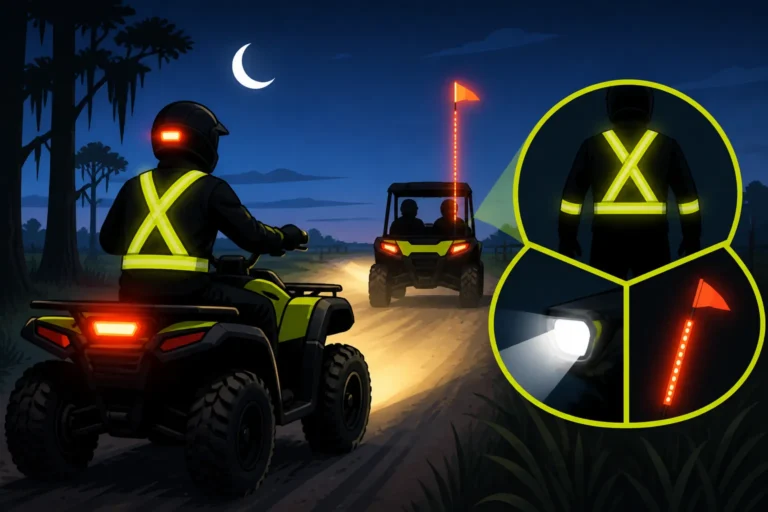
- Lights: Ensure all headlights, taillights, and brake lights are functioning, especially if you plan to ride near dusk or dawn, or if required by park rules.
- Winch: If you have one, regularly test your winch and inspect the cable/rope for fraying or damage. Brands like SuperATV make robust winches that are vital for pulling yourself (or a buddy) out of a sticky situation.
A well-maintained machine is a safe and enjoyable machine. Neglecting maintenance can lead to breakdowns far from help, or worse, mechanical failures that cause accidents.
Ethical Riding: Leave No Trace
Responsible riding extends beyond just following the law and wearing gear; it's also about respecting the environment and other users. The "Leave No Trace" principles are excellent guidelines for off-road enthusiasts:
- Stay on Designated Trails: Never venture off marked trails. This prevents erosion, protects fragile ecosystems, and keeps you out of areas where you might accidentally trespass or disturb wildlife.
- Respect Wildlife: Observe wildlife from a distance. Do not disturb animals or their habitats.
- Pack It In, Pack It Out: Whatever you bring with you, take it back out. This includes all trash, food wrappers, and even small debris. Leave the area cleaner than you found it.
- Be Considerate of Others: Reduce speed and dust when passing hikers, equestrians, or campers. Keep noise levels down, especially in shared-use areas or near residential zones.
- Plan Ahead and Be Prepared: Know your route, carry maps, first-aid supplies, and tools for minor repairs. Tell someone your plans.
By adhering to these principles, you help ensure that Louisiana's beautiful natural areas remain accessible and enjoyable for everyone, for years to come. Being a good steward of the land and a respectful member of the riding community is key to promoting our sport.
Riding ATVs and UTVs in Louisiana offers some incredible opportunities for adventure, but it’s absolutely essential to know and follow the rules. While the thought of cruising along a levee might seem appealing, the reality is that [Louisiana Levee Riding Is Prohibited] for unauthorized recreational use, and the penalties can be steep. Instead of risking fines, impoundment, or worse, focus your energy on the many fantastic legal options available. From the challenging mud pits of private parks to the scenic trails of Kisatchie National Forest, and even respectful riding on private land with permission, there are countless ways to enjoy your machine responsibly and legally. Do your homework, gear up safely, maintain your machine diligently, and always ride ethically. That way, you'll ensure many more years of thrilling off-road adventures in the Pelican State.
Disclaimer
This article is for general informational purposes only and does not constitute professional advice. Laws, prices and regulations vary by location and change over time. Consult a qualified professional for guidance on your specific situation.