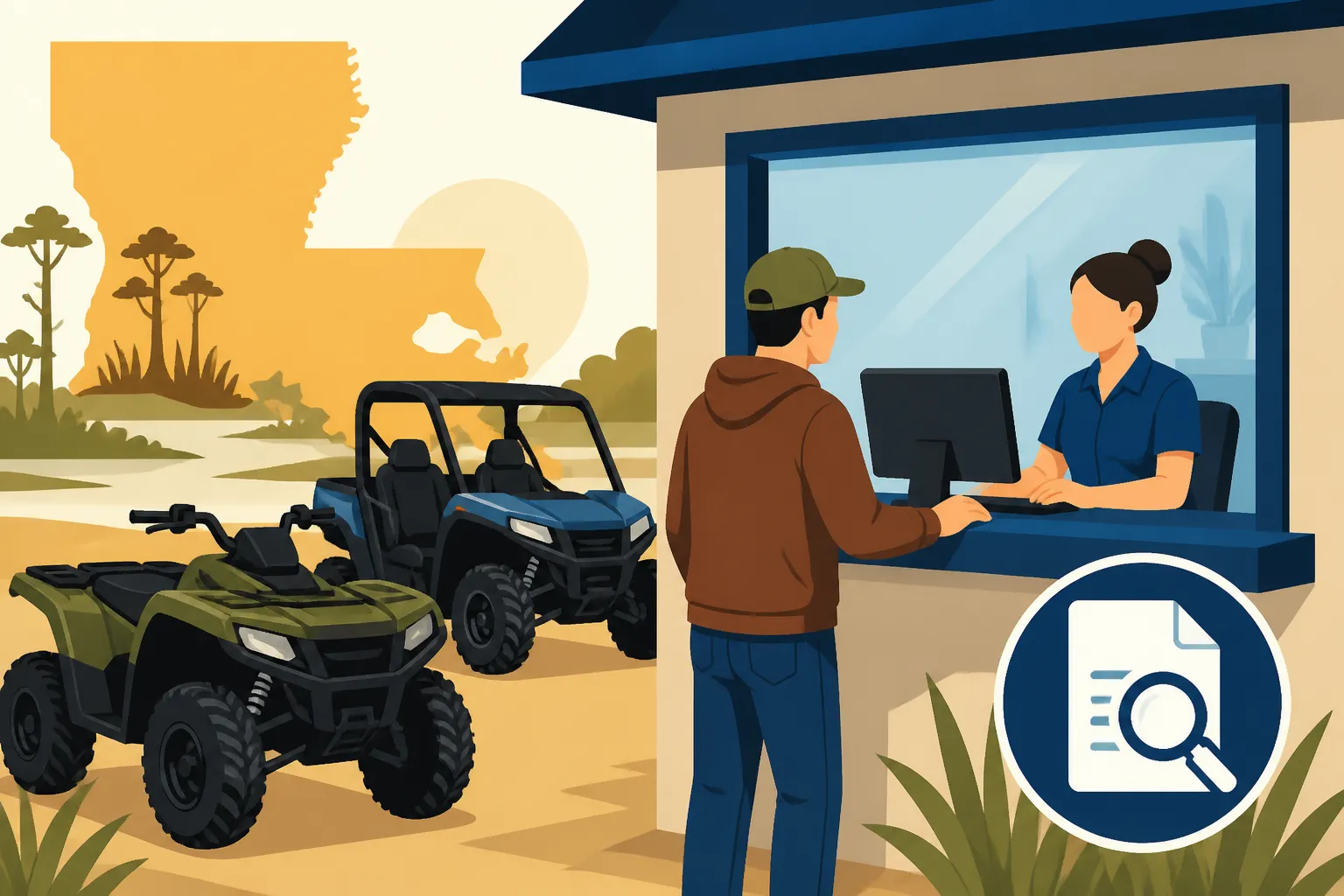
Running a Record Search at an OMV Window
Buying a used ATV or UTV in Louisiana can feel like navigating a swamp blindfolded, especially when you're trying to figure out if the machine you're eyeing has a clean past. There’s nothing worse than thinking you’ve found a great deal, only to discover a hidden lien or, even worse, that the machine was reported stolen. This guide will walk you through exactly how to perform a record search at a Louisiana Office of Motor Vehicles (OMV) window, helping you uncover crucial details about an off-road machine's history and ensuring you make an informed decision.
Why You Might Need a Record Search at the Louisiana OMV
You might be thinking, "Why do I even need to go through all this trouble?" It's a fair question, especially when you're excited about a potential purchase. But trust me, a few minutes at the OMV counter can save you countless headaches, legal battles, and financial losses down the road. It’s all about protecting yourself and your investment.
Buying a Used Machine from a Private Seller
Imagine this: You’ve been scrolling through Facebook Marketplace or local classifieds, and a shiny, well-maintained side-by-side catches your eye. The price is right, the photos look great, and the seller seems friendly enough. You arrange to meet, take it for a test ride, and it feels perfect. Everything points to a smooth transaction, but there’s always that little voice in the back of your head, isn’t there? That voice asks, "What if there's something they're not telling me?"
This is exactly why a record search is so critical. When you're buying from a private individual, you don't have the same consumer protections you would get from a licensed dealer. The seller might genuinely not know about a past issue, or they might be deliberately trying to hide something. A quick trip to the OMV can reveal if the machine has been reported stolen, if there's an outstanding loan or lien against it, or if the seller is even the legitimate owner. Don't let a sweet deal turn sour because you skipped this vital step. Think of it as a pre-purchase inspection for the paperwork, ensuring the legal side of things is as solid as the machine's engine. It gives you peace of mind that you're not inadvertently becoming an accomplice in a legal mess.
Verifying Ownership or Lien Status
Sometimes, you’re not even buying a machine, but you still need to know its legal standing. Perhaps you’re dealing with an inherited estate where an ATV is part of the assets, and you need to confirm who legally owned it and if it was free and clear of debt. Or maybe you've lent a friend some money, and their ATV was offered as collateral – you'd want to ensure there are no prior claims on it.
A record search helps you verify the current titled owner and, crucially, any active liens on the machine. A lien means that someone else, often a bank or credit union, has a financial claim on the ATV or UTV. If you were to purchase a machine with an active lien, that debt could potentially become your responsibility, or the lienholder could repossess the machine even after you’ve paid for it. This verification is essential for legal clarity, whether you’re settling an estate, securing a loan, or simply needing to know the true legal status of an off-road vehicle for any reason. Knowing the actual ownership and lien status upfront can prevent disputes and legal challenges down the line. [How a Lien Shows Up on an ATV Title] is a great resource if you discover a lien and need to understand it better.
Dealing with Lost or Damaged Paperwork
Life happens. Hurricanes, floods, fires, or simply misplacing important documents can leave you without the crucial title or bill of sale for your ATV or UTV. If you ever need to sell the machine, transfer it to a family member, or even just prove ownership for insurance purposes, missing paperwork is a huge hurdle. Imagine trying to explain to a potential buyer that you just "lost" the title – it instantly raises red flags, right?
In these situations, an OMV record search can be your saving grace. While it won't magically reproduce your lost title, it provides the foundational information needed to apply for a duplicate. The OMV's records contain the Vehicle Identification Number (VIN), past ownership history, and title issuance dates. This data is invaluable when you’re trying to reconstruct a paper trail. It validates your claim to ownership and gives the OMV staff the necessary details to process your request for a new title. Without being able to run that search, proving your ownership and getting a replacement can be significantly more complicated, sometimes even impossible without substantial extra effort and documentation. For more on this, check out [Ordering a Duplicate Title From the OMV].
The Information You'll Need and How to Get It
Walking into the OMV without knowing what to ask for or what information to bring can feel like trying to catch smoke. To make your visit efficient and successful, it's vital to be prepared. The OMV deals with thousands of transactions daily, and having your ducks in a row will ensure you get the information you need quickly, without having to make multiple trips.
Essential Details for Your Search
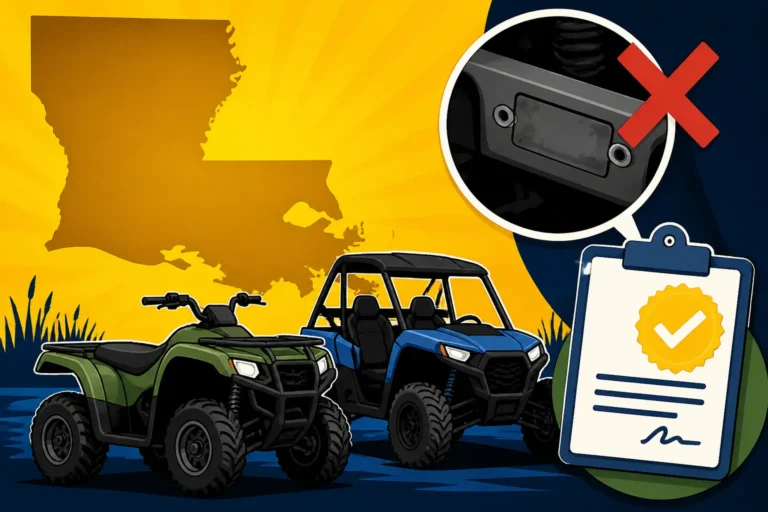
The absolute bedrock of any OMV record search for an ATV or UTV is the Vehicle Identification Number, or VIN. Think of the VIN as the machine’s DNA – it’s a unique identifier that tells the entire story of that specific vehicle, from its manufacturer to its model year and, crucially for your search, its entire recorded history in the OMV system. If you're looking at a used machine, obtaining the VIN from the seller before you go to the OMV is paramount. It’s typically stamped on the frame, often near the steering column, on a front frame rail, or under the seat. Always physically verify the VIN on the machine against any paperwork the seller provides, and ideally, take a photo of it.
While the VIN is the most critical piece of information, having the full name of the current or previous owner can also be helpful, especially if there's any ambiguity or if you’re trying to cross-reference details. However, without a VIN, the OMV staff will have a much harder time locating specific records, as their system is primarily VIN-driven for vehicle histories. Don't rely solely on a name, but if you have it, bring it along. The more specific information you can provide, the smoother your search will be.
Preparing Your Request Form and Identification
The OMV isn't like a public library where you can just browse records freely. There's a process involved, primarily due to privacy laws designed to protect individuals' personal information. When you arrive at the OMV counter, you’ll typically be asked to fill out a specific request form for vehicle record information. This form will ask for your personal details, the VIN of the machine you're inquiring about, and your reason for the request.
Crucially, you will need to present valid identification. The OMV requires [Louisiana Photo ID at the Counter] for almost any transaction, and a record search is no exception. Make sure you have your driver's license or another government-issued photo ID with you. In some cases, especially if your "legitimate interest" (which we'll cover next) isn't immediately obvious, you might need to provide additional documentation. For instance, if you're an attorney representing a client, you'd bring your bar card and a letter of representation. If you're a prospective buyer, showing a signed, notarized letter from the seller granting you permission to run the VIN can certainly help, though it's not always strictly required for a basic stolen vehicle or lien check. If you ever need to formalize a request for information or document a transaction, resources like LawDepot offer templates for various legal documents that could support your paperwork.
Understanding "Legitimate Interest" and Privacy
This is where many people run into a roadblock. You can't just walk into the OMV and ask for all the details on your neighbor's new mud machine out of sheer curiosity. The OMV operates under strict privacy regulations, primarily the federal Driver's Privacy Protection Act (DPPA), which limits access to personal information contained in motor vehicle records. To access anything beyond basic public information (like whether a vehicle is stolen or has a lien), you generally need to demonstrate a "legitimate interest."
What constitutes a "legitimate interest"?
- You are the owner: If you own the machine and need its history, that's a clear legitimate interest.
- You are a lienholder: If you hold a loan on the machine, you have a financial interest in its status.
- You are a prospective buyer: This is one of the most common scenarios. If you're considering purchasing the machine, you have a legitimate interest in ensuring it's not stolen and has a clean title. However, the OMV may ask for proof of this, such as a bill of sale in progress or a signed statement from the seller.
- You are a legal representative: Attorneys working on behalf of an owner or lienholder have a legitimate interest.
- For legal proceedings: If the information is needed for a court case or governmental action.
Essentially, the OMV isn't going to disclose private details like previous owners' addresses or personal information unless there's a clear, legally recognized reason. They're safeguarding personal data. If your reason isn't clear, the clerk may deny your request, so be prepared to explain why you need the information and how it relates to one of the approved "legitimate interest" categories. Don't be surprised if they're cautious; they're just doing their job to protect privacy.
What a Louisiana OMV Record Search Can Reveal
Once you’ve submitted your request and demonstrated your legitimate interest, the OMV clerk will perform the search. The information they retrieve can be incredibly valuable, painting a detailed picture of the ATV or UTV’s past and present legal standing. This isn't just about verifying what a seller tells you; it's about uncovering what they can't tell you, or perhaps don't even know themselves.
Ownership History and Current Titled Owner
The most fundamental piece of information a record search provides is the identification of the current legal owner. This might seem obvious, but you’d be surprised how often a casual seller online isn’t actually the person listed on the title. Sometimes they’re selling for a friend or family member, and while that might be innocent, it can complicate the transfer of ownership if the true titled owner isn’t present to sign the title over. The search will clearly state who the OMV recognizes as the current owner, helping to ensure that the person you're dealing with has the legal right to sell the machine.
Beyond the current owner, the search might also reveal the machine's ownership history. This can tell you how many times the ATV or UTV has changed hands. A machine with numerous owners in a short period might not always be a red flag, but it could prompt you to ask more questions about its history and why it’s been sold so frequently. Conversely, a machine with a single, long-term owner often suggests a well-cared-for vehicle. This information is crucial for ensuring that the entire chain of ownership has been properly documented, especially since [Louisiana Requires an Assigned Title for a Used One] when a machine changes hands. Any missing links in that chain could signal future titling problems for you.
Lien Information and Encumbrances
This is arguably the most critical part of a record search, especially for buyers. An encumbrance, most commonly a lien, means that a third party has a legal claim to the machine until a debt is paid. Imagine buying an ATV, paying cash, and then a few months later, a bank shows up to repossess it because the previous owner never finished paying off their loan. It's a nightmare scenario, but one that an OMV record search can help you completely avoid.
The search will clearly indicate if there are any active liens recorded against the VIN. This usually means a financial institution (like a bank or a credit union, perhaps one involved in [Using a Louisiana Credit Union Loan for a Quad]) lent money for the purchase of the machine, and they hold the title as collateral until the loan is satisfied. If a lien is present, you absolutely must ensure it is released and satisfied before you complete your purchase. The seller should ideally provide a lien release document directly from the lienholder. If they cannot, or if the lien still shows as active after they claim it's paid, do not proceed with the purchase until you have official confirmation from the OMV or the lienholder that the debt is clear. Inheriting someone else's debt is a costly mistake you don't want to make.
Stolen Vehicle Status and Other Alerts
Another hugely important function of the OMV record search is to confirm whether the ATV or UTV has been reported stolen. This is a non-negotiable check for anyone buying a used machine. Purchasing a stolen vehicle, even unknowingly, can lead to severe legal repercussions. You'd lose both the machine and the money you paid for it, and you could even face legal trouble for possession of stolen property. The OMV system is linked to national databases, making it an effective way of [Checking Whether a Used Quad Is Reported Stolen].
Beyond stolen status, the record search might also reveal other significant alerts or flags. For ATVs and UTVs, this could include:
- Salvage title: Indicates the machine was declared a total loss by an insurance company due to damage (e.g., from an accident, flood, or fire). While salvage titles for off-road machines are less common than for cars, they do exist and signal extensive damage.
- Rebuilt title: If a salvage machine was repaired and inspected, it might get a rebuilt title. This still means it had significant damage history.
- Branded title: A general term for titles that carry specific notations about a vehicle's history, such as flood damage, odometer tampering, or other issues.
These alerts are critical because they speak directly to the value, safety, and legal standing of the machine. Ignoring them could mean buying a problematic machine or one that will be incredibly difficult to insure or resell. For example, if you're looking at [Titling a Quad Bought at a Louisiana Auction], a record search is even more vital as auction machines sometimes come with more complex histories.
Costs, Timeframes, and What to Expect
You're prepared, you know what you're looking for, and you understand the importance. Now, let's talk practicalities: how much does it cost, how long does it take, and what should you do with the information once you have it? Being aware of these details will help you manage your expectations and budget your time effectively.
Fees for a Record Search
The Louisiana OMV does charge a nominal fee for performing a record search. This isn't a free service, as it involves staff time and access to their databases. While I can't provide exact figures (as these can change), you should expect the cost to be relatively modest, usually a flat fee per search or per record accessed. It’s designed to cover the administrative costs rather than to be a significant revenue generator.
My best advice here is always to check the official Louisiana OMV website or call your local OMV branch ahead of time to confirm the current fee for a vehicle record search. This way, you can arrive prepared with the correct payment method, whether that's cash, card, or check. Consider this fee a small investment that offers substantial protection against potentially much larger financial losses. It’s a tiny price to pay for peace of mind, especially when you compare it to the cost of purchasing a machine with a hidden problem.
Processing Time and Receiving Results
Good news! For most standard record searches concerning liens, stolen status, and current ownership for ATVs and UTVs, the process at the OMV counter is typically quite quick. In many cases, if you have the VIN ready and your identification is in order, the OMV clerk can perform the search and provide you with the results on the spot. They might print out a summary, tell you the information verbally, or give you a copy of the specific record if you requested it.
However, keep in mind that "quick" can sometimes mean waiting in line if the OMV office is busy. It's always a good idea to visit during off-peak hours if possible. For more complex requests, or if the clerk needs to dig deeper into archived records, it might take a bit longer, but usually, you won't be waiting days or weeks. You should expect to leave the OMV window with the information you need, allowing you to proceed with your buying decision without significant delay. This immediate feedback is one of the major advantages of doing an in-person search.
What to Do With the Information
So, you’ve got the record search results in hand. Now what? This is the point where you leverage that information to your advantage. The actions you take next will depend directly on what the search revealed:
- Clean Record: If the search comes back clean – no liens, not stolen, clear ownership – congratulations! This significantly de-risks your purchase. You can move forward with confidence, knowing that the legal side of the transaction is solid. Always make sure the seller is the titled owner and is present to sign the title over to you.
- Active Lien Found: If an active lien is discovered, this is a major red flag. Do NOT proceed with the purchase until the lien is officially released. Request proof of the lien release directly from the lienholder, and ideally, verify with the OMV that the lien has been removed from the record before you hand over any money. If the seller insists it's paid but can't provide proof, walk away. Your money is better kept safe than tied up in someone else's debt. For more insights on financial aspects, consider [Financing a Quad Through a Shreveport Dealer].
- Stolen Vehicle: This is the worst-case scenario. If the machine is reported stolen, immediately inform the OMV clerk and the local law enforcement. Do not attempt to confront the seller yourself. You've just saved yourself from a huge legal and financial headache, but it’s crucial to let the authorities handle it.
- Discrepancies or Other Alerts: If you find any other discrepancies (like a different owner than the seller claimed, or a branded title you weren't aware of), this is your opportunity to ask probing questions. Use this information to negotiate a lower price, or if the issues are too severe, reconsider the purchase entirely. For example, if [What Happens When a Title Is Missing a Signature] from a previous owner, the OMV record might hint at that, and you'd need to get that corrected before you could title it.
Ultimately, the OMV record search is a powerful tool in your due diligence arsenal. It empowers you with facts, protecting you from potential fraud, legal entanglements, and financial loss. It’s an essential step for any responsible buyer or anyone needing to confirm the legal status of an ATV or UTV in Louisiana.
Here’s a quick overview of what an OMV record search can clarify:
| Aspect | What You Might Assume | What an OMV Record Search Reveals |
|---|---|---|
| Ownership | Seller says they own it. | Confirms current legal titled owner, and potentially prior owners. |
| Liens | Seller says it's paid off / no loans. | Clearly shows if any banks, credit unions, or other entities have a claim. |
| Theft Status | Seller assures you it's not stolen. | Cross-references VIN with stolen vehicle databases. |
| Title History | Seller claims "clean title." | May reveal salvage, rebuilt, or other branded title notations. |
| Paperwork Issues | Seller has a basic bill of sale. | Can provide info needed to apply for [Louisiana Title Without a Bill of Sale] if yours is lost. |
Disclaimer
This article is for general informational purposes only and does not constitute professional advice. Laws, prices and regulations vary by location and change over time. Consult a qualified professional for guidance on your specific situation.