Decal Mistakes the OMV Sees Over and Over
If you've ever felt that pit in your stomach when a Louisiana State Trooper pulls you over, or when you finally decide to sell your trusty ATV and discover a forgotten issue with its decal, you're not alone. The Office of Motor Vehicles (OMV) sees countless issues with off-road vehicle decals every year, often due to simple misunderstandings or honest mistakes. This guide is here to walk you through the most common decal blunders and, more importantly, how to avoid them, ensuring your machine is always street-legal for those permitted shoulder rides or ready for its next adventure without a hitch.
The Most Common Decal Headaches the OMV Encounters
Navigating the world of off-road vehicle registration in Louisiana can sometimes feel like trying to find your way through a cypress swamp after dark – confusing and full of hidden obstacles. When it comes to the small but mighty ORV decal, many riders inadvertently trip themselves up. It's not usually intentional; often, it comes down to not fully grasping the OMV's expectations.
Incorrect Placement or Visibility Issues
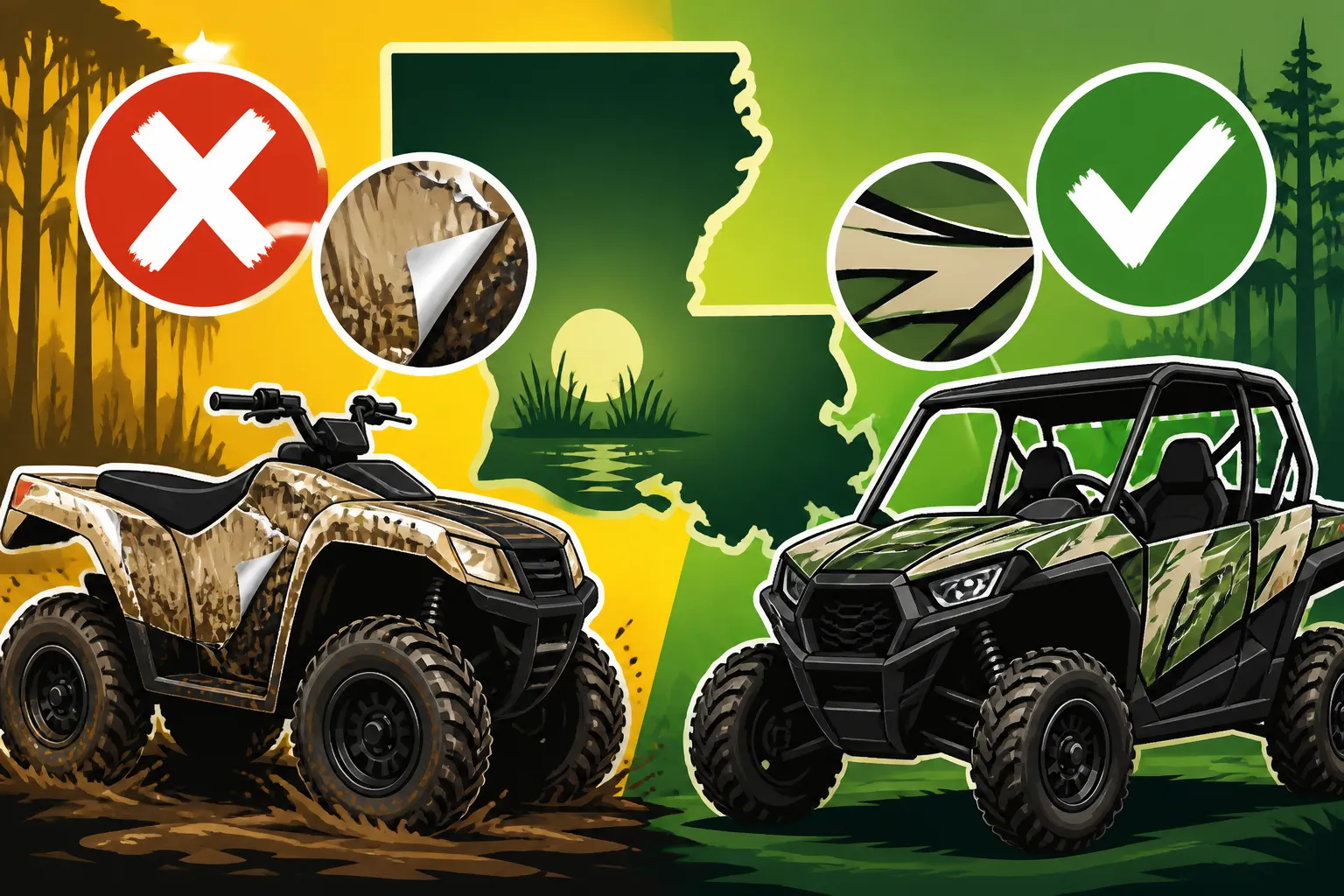
One of the top reasons people run into trouble is simply where or how they’ve affixed their decal. You might think, "It's on the machine, so what's the big deal?" But the OMV has specific guidelines for [Louisiana Decal Placement on a Machine], and straying from these can lead to complications. For instance, if your decal is tucked away in a glove box, obscured by mud, or slapped onto a piece of removable gear, it’s effectively invisible. A law enforcement officer needs to be able to see that decal clearly and quickly to verify your machine's compliance.
Think about it from a trooper's perspective: they pull you over on a parish road, perhaps because you're riding too close to the travel lane or a concerned citizen called in. They need to quickly identify if your machine is legally permitted to be there. If they have to climb all over your quad to find a smudged or hidden decal, that quick stop can turn into a much longer, more frustrating interaction. This isn't about being nitpicky; it's about quick identification and enforcement, especially when dealing with the rules around [Louisiana ATV Road Rules Under 32:299]. Many riders don't realize that a poorly placed decal can be just as problematic as no decal at all, leading to the same penalties and the hassle of proving you do have one.
Letting Your Decal Expire
Life gets busy, right? Between work, family, and trying to squeeze in some saddle time on your quad, remembering to renew a small decal might slip your mind. However, an expired decal is another major pitfall the OMV sees repeatedly. Louisiana's ORV decals operate on a specific cycle, and if you're not aware of [Louisiana Decal Cycles and Their Length], it's easy to miss the renewal window. You might have just a few days or weeks left before it expires, and suddenly you're riding around without a valid decal.
This isn't like forgetting to renew your gym membership; there are real consequences. An expired decal means your machine isn't legally registered for off-road use or for the limited road privileges Louisiana allows. If you’re riding on a designated parish road or crossing a highway, and your decal is expired, it’s essentially the same as riding without one. The OMV often hears stories from riders who genuinely forgot, only to face a citation. Keeping track of that expiration date is crucial, especially when you consider [Louisiana's Yearly Off-Road Decal] is such a small fee that it often gets overlooked in the grand scheme of things.
Not Getting a Decal for Exempt Machines
Now, this one can be tricky because Louisiana does have exemptions. For example, machines used exclusively for bona fide agricultural purposes on private land generally don't need a full ORV decal. You might think, "Great, one less piece of paperwork!" However, there's a critical nuance that often gets missed. Even if your quad is purely for the farm, if you ever cross a public road, even just a parish road shoulder, for agricultural purposes, you still need to be aware of the rules. The OMV deals with many cases where farmers assumed total exemption, only to be stopped when riding along a shoulder to get to another field. While [Louisiana Farm-Only Machines Need No Decal] for strictly private land use, the moment that wheel touches a public right-of-way, even for legitimate farm work, the rules shift.
This often leads to confusion, especially with the limited shoulder-riding exceptions. The OMV frequently sees affidavits for farm use, but these are specifically for road use exemptions under certain conditions, not for complete decal avoidance if any public access is involved. It’s a common misconception that because your machine is primarily for farm work, it’s exempt from all decal requirements, no matter where it goes. This gray area leads to many OMV visits and, unfortunately, tickets for those who weren't fully informed.
Forgetting the 30-Day Deadline to Affix Your Decal
You just bought a brand-new side-by-side or a used quad from a private seller. You're excited, you've got your paperwork, and you're ready to hit the trails or get to work on the farm. But did you know there's a strict deadline for actually affixing that shiny new decal? The OMV policy is clear: [You Have 30 Days to Affix the Decal] once it's issued. This isn't just about having the decal; it's about having it on the machine, properly displayed. Many riders mistakenly believe that as long as they have the physical decal in hand, they're good to go.
This often happens with private sales. You might complete the transaction, get your [Louisiana Notarized Bills of Sale] in order (perhaps even using a service like LawDepot to ensure your bill of sale is legally sound), and then you head to the OMV to get your title and decal. The decal arrives in the mail, but it sits on the kitchen counter while you get around to washing the machine or finding the perfect spot. That grace period is shorter than you think, and if you're pulled over within that 30-day window but haven't actually applied it, you could still be in violation. It's a small detail, but one that causes disproportionately high numbers of headaches for riders and OMV staff alike.
The Consequences of Decal Missteps
Making a mistake with your ORV decal isn't just about a potential slap on the wrist. Depending on the severity and frequency of the issue, the consequences can range from minor inconveniences to significant financial burdens and even the loss of your machine. It's important to understand the ripple effect these seemingly small oversights can have.
Penalties, Fines, and Court Costs
The most immediate and common consequence of a decal mistake is a citation. If you're caught riding with an expired, improperly displayed, or missing decal, law enforcement isn't likely to just give you a warning, especially if you're on a public road. [Louisiana Penalties for No Decal] can be substantial, often involving fines that quickly add up. Beyond the initial fine, you'll also likely face court costs, even if you simply pay the ticket without appearing before a judge. These costs can easily dwarf the actual cost of the decal itself, which is typically a very minimal yearly fee.
Imagine you're enjoying a weekend ride near Colfax or on one of the designated trails in Kisatchie National Forest, and you take a wrong turn onto a public road. A quick check by a state trooper reveals your decal expired two months ago. What started as a fun day can quickly become a costly lesson, especially when you factor in the time lost, the stress of dealing with a citation, and the hit to your wallet. These are the scenarios the OMV hears about constantly, and they're almost always preventable.
Roadside Stops and Possible Impoundment
Beyond financial penalties, a decal issue can lead to a roadside stop escalating in severity. If a law enforcement officer cannot verify your machine's registration status due to a missing or obscured decal, they might suspect the machine is stolen or illegally operated. This can lead to a much longer and more thorough investigation than a simple traffic stop. In some cases, particularly if there's no proof of ownership or the decal issue is severe (e.g., a clearly fraudulent decal), your machine could even face impoundment.
Having your ATV or UTV impounded is a nightmare scenario. You're not just looking at fines; you're looking at tow fees, storage fees that accrue daily, and the massive hassle of proving ownership and getting the vehicle released. The OMV is very clear on this: without proper documentation and a visible, valid decal, you're putting yourself at risk. It’s a situation that turns a routine ride into a costly administrative headache, underscoring why paying attention to details like your decal is so crucial.
Trouble When Selling Your Machine
Let's say you've enjoyed years of riding, and now it's time to upgrade or sell your current machine. You list it online or take it to a dealer, only for the buyer or dealer to discover an issue with the decal history or current status. This can be a major red flag for potential buyers and can significantly delay or even derail a sale. If your machine has a history of expired decals, or if you can't provide proper documentation showing continuous compliance, it raises questions about its legal status and maintenance.
A diligent buyer, especially one using a service like LawDepot to draft their purchase agreements or to perform due diligence, will want to ensure the machine they are buying has a clean history. If you've got a string of expired decals or have gaps in your registration, it complicates the transaction. The buyer might ask for a lower price, or worse, walk away entirely. The OMV often advises sellers to ensure all their paperwork, including current decals and title records, is perfectly in order before even thinking about putting their machine on the market. A clear, compliant history makes for a smooth, hassle-free sale.
A Checklist to Avoid Decal Problems
Avoiding common decal mistakes boils down to a few straightforward steps and a bit of proactive planning. The OMV, and experienced riders across Louisiana, will tell you that a little effort upfront saves a lot of grief later.
Double-Checking Your Application
The process of getting your decal starts with the application. Whether you're doing it in person at an OMV office or online, accuracy is paramount. Make sure every field is filled out correctly, especially your mailing address so the decal actually reaches you. It sounds simple, but errors here can delay your decal or send it to the wrong place. When you apply for your title, such as described in [Louisiana Titles ATVs Through the OMV], your decal often comes as part of that process.
It’s also crucial to ensure all supporting documents are correct. If you're buying a new machine, you'll need the Manufacturer's Statement of Origin (MSO). For a used machine, an assigned title is required. Ensure that any [Louisiana Notarized Bills of Sale] you submit are complete and accurate. You might consider using a reputable online platform like LawDepot to generate a comprehensive bill of sale, ensuring all the necessary legal language and fields are included, which can save you a trip back to the OMV. Double-check your VIN, your name, and any other identifying information. A small typo on the application can create a big headache down the line.
Understanding Your Decal's Cycle
Louisiana's off-road vehicle decals typically run on a cycle, often a four-year one, with a small yearly fee. But this doesn't mean you get a new sticker every year. You might get one decal that's valid for multiple years, but you're still responsible for paying the annual fee. Knowing when that fee is due, and understanding the full [Louisiana Decal Cycles and Their Length], is key. Some riders mistakenly think if they have the multi-year sticker, they don't need to do anything until that sticker expires, forgetting the annual payment requirement.
It’s a good idea to set up reminders on your phone or mark your calendar for when your annual fee is due, not just the sticker’s physical expiration. The OMV doesn't want to catch you unaware, but it's ultimately your responsibility to stay compliant. Keep a copy of your initial application or registration in a safe place so you can easily reference the cycle dates.
Knowing Your Machine's Exempt Status
If your machine is primarily for agricultural use, you might be eligible for an exemption from the ORV decal if it stays strictly on private land. However, as we discussed, even incidental use on public rights-of-way, like crossing a parish road or riding a shoulder, can require specific paperwork. If you use your quad for farming and occasionally need to travel short distances on public roads, you might need to carry a [Louisiana Agricultural Affidavits for an ATV] and ensure you meet the specific criteria outlined in [Louisiana's Shoulder-Only Farm Exception].
It's vital to clarify with the OMV whether your specific use case qualifies for an exemption or if you need to follow specific procedures for limited road use. Don't assume. Many people use services like LawDepot to create clear, legally sound affidavits for various purposes, including agricultural exemptions, to ensure they have the proper documentation. A quick call to your local OMV or a review of their official guidelines can save you from an uncomfortable conversation with law enforcement later.
Keeping Paperwork Organized
This might sound like a simple piece of advice, but it's profoundly important. Keep all your ORV-related paperwork – your title, proof of sales tax payment (because [Louisiana Requires Proof of Sales Tax First] before titling), original MSO or bill of sale, and any decal receipts – in a secure, easily accessible folder. While you typically don't carry your title on your machine, having a copy of your current decal receipt or registration proof is a good practice, especially if you're frequently riding on public access points.
If you ever get stopped, or if there's a question about your machine, having immediate access to your documentation can clear up misunderstandings quickly. It also makes renewing your decal, selling your machine, or even dealing with insurance claims much smoother. This organizational habit can be a lifesaver when you need to prove compliance or ownership on the spot.
Here's a quick summary of common decal issues and how to tackle them:
| Mistake Type | Common Cause | Solution |
|---|---|---|
| Incorrect Placement | Not knowing OMV guidelines, rushed application | Affix decal in a visible, easily accessible spot (e.g., front fender, frame). Refer to OMV guidelines. |
| Expired Decal | Forgetting renewal date, confusion about cycle | Track expiration date. Understand the [Louisiana Decal Cycles and Their Length]. Renew promptly. |
| Missing Decal (Exempt) | Misunderstanding "farm-only" rules | Confirm if any public road use (even shoulder) requires a decal or specific affidavit. |
| Not Affixing Decal (30-day) | Delay in application, thinking "having it" is enough | Affix your new decal within [Louisiana's 30-Day Decal Deadline] after receiving it. |
| Lost/Damaged Decal | Wear and tear, accident | Apply for a [Louisiana Decal Replacement If Lost] through the OMV as soon as possible. |
What to Do When You've Already Made a Decal Mistake
It happens. You're human, and mistakes are part of life. The good news is that most decal errors can be rectified. The key is to address them proactively rather than waiting for a law enforcement officer to point them out.
Correcting Placement or Re-affixing a Decal
If you realize your decal isn't properly placed or has become obscured, the first step is simple: fix it. Peel off any old or damaged decals cleanly. Make sure the area where you'll apply the new decal is clean and dry. Choose a prominent, easily visible spot on your machine that aligns with OMV recommendations – usually a front fender, frame, or another clear, flat surface. The OMV often sees decals applied to removable parts, like a cooler, which isn't ideal.
If your current decal is too dirty to read, clean it gently. If it's torn or faded to the point of illegibility, you'll need a replacement. Don't try to "make do" with a barely visible decal, as it will likely still lead to questions if you're ever stopped. It’s better to be safe and ensure the decal is clear as day.
Renewing an Expired Decal
Discovering your decal is expired is a moment for quick action. Don't continue riding on public land or roads with it. Head to your local OMV office or use their online services to initiate a renewal. You'll likely need your machine's VIN and proof of ownership (like your title). Be prepared to pay any applicable fees, including the yearly decal cost.
Sometimes, if your decal has been expired for a significant period, there might be additional steps or questions, but generally, the OMV wants to get you back into compliance. The important thing is not to delay. The longer it's expired, the higher the risk of encountering issues with law enforcement. Keeping an eye on the [Louisiana OMV Policy Changes for 2026] and subsequent years can also help you stay ahead of any new requirements for renewal.
Applying for a Missing Decal
If you've bought a machine and never received a decal, or if you had an exemption that no longer applies (e.g., you're now using a farm machine for recreation), you'll need to apply for one. This process is similar to initial registration. You'll need your title, proof of sales tax payment (or an affidavit if sales tax was paid in another state, such as when [Using a Texas Sales Tax Receipt at the OMV]), and a valid photo ID.
The OMV counter staff are there to help, but it makes their job, and your visit, much smoother if you come prepared with all necessary documents. Don't assume the machine "came with" a decal from a private seller if you haven't seen one; it's your responsibility to ensure it has one. Getting everything in order before you hit the trails or fields ensures your rides are worry-free.
Disclaimer
This article is for general informational purposes only and does not constitute professional advice. Laws, prices and regulations vary by location and change over time. Consult a qualified professional for guidance on your specific situation.