Louisiana Titles for an Inherited Machine
Losing someone you love is incredibly tough, and the last thing you want to deal with amidst your grief is a mountain of paperwork. Yet, when an ATV or UTV is part of the estate, you eventually face the task of transferring that machine into your name. It can feel overwhelming trying to figure out the Louisiana Office of Motor Vehicles (OMV) process while navigating everything else. This guide is here to walk you through the steps, clarify the requirements, and help you title an inherited off-road machine in Louisiana with as much ease as possible during a difficult time.
Understanding the Landscape of Inheritance in Louisiana
Inheriting an off-road vehicle in Louisiana brings with it a unique set of administrative challenges, especially when you're already grappling with the emotional weight of loss. It’s a moment when the state's legal framework for property transfer intersects with personal grief, creating a situation that can feel both necessary and incredibly taxing. Many folks are simply trying to honor a loved one's memory and ensure their cherished machine can still be enjoyed responsibly, without running afoul of the law.
The Emotional Burden of Estate Management
Let's be real, dealing with an estate is rarely just about logistics. It's an emotional minefield, and the thought of tackling government forms and legal documents can be utterly exhausting when your heart is heavy. You might be sifting through boxes of old photos one day and trying to locate a title the next. This isn't just about transferring ownership; it's about acknowledging the past and preparing for the future, all while carrying a significant emotional load. It’s perfectly normal to feel overwhelmed, frustrated, or even a bit resentful that these tasks fall to you during such a sensitive period. Please know you're not alone in these feelings.
The paperwork itself can feel impersonal and cold, a stark contrast to the personal nature of what you’re experiencing. Even tasks that seem minor, like getting a vehicle titled, can balloon into major stressors. It's not just the complexity of the forms; it's the mental energy required to focus on details when your mind is naturally elsewhere. Taking it one step at a time, and understanding that others have walked this path before, can sometimes make it a little less daunting.
Why Louisiana Requires a Title for Off-Road Vehicles
Louisiana takes the titling of off-road vehicles seriously, and for good reason. Just like with cars and trucks, a title for an ATV or UTV serves as the official proof of legal ownership. Without it, the state can't properly track who owns what, which makes things like collecting sales tax, deterring theft, and resolving disputes nearly impossible. Even though your inherited machine might never see a public road, the OMV still needs a clear chain of ownership documented. This is part of the broader system that [Louisiana ORV Decals and Titles Explained] covers, ensuring every machine on Louisiana's trails and private lands has a verifiable owner.
The OMV’s system is designed to provide clarity and prevent fraud. When a machine passes from one owner to another, whether by sale or inheritance, the state wants a formal record. This is especially important for situations where a vehicle might have been acquired in another state, or where there’s a question about previous ownership. For the new owner, having a clean title in your name is paramount. It protects you from future claims, allows you to legally sell the machine down the line, and ensures you can get the necessary [Louisiana's Yearly Off-Road Decal] to ride on public lands where decals are required.
Essential Documents You'll Need to Gather
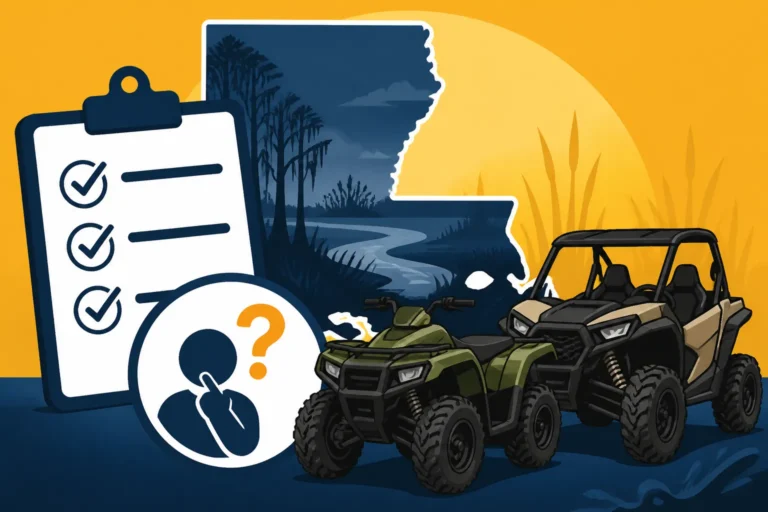
When you're trying to title an inherited off-road machine in Louisiana, one of the first and most critical steps is gathering all the necessary documentation. This can feel like a scavenger hunt at times, especially when you're still coming to terms with the loss. But having everything in order before you head to the OMV will save you immense time and potential frustration down the road. It’s a testament to your loved one's legacy to ensure their affairs are handled correctly.
The Importance of a Will or Succession Documents
The cornerstone of inheriting any property, including an ATV or UTV, is typically the deceased's will. If a valid will exists, it will designate who inherits the machine. This document, once validated through a process often called "succession" or "probate" in Louisiana, provides the legal authority for the property transfer. You'll need a certified copy of the will and the court order recognizing it. For smaller estates, Louisiana has simplified "small succession" procedures, which might require less formal court involvement but still lead to an official judgment or affidavit recognizing the heirs.
If there was no will, the machine is subject to Louisiana's laws of "intestate succession," which means the state's laws dictate who inherits. This usually involves spouses and children first, then other relatives. In such cases, a formal judgment of possession from a Louisiana court will be essential. This judgment legally declares who the heirs are and what property they inherit. Without it, the OMV won't have the legal basis to transfer the title, making those court documents absolutely crucial. It's a step that confirms the rightful new owner in the eyes of the law.
Proof of the Deceased's Ownership
Beyond the will or succession documents, you absolutely must have proof that the deceased legally owned the ATV or UTV in the first place. The gold standard here is the original Louisiana Certificate of Title. If your loved one kept good records, this should be fairly easy to locate among their important papers. This document clearly lists the deceased as the owner, and its presence streamlines the transfer significantly.
What if the original title is missing? This is a surprisingly common scenario, and it definitely adds a layer of complexity. Don't panic, but be prepared for a bit more legwork. You might need to check if a lienholder (like a bank) has the title, or if the OMV has an electronic record. In some cases, you might be able to request a duplicate title through the succession process, or the OMV might accept other forms of evidence combined with an affidavit. This is where researching options like those described in [Louisiana Title Without a Bill of Sale] can offer a glimpse into how the OMV handles situations with less-than-perfect documentation, though inheritance rules have specific pathways.
Identifying the New Owner(s) and Their Information
Once the legal process has identified you as the heir, you'll need to provide all your personal information to the OMV. This includes your full legal name, current physical address, and a valid photo identification. The OMV is very particular about ensuring the person applying for the title is indeed the person legally entitled to it and that all information is accurate. Having all of this ready will make your visit much smoother.
If the will or succession documents designate multiple heirs for the same machine—say, a brother and sister inheriting their dad's side-by-side—then things get a little more intricate. In this case, all designated owners will need to be listed on the new title. This means they will all need to provide their personal information and IDs. The OMV will then issue a title with both (or more) names on it. The precise wording (e.g., "OR" versus "AND") can affect how the machine can be sold later, so it's worth understanding the implications, as detailed in guides like [Putting Two Names on One Louisiana Title].
Navigating the Louisiana OMV Process
With all your documents in hand, the next step is to actually go through the OMV process. This can feel like walking into a maze sometimes, but knowing what forms you need and what specific requirements apply to inherited vehicles will make a world of difference. Being prepared is half the battle when dealing with any government agency.
The Application for Vehicle Certificate of Title
The central piece of paperwork you’ll complete at the OMV is the application for a new title. In Louisiana, this is typically the Form DPSMV 1799. While it’s a standard form for all title applications, certain sections will be crucial for your inherited machine. You’ll need to fill out your information as the new owner, and then carefully indicate that the transfer is due to inheritance, not a sale. This distinction is important for how the OMV processes the application and particularly for sales tax considerations.
It's vital to fill out every section accurately and completely. Any missing information or discrepancies can lead to delays, forcing you to make another trip or resubmit forms. The OMV clerks are there to help, but they can only work with the information you provide. Double-check VINs, names, and addresses. Familiarizing yourself with the form beforehand, perhaps by looking at a sample, can be a great way to prepare. For a more detailed breakdown of this form, you can refer to [Louisiana Form DPSMV 1799 Explained].
Affidavits of Heirship or Small Succession Affidavits
In situations where a full, formal succession through the courts isn't required (often for smaller estates or certain types of property), Louisiana allows for the use of affidavits to confirm heirship. An Affidavit of Heirship or a Small Succession Affidavit is a sworn legal document, signed under penalty of perjury, that identifies the deceased's heirs and lists the property they are inheriting. These affidavits are incredibly powerful and critical when avoiding a lengthy probate process. They provide the OMV with the legal assurance they need that you are the rightful inheritor.
These affidavits typically need to be sworn to and signed in front of a notary public, adding another layer of legal validity. A notary's seal confirms the identity of the signer and the authenticity of the signature. Understanding the role of a notary, as explained in [Why Your Bill of Sale Needs a Notary], can be helpful here, even though this isn't a bill of sale. Drafting these affidavits correctly is paramount; they must contain specific legal language and facts about the deceased and their heirs. If you're managing this without a lawyer for a straightforward situation, services like LawDepot can be incredibly useful. LawDepot offers templates for various legal documents, including affidavits, which can help ensure you're including all the necessary information in the proper legal format, often saving you legal fees for simpler matters.
Addressing Sales Tax (Even on an Inherited Machine)
This is a point of frequent confusion for many inheritors. Generally, an inherited ATV or UTV is not subject to new sales tax at the time of transfer if sales tax was already paid when the deceased purchased the machine. The OMV isn't looking to collect tax twice on the same item simply because it changed hands due to death. The state considers this a transfer of ownership, not a new sale.
However, the OMV still needs proof of that original sales tax payment. If your loved one purchased the machine new from a Louisiana dealer, that proof will likely be in their records or on the original title application. If the machine was purchased privately or out-of-state, and there’s no clear record of sales tax having been paid to Louisiana, you might need to sign an affidavit attesting that tax was, in fact, paid. In rare cases, if no tax was ever legally paid to Louisiana or another state that offers reciprocity, the OMV might require you to pay a use tax. It’s always best to have as much documentation as possible regarding the original purchase, as discussed generally in [Louisiana Sales Tax Proof at the Counter], to avoid any unexpected tax bills.
Potential Hurdles and How to Overcome Them
Even with the best preparation, dealing with inherited property can sometimes throw a curveball. The OMV process, while generally straightforward for common transactions, can become complicated quickly when critical documents are missing or unforeseen circumstances arise. Anticipating these hurdles can help you prepare and navigate them more effectively.
Missing Titles or Incomplete Paperwork
It’s an all-too-common scenario: you’re going through a loved one’s belongings, looking for that elusive ATV title, and it's simply not there. Perhaps it was lost, damaged, or simply misplaced years ago. While frustrating, a missing title doesn’t mean you’re out of luck, but it does mean more steps. Your first course of action should be an exhaustive search through all the deceased’s important papers, safe deposit boxes, and even filing cabinets. Sometimes, a lienholder (like a bank that financed the original purchase) might still hold the physical title until the loan was paid off.
If the physical title cannot be found, the OMV can often conduct a record search based on the Vehicle Identification Number (VIN). This search, detailed in [Running a Record Search at an OMV Window], can confirm if the deceased was indeed the registered owner and if there were any liens. You may then need to complete additional affidavits attesting to the loss of the title and your right to inherit the machine, alongside your succession documents. The key is providing the OMV with enough verified information to confidently issue a new title in your name.
Handling Liens on an Inherited ATV/UTV
Discovering that an inherited ATV or UTV still has an outstanding lien on it can be a significant complication. A lien means that another party, usually a bank or finance company, has a legal claim to the vehicle until a debt is paid off. This lien passes with the inheritance, meaning you, as the inheritor, are now responsible for the remaining debt if you wish to obtain a clear title. The OMV will not issue a new, clear title in your name until the lien is satisfied and a lien release is provided.
You'll need to contact the lienholder directly to understand the outstanding balance and payment options. Once the debt is paid off, the lienholder will issue a "lien release" document. This official document must then be presented to the OMV along with your other inheritance paperwork. The OMV will then process the new title, ensuring the lien is removed from the record. For more information on how liens are recorded and appear on titles, see [How a Lien Shows Up on an ATV Title]. This step is crucial for gaining full, unencumbered ownership of the machine.
Out-of-State Inheritance
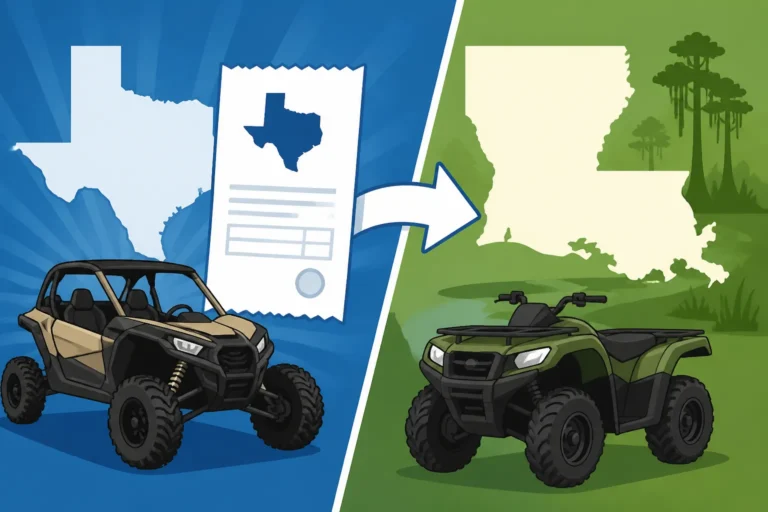
Sometimes, a loved one might have owned an ATV or UTV that was titled in another state, but you now reside in Louisiana, or the machine will primarily be used here. This scenario introduces another layer of complexity because you're dealing with two different state's titling laws. The Louisiana OMV will require the original title from the other state. They will also need robust proof of inheritance, such as the will and succession documents, or the relevant affidavits from the state where the succession took place.
Additionally, Louisiana has its own sales and use tax laws. If sales tax wasn't paid to Louisiana when the machine was first brought into the state, or if the original purchase was made in a state with a significantly lower sales tax rate, you might be assessed a "use tax" to make up the difference. This is a common requirement for vehicles brought in from out of state, whether purchased or inherited, as explained in [Louisiana Tax on an Out-of-State Machine]. Be prepared to provide documentation of any sales tax paid in the original state of titling. You might also need a Louisiana-specific affidavit affirming the out-of-state inheritance. LawDepot can again be a resource here, providing templates for affidavits that can be customized to describe the specific circumstances of inheriting an out-of-state vehicle, helping you present clear documentation to the OMV.
The Final Steps and What Comes Next
You've navigated the emotional waters, gathered the necessary documents, and understood the potential pitfalls. Now, you're on the home stretch of officially titling your inherited ATV or UTV in Louisiana. These final steps are about wrapping up the administrative process and preparing your machine for responsible use, ensuring everything is in order for its next chapter.
Fees Associated with Titling
Unfortunately, even with an inherited machine, there are still some fees associated with getting a new title issued in your name. While you're not paying sales tax again (assuming it was previously paid), you will typically encounter the standard Louisiana title fee and an OMV handling fee. These fees are set by the state and are generally non-negotiable. While the exact figures can change over time, they are fixed amounts for these services. It's always a good idea to check the current rates on the OMV's website or by calling your local office before your visit. You can find more general information about these costs in [Louisiana Title Fees for an ATV].
Beyond the state fees, if you utilized a notary for any affidavits or other documents, you’ll have a separate notary fee. If your situation was complex enough to warrant legal counsel, those attorney fees would also be part of your overall cost of transferring the title. These fees, while not always substantial, are important to factor into your planning. Being prepared for these costs means you won't face any surprises when you're at the OMV counter, ready to complete the process.
What to Do After Receiving the New Title
Congratulations! Once you've successfully navigated the OMV process and received the new Louisiana Certificate of Title in your name, you've completed a major hurdle. This title is a critical legal document, so your first order of business should be to store it in a safe and secure place, such as a fireproof safe, a secure filing cabinet, or a safe deposit box. Do not keep it in the ATV or UTV itself, where it could be lost or stolen.
With the title secured, your next step is to address the [Louisiana's Yearly Off-Road Decal]. Even if the machine is now in your name, it still requires this decal if you plan to ride it on public lands, designated trails, or sometimes even on parish roads with specific ordinances. You can usually apply for and purchase this decal at the OMV office at the same time you title the machine, or shortly thereafter. Finally, consider your insurance options. While Louisiana doesn't always mandate insurance for off-road machines used exclusively on private property, it's a wise investment for protecting your asset and yourself, especially if you plan to ride it on roads or public trails. [Does Louisiana Require Insurance on an Off-Road Machine?] offers more insights into this.
Seeking Professional Assistance
While this guide aims to simplify the process, some inheritance situations can be incredibly complex. If the estate is large, involves multiple heirs with disagreements, or has unusual circumstances (like a missing VIN or complicated lien issues), it might be prudent to consult with an attorney specializing in estate law or property transfers. They can provide tailored advice, navigate complex legal frameworks, and represent your interests, ensuring a smooth and legally sound transfer. Sometimes, the peace of mind an attorney provides is well worth the investment, especially when emotions are already running high.
For those who find the OMV process itself daunting but don't require full legal representation, a public tag agent can be a fantastic resource. These are private businesses licensed by the state to process OMV transactions, and they often offer more personalized service and shorter wait times than a direct OMV office visit. They can guide you through the forms, ensure everything is correct, and submit the paperwork on your behalf. Additionally, as mentioned, for those looking for cost-effective ways to ensure their documents are legally sound for simpler cases, LawDepot offers a wide array of legal document templates. This can be beneficial for creating necessary affidavits or other basic estate-related forms, empowering you to handle parts of the process yourself with confidence, even without a lawyer on retainer. LawDepot's resources can offer a valuable middle ground for many inheritors, providing structured assistance for common legal paperwork requirements.
Inheritance Documentation Overview for Louisiana ATV/UTV Title Transfer
| Document Type | With a Valid Will & Formal Succession | Without a Will / Small Succession | If Original Title is Missing |
|---|---|---|---|
| Certified Death Certificate | Required | Required | Required |
| Original Louisiana Title | Required (if available) | Required (if available) | Not available |
| Certified Will | Required | Not applicable | If applicable |
| Judgment of Possession | Required | Required | Required |
| Affidavit of Heirship | May be used in lieu of formal JOP | Required (often for small estates) | May be required |
| Application for Title (DPSMV 1799) | Required | Required | Required |
| Photo ID of New Owner(s) | Required | Required | Required |
| Lien Release (if applicable) | Required | Required | Required |
| Proof of Sales Tax Paid | Required (or affidavit) | Required (or affidavit) | Required (or affidavit) |
| Notarized Statements/Affidavits | As needed | Often required for affidavits | Required (lost title affidavit) |
This article is for general informational purposes only and does not constitute professional advice. Laws, prices and regulations vary by location and change over time. Consult a qualified professional for guidance on your specific situation.