Twenty-Six by Twelve Tires
A tire marked 26 by 12 can look compliant at a glance, but the label includes several measurements, and Louisiana WMA rules may also limit tread height and tire pressure. If you ride public land, the practical question is whether your machine and its tires meet the rules for that specific area—not simply whether they fit the wheel wells. Here’s how to check before you unload.
What “26 by 12” means on an ATV tire
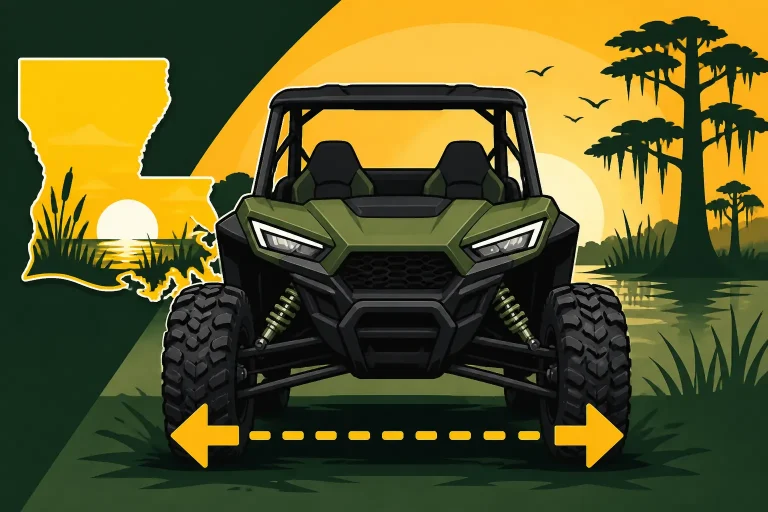
For Louisiana WMA riding, the tire-size limit is commonly described as a maximum of 26 inches in diameter and 12 inches in width. The two numbers describe different dimensions: the first refers to the tire’s nominal outside diameter, and the second to its nominal width. A third number on a typical tire label refers to the rim diameter, not another part of the 26-by-12 limit.
For example, a tire labeled 26×10-12 is nominally 26 inches tall and 10 inches wide, and it fits a 12-inch rim. A 26×12-12 is nominally 26 inches tall and 12 inches wide. By contrast, a 27×10-12 is over the diameter limit even though its width is below 12 inches. A 26×13-12 is over the width limit even though its diameter is not.
| Tire marking | Nominal diameter | Nominal width | What to notice |
|---|---|---|---|
| 26×10-12 | 26 inches | 10 inches | At the diameter limit; under the width limit |
| 26×12-12 | 26 inches | 12 inches | At both stated limits |
| 27×10-12 | 27 inches | 10 inches | Over the stated diameter limit |
| 26×13-12 | 26 inches | 13 inches | Over the stated width limit |
The tire marking is a useful first check, not a guarantee that every machine or every riding area will accept the setup. A tire’s actual dimensions can differ from its nominal label, and the rules can include separate requirements for tread, pressure, vehicle weight, or the trail itself. If your tire is close to a limit, confirm how the relevant WMA applies its requirements before making the trip.
It is easy to mistake the last number for tire width or to compare it with the wrong measurement. In a label such as 26×10-12, the 12 is the wheel’s rim diameter. It does not mean the tire is 12 inches wide. When checking the size, read the full marking on each tire rather than relying on a seller’s short description or the size of the rim.
The 26-by-12 cap is a maximum, not a target. A smaller tire may meet the size limit, but it still needs to satisfy other applicable rules and work safely with the machine. For the broader context, see Louisiana WMA Tire Rules Explained and Why Tires Over 26 by 12 Are Turned Away.
Where the limit applies and what it does not replace
The tire-size rule concerns riding on Louisiana Wildlife Management Area land, not a universal tire standard for every private trail, mud park, farm, or road. A machine that meets the tire limit is not automatically allowed everywhere, and a machine that is too large for a WMA may still be permitted at a private venue if that venue’s own rules allow it.
Check the requirements for the specific WMA and trail you plan to use. Public-land rules can cover more than tire size: they may specify which trails are open, when riding is allowed, what machines can use those trails, and whether a particular access permit or other step is required. A permit does not cancel equipment restrictions. Likewise, a machine that meets the equipment rules still needs the required permission to ride.
Start with the posted rules and current information for the area, then compare them with the machine you will actually bring. The WMA may have designated trails rather than open cross-country access. Only Marked WMA Trails Are Open to Quads explains why checking the route matters as much as checking the vehicle. If you are planning a UTV trip, review Louisiana WMA Riding Rules for UTVs as well as any applicable tire requirements; an ATV and a UTV can have different limits.
The same principle applies to riders visiting from another state. An out-of-state title, decal, or other registration document does not necessarily exempt a machine from Louisiana public-land restrictions. Check the requirements that apply at the destination, including any permit or access step, before assuming the documents you use at home are enough. See Riding Louisiana Public Land on an Out-of-State Machine for the separate questions visiting riders should check.
Keep these distinctions in mind:
- Tire size is only one part of compliance. Tread height, pressure, machine weight, access rules, and trail closures may matter too.
- Public land and private parks set different conditions. A tire accepted at a private park is not automatically suitable for a WMA.
- A decal or permit is not an equipment waiver. Complete the required paperwork and meet the vehicle rules.
- Rules can be area-specific or change. Check the current information for the WMA and the trail before traveling.
If you are unsure whether a specific trail allows your type of machine, do not treat a general tire-size rule as approval to ride it. Confirm that the machine class and route are both permitted.
Check more than the sidewall marking
A careful inspection should cover every tire and the other restrictions that apply to the riding area. Checking only one front tire, or relying on a machine listing that says “WMA legal,” can miss a replacement tire or modification that changes the setup.
Read all four tire labels
Look for the complete size marking molded into the sidewall. If the marking is dirty or hard to see, clean the sidewall and inspect it with a light. Record the size of each tire, especially if the front and rear tires differ or the machine has been modified.
Do not rely only on the model name of the ATV or UTV. A machine may have left the factory with a compliant setup and later received larger, wider, or more aggressive tires. Used machines are especially worth checking because tire upgrades are common and may not appear in the paperwork.
If a sidewall marking has worn away, check the manufacturer’s tire documentation or contact the tire maker or dealer for the exact size. A tape measure can help you understand the tire’s approximate dimensions, but it does not establish how an agency will interpret a borderline tire. Ask the WMA contact or managing agency when a measurement is close to the limit.
Check tread height separately
A tire can meet the 26-inch diameter and 12-inch width limits yet still fail a separate tread restriction. Louisiana WMA rules also limit lug height. Do not assume that a tire is acceptable simply because its overall size is under the maximum.
This matters most when a machine has oversized mud tires. Large, deep lugs may be chosen for traction in soft ground, but a public-land restriction can make that setup unsuitable for WMA trails. Review Why WMA Rules Cap Lug Height at 1 Inch and check the rule wording for the area you plan to visit. Tire size and lug height are distinct checks; one does not stand in for the other.
If you cannot determine the lug height from the tire specifications, ask the tire maker or the WMA contact how to confirm it. Avoid guessing from a product photo, since perspective and tread pattern make visual estimates unreliable. A measurement that appears close is a reason to verify, not a reason to assume it passes.
Check inflation pressure with a gauge
The tire rules also include a pressure limit. Louisiana WMA guidance describes a maximum of 12 pounds of pressure, so check pressure rather than assuming that a tire below the size limit is compliant. For details on the pressure limit and why it is separate from tire size, see 12 Pounds of Pressure.
A low-pressure gauge makes this check more reliable than pressing on the tire or relying on an air compressor’s built-in display. A basic gauge from an automotive or outdoor-equipment retailer—or Amazon—can help you check the pressure at the trailhead. Use a gauge suited to the low pressure range involved, and follow the tire and machine manufacturer’s safety recommendations as well as the applicable WMA rule.
Pressure can change as a tire warms during use, so avoid starting at the legal maximum and assuming it will remain there. At the same time, do not reduce pressure below what is safe for the tire, rim, load, and riding conditions. Underinflation can affect handling and increase the chance of tire or bead problems. If the vehicle maker’s safe operating guidance conflicts with the pressure limit for a WMA, do not try to solve the conflict by guessing; confirm whether the setup is suitable for that riding area.
Check the machine and trail requirements
The tire rule is part of a larger set of restrictions. A machine’s weight, width, or type may affect whether it can use a particular area or trail. Louisiana WMA Weight Limits Explained covers the separate weight restrictions, and Reading a WMA Map Before You Unload can help you confirm where riding is allowed.
A large machine may fail one requirement even though its tires meet the size cap. Conversely, tires within the stated dimensions do not make a machine eligible for a trail that is closed to that type of vehicle. Check each requirement as its own item.
What to do if the tires are over the limit
If a tire’s label exceeds the stated maximum, the straightforward response is to choose a compliant setup or ride somewhere that allows the machine under its own rules. Do not count on reducing tire pressure, changing a wheel, or finding a less-used trail to make an oversized tire acceptable.
Lowering pressure does not change the tire’s nominal size. It also does not turn an over-width tire into a compliant one. Trying to use pressure as a workaround can create handling and tire-retention risks without resolving the size issue.
Before replacing tires, check the specifications of the complete replacement set and confirm that they fit the vehicle safely. The tire must be suitable for the wheel, machine, load, and intended use—not just below the WMA’s maximum dimensions. If you are comparing options, verify the full size marking, tread height, and recommended pressure rather than shopping by a phrase such as “mud tire” or “stock size.”
A tire change can affect clearance and handling, too. Confirm that the replacement does not rub against the machine, interfere with steering or suspension, or create a load or safety problem. For a modified vehicle, a tire dealer or qualified technician can help check compatibility. A compliant label alone does not prove that a tire is a safe match for a particular ATV or UTV.
If the tire size is close to the limit but appears to be within it, ask the relevant WMA contact or managing agency before you tow. Give them the complete tire marking and, if useful, the machine’s make and model and the trail you intend to use. Ask about all relevant tire rules, not just the diameter and width. Keep the answer with your trip notes, but still follow posted signs and instructions at the site.
You have a few practical options:
- Use a verified compliant tire setup. Confirm size, tread height, and pressure, and make sure the tires are safe for your machine.
- Choose a venue whose rules fit the machine. A private riding area may have different limits, but check its current requirements directly.
- Leave the machine at home for that trip. This is the sensible choice when you cannot confirm compliance in time.
- Ask before unloading. If you arrive uncertain, contact staff or the relevant land manager rather than riding first and hoping the setup is accepted.
Do not assume that a machine is permitted because other riders have similar tires. Another rider may be on a different trail, at a different venue, or using a setup that is not compliant. Visible use is not a reliable substitute for checking the rule.
A pre-trip checklist for WMA tire compliance
Build the tire check into trip planning, alongside the access permit and route check. It is much easier to catch a problem at home than after towing to a trailhead.
- Identify the exact riding area. Confirm that it is open to your type of machine and that the intended trail is open. Seasonal or temporary closures can change plans even when the vehicle is compliant. See Louisiana WMA Season Closures before setting out.
- Read the current equipment rules. Check the current WMA information for tire size, lug height, pressure, machine size, and any other restrictions.
- Inspect each tire. Read the full sidewall marking on every tire. Note any differences between front and rear sizes or between replacement tires.
- Verify the tread. Check the lug-height requirement separately from overall tire size.
- Measure pressure. Use a suitable gauge and stay within the applicable maximum while following the machine and tire manufacturers’ safe-use guidance.
- Check the machine’s other limits. Review the rules for vehicle class, weight, width, and trail access. Louisiana WMA Riding Rules for Quads is a useful companion if you are taking an ATV.
- Complete access requirements. Confirm whether you need a self-clearing permit or another access step, and follow the instructions posted at the location.
- Recheck before unloading. Look for notices or signs at the trailhead, and do not ride a route that is closed or not designated for your machine.
A quick checklist can prevent a wasted trip, but it cannot replace current site-specific rules. When a measurement is borderline or the public information is unclear, ask the agency responsible for that WMA. Keep the response specific to your setup and destination; a general answer about tire sizes may not cover tread, pressure, vehicle class, or a particular trail.
Most importantly, do not treat “26 by 12” as a complete pass. It addresses nominal tire diameter and width. A legally suitable setup also needs to meet the other restrictions, and the machine must be allowed on the route you plan to ride. Planning around all of those checks is safer and more reliable than trying to resolve a tire question after reaching the gate.
Frequently Asked Questions
Does a 26×12-12 tire meet the stated size limit?
Its nominal dimensions are 26 inches in diameter and 12 inches wide, which are at the stated maximums. Check the other requirements too, including tread height, pressure, machine eligibility, and trail access.
Is a 27×10-12 tire allowed because it is only 10 inches wide?
Not under a maximum diameter of 26 inches: the 27-inch nominal diameter exceeds the limit, even though the width is below 12 inches.
Does airing down make an oversized tire compliant?
No. Lowering pressure does not change the tire’s nominal size, and it may create handling or tire-retention problems. Use a suitable tire setup or choose a riding area whose rules allow the machine.
Do out-of-state riders get an exception?
Do not assume that an out-of-state title, decal, or registration creates an exception to Louisiana WMA equipment rules. Check the destination’s current access and vehicle requirements before riding.
Disclaimer
This article is for general informational purposes only and does not constitute professional advice. Laws, prices and regulations vary by location and change over time. Consult a qualified professional for guidance on your specific situation.