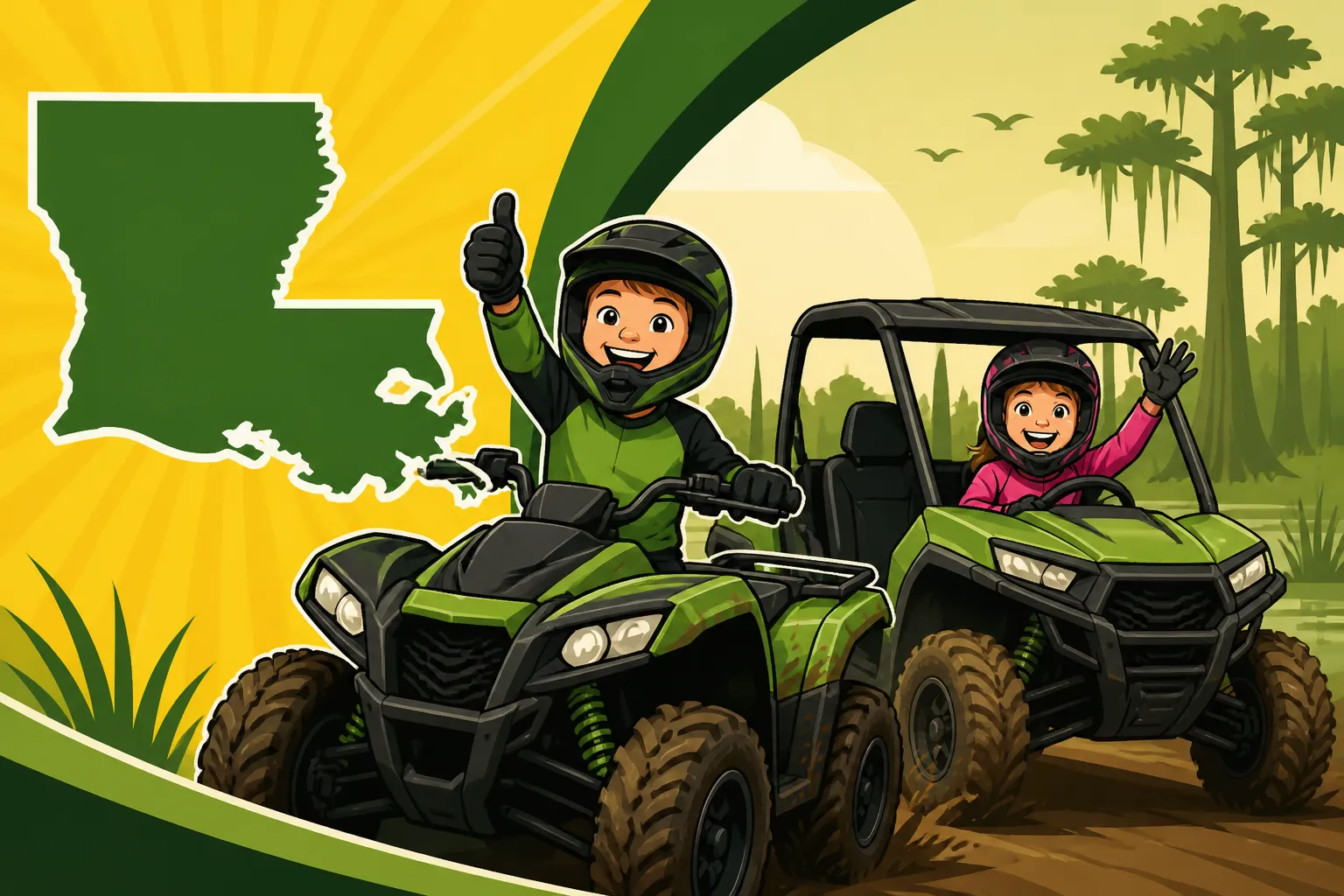
Children Ten and Under Free
When you’re planning a Louisiana mud-park weekend with kids, admission is only one piece of the budget—and it can be hard to tell which rules apply to children versus adults. At Muddy Bottoms, the “children ten and under free” offer can help families plan, but it’s important to confirm what it covers, who qualifies, and what else to arrange before you tow.
What “Children Ten and Under Free” Means
The offer is about admission, not the whole weekend
The offer means a child who meets the age requirement may not need a paid admission ticket for the applicable event. It can make a family outing more affordable, especially when several children are coming along. But free admission does not automatically mean every part of the weekend is free.
Camping, meals, fuel, riding gear, machine rentals, and other add-ons may be separate expenses. A child may also need a paid spot or reservation if your family is booking accommodation or services with a per-person or per-site charge. Treat the free-admission offer as one line in your budget—not as a promise that the child’s whole visit will cost nothing.
Before leaving home, look at the specific event information and ask the park what the offer covers. Does it apply to the child’s entry only? Is the child expected to arrive with a ticket-holding adult? Does it include access to all event areas, or are certain activities separate? Those questions are easier to resolve before you reach the gate with tired kids and a trailer behind you.
“Ten and under” needs a clear age check
The phrase “ten and under” ordinarily includes children who are ten, as well as younger children. Still, a venue may have its own way of confirming eligibility. Ask whether the child’s age is checked at the entrance and whether you should bring any proof of age. It’s better to ask than to assume a conversation at the gate will settle a disagreement.
If your child has a birthday close to the event date, confirm which date the park uses to determine eligibility. For example, a child who turns eleven during the weekend might be treated differently depending on the admission policy. Do not rely on a friend’s experience from a previous event; event arrangements can vary, and staff may apply the policy according to the details listed for that particular weekend.
The offer also should not be assumed to apply at every Louisiana riding area. Admission rules at a private park, public-land trail access rules, and event-ticket policies are different things. A child’s free entry at one park does not tell you what a nearby trailhead, campground, or riding event will charge.
What to Confirm Before You Travel
Check the event listing and ask specific questions
Muddy Bottoms is a private riding destination near Sarepta in Webster Parish, and its event weekends can involve more than general park access. Read the listing for the exact weekend you plan to attend. If anything is unclear, contact the park and ask about the child admission offer for that event rather than assuming the wording applies in every situation.
A useful check-in list includes:
- Whether children ten and under enter without an admission charge for your chosen event.
- Whether the offer applies to every child in that age group or has any conditions.
- How the park confirms a child’s age.
- Whether the child needs a ticket, wristband, waiver, or other check-in item.
- Whether camping, activities, rentals, or other services are separate.
- Whether children must stay with a responsible adult in particular areas.
Keep the answers with your reservation details or event information. If a staff member asks a question at check-in, having the event listing and your confirmation handy can make the conversation straightforward. This is especially useful when a group arrives in separate vehicles or one adult handles check-in while another unloads.
Keep admission separate from camping and other add-ons
Families often build their budget around the gate and then discover that the bigger costs are elsewhere. A free child admission does not necessarily include a campsite, cabin, RV space, food, showers, supplies, or a machine for the child to ride. Those costs depend on the arrangements you choose, so confirm them individually.
If you are bringing your own machine, plan for transportation, fuel, maintenance, and protective equipment. If you are not, ask whether rentals are available for the event and what age, supervision, or safety requirements apply. Do not assume that a free entry offer also includes a ride on an adult’s ATV or UTV.
For a broader look at the venue’s event-weekend arrangements, see [Muddy Bottoms' Event Calendar in Louisiana] and [What Your Ticket Covers at a Mudfest Weekend]. These can help you make a more complete checklist, but confirm the details for the exact event you are attending. Ticket inclusions and event logistics should not be inferred from another weekend’s experience.
| Budget item | What to check |
|---|---|
| Child admission | Whether the free offer applies to your event and how age is confirmed |
| Adult admission | Ticket requirements for each accompanying adult |
| Camping or lodging | Whether your selected site or cabin requires a separate reservation or charge |
| Riding machine | Whether you are bringing one, renting one, or attending as a passenger |
| Food and supplies | What you plan to bring and what may be available at the venue |
| Safety gear | Helmets, suitable clothing, eye protection, and any event-specific requirements |
| Travel | Fuel, towing arrangements, and the drive to the park |
Planning a Safer Family Riding Weekend
Match the riding plan to the child
A child who can enjoy a day outdoors may not be ready to ride every trail, mud hole, or obstacle at a park. Before the trip, talk about what the child will do if the group splits up, where they should wait, and which adult they should stay with. A simple plan helps prevent confusion when engines are loud and people are moving around.
Do not treat admission as evidence that a child can operate any machine or ride in any situation. Age rules, passenger rules, helmet requirements, machine suitability, and park policies can all differ. Check the park’s current rules, then use good judgment about the child’s experience, size, confidence, and ability to follow instructions. If a child is not ready for a particular ride, there should be no pressure to try it just because the family has made the trip.
Before unloading, make sure children know the boundaries of your campsite or staging area. Explain that they should not walk behind reversing vehicles, approach a machine without permission, or enter a riding route on foot without an adult. These small conversations can matter more than a carefully packed cooler once the park gets busy.
Pack for heat, mud, and downtime
Louisiana weather can make an outdoor day feel demanding even when the ride itself is short. Pack drinking water, sun protection, a change of clothes, towels, and footwear that can handle wet ground. Add snacks that are easy to reach, and bring a dry layer or spare clothes for the trip home. Children may be happiest after a ride when they can clean up, sit in the shade, and have something familiar to eat.
Bring enough protective gear for every child who may ride, and check that it fits before the event. A helmet that is too loose or uncomfortable can become a battle at the exact moment everyone is ready to leave. The park may set its own equipment rules; confirm those in advance instead of relying on what another family wore on a previous visit.
Plan breaks into the day. Children may become tired, hungry, overstimulated, or uncomfortable before adults notice, particularly at a loud event with long stretches outdoors. A quiet break at camp, a drink of water, or a change into dry clothes can help the child enjoy the rest of the visit. For more family-oriented preparation, see [Packing for Humid Heat] and [First Aid at a Mud Park].
Finding Your Way Around the Riding Area
Plan the route before the engine starts
A large riding area can be confusing when trails branch, conditions change, or your group is unfamiliar with the property. Before setting out, identify where you are staying, where the group plans to ride, and how you will return if a child needs a break. Agree on a meeting point and make sure everyone knows what to do if they lose sight of the group.
Digital navigation tools such as onX Offroad can help riders review available mapping information and prepare a route before heading out. Use it as a planning aid, not as permission to ride anywhere. A map may help you understand where you are, but it does not replace posted signs, event instructions, property boundaries, or park rules. If the venue provides its own map or route guidance, follow that information first.
Cell reception can be unreliable in wooded or rural areas, so do not make a phone connection your only safety plan. Save useful information ahead of time where the app allows, carry a charged phone, and tell the group what to do if someone gets separated. Families who ride with children can also agree that the child stays with a designated adult rather than trying to navigate back alone.
Keep the whole group on the same plan
A family trip often involves adults with different riding speeds and children with different comfort levels. Decide whether everyone will ride together or whether the group will split into smaller parties. If you do split up, set a check-in time and a specific meeting location. Avoid vague directions such as “we’ll meet back near camp,” especially if the area has several camping sections or trails that look alike.
Use onX Offroad or another navigation aid to prepare, but compare what you see on your screen with signs and directions on the ground. If you are unsure whether a route is open or appropriate for your machine, stop and ask park staff rather than testing it. Conditions can change after rain, and a route that looks manageable on a map may be too challenging for a young rider or passenger.
If your family is visiting for the first time, take a slower orientation lap before committing to a long ride. Let children see where the group starts and where to return. That small step can ease first-visit nerves and prevent adults from having to improvise directions while managing machines, gear, and tired passengers.
Making the Most of the Free Child Admission
Choose a realistic schedule
A free child ticket can make a visit feel like an easy yes, but a full event weekend may be a lot for a young child. Consider whether your family will be more comfortable with a shorter visit, a single riding session, or an overnight stay. The best plan is not necessarily the one that includes the most riding; it is the one that lets everyone stay safe and enjoy the day.
Build in extra time for check-in, unloading, getting dressed, and helping children understand the park layout. If you arrive late and try to rush straight onto a trail, small problems—missing gloves, a thirsty child, or a machine that needs a quick check—can feel bigger than they are. A calmer start leaves room to adjust the plan if the weather or the child’s energy changes.
If your group is attending a busy weekend, check event details before deciding when to travel. Arriving with a clear plan for admission, camping, and the first ride can reduce the number of decisions you have to make at the entrance. For more background on the venue and how event access works, see [Muddy Bottoms' 5,000 Acres in Louisiana] and [Muddy Bottoms' Gate Prices in Louisiana]. Confirm the relevant details for your selected weekend before setting a family budget.
Give children a role in the preparation
Children are more likely to cooperate when they know what to expect. Let them help pack a small bag with a towel, spare shirt, water bottle, and other age-appropriate items. Explain which gear they must wear, where they can go, and which adult is responsible for them. Keep instructions simple and repeat the most important ones before riding begins.
A child can also help with safe, non-riding tasks at camp, such as checking that their water bottle is filled or putting their own belongings in a marked bag. Avoid assigning a child responsibility for handling fuel, moving machines, or managing equipment that could expose them to hazards. The goal is to help them feel included without putting them in charge of safety.
If your family rides at public land or another trail system before or after the park visit, check that location’s access rules separately. A private-park admission offer does not apply to public-land permits or trail fees. Guides such as [Louisiana ATV Trails: Where to Ride] and [Louisiana OHV Camping With Trail Access] can help you compare other riding options, while [Louisiana Trail Conditions After Rain] is a useful reminder to check conditions before choosing a route.
Questions Families Commonly Ask
Does free admission mean my child can ride for free?
Not necessarily. The offer concerns admission, and a machine rental, activity, or other service may have a separate charge or separate eligibility rules. Ask the park what the child’s admission includes and what costs extra. If your child will ride as a passenger or operate a machine, confirm the relevant age, equipment, supervision, and park requirements before arriving.
Does the offer apply at every Louisiana ATV park?
No. A child admission policy at one private venue should not be treated as a statewide rule or as a policy shared by every park. Other riding areas may have different entry arrangements, permit requirements, age rules, or event terms. Check the rules for the specific place you plan to visit.
What should I do if the child’s age is close to the cutoff?
Ask the venue how it determines eligibility and what proof, if any, it expects. If a birthday falls near the visit, clarify whether age is measured on the event date, the date of arrival, or another point in the check-in process. Getting a clear answer ahead of time helps avoid an awkward surprise at the gate.
What is the most useful first-time family checklist?
Before leaving, confirm the child-admission terms, adult tickets, camping or lodging, machine arrangements, park rules, and any age or safety requirements. Pack fitted protective gear, water, spare clothes, basic first aid, and a way to keep the group together. On arrival, learn the boundaries of your riding area, choose a meeting point, and make a realistic plan for breaks.
Disclaimer
This article is for general informational purposes only and does not constitute professional advice. Laws, prices and regulations vary by location and change over time. Consult a qualified professional for guidance on your specific situation.