What a Locked Gate on a Timber Road Means
Coming across a locked gate on a timber road in Louisiana can be incredibly frustrating for an ATV or UTV rider. You see a perfect path winding through the trees, inviting you to explore, only to be met with a chain and padlock, leaving you wondering if it's just a temporary measure or an absolute no-go. This guide aims to clear up that confusion, explaining what those locked gates truly signify for off-road enthusiasts and how to navigate access responsibly and legally.
Understanding Timber Road Ownership and Access in Louisiana
Louisiana is rich with vast tracts of timberland, from the piney woods of the north to the bottomland hardwoods of the south. These lands are often crisscrossed by a network of private roads, built and maintained by timber companies, logging outfits, or private landowners for their operations. It's easy to assume that because a road looks "public" or is unpaved, it's fair game for riding, but that's a common misconception that can lead to serious trouble.
Most of these roads are not public thoroughfares. They are integral to private commercial operations or land management, meaning they are privately owned and controlled. Just like you wouldn't expect to drive your ATV into someone's backyard without permission, you shouldn't assume access to a timber road simply because it's there. The appearance of a road can be deceiving, and ignoring the signs of private ownership, like a locked gate, is a recipe for problems.
Public vs. Private Timber Land
Let's clarify something right from the start: the vast majority of timber roads you encounter in Louisiana are on private land. While the state does have public lands like the Kisatchie National Forest, where designated trails are often open for ATV and UTV use, the countless miles of logging roads winding through the countryside are almost exclusively private. This distinction is absolutely crucial for riders to understand.
When you're on public land, like a national forest, there will typically be clear signage indicating designated riding areas, trail rules, and permit requirements. These lands are managed for multiple uses, including recreation, but even then, not all roads are open to motorized vehicles. Private timberlands, however, operate under a different set of rules entirely, dictated by the landowner or timber company. Their primary purpose is often timber harvesting, not recreational riding.
It's common for riders to mistakenly believe that if a road isn't paved and doesn't have "No Trespassing" signs plastered every few feet, it must be public. This simply isn't true. A locked gate is often the most definitive "No Trespassing" sign of all, even if no other explicit warnings are visible. The burden of knowing who owns the land and whether you have permission to be there falls squarely on you, the rider.
Why Timber Companies Lock Their Gates
Timber companies and private landowners don't lock their gates to be difficult; they do it for a host of very practical and critical reasons that impact their operations, safety, and finances. Understanding these reasons can help you appreciate why unauthorized access is taken so seriously. It's not just about keeping people out; it's about protecting significant investments and ensuring safety.
Firstly, security is a major concern. Timber roads provide access to valuable assets like harvested timber, logging equipment, and even remote hunting camps. Leaving these areas open to the public invites theft, vandalism, and illegal dumping, all of which can cost companies and landowners thousands, if not tens of thousands, of dollars. A locked gate acts as a deterrent, protecting their property and livelihood.
Secondly, and perhaps most importantly, is liability. If someone enters their private land without permission and gets injured, the landowner could face significant legal challenges. This is especially true if there are active logging operations, heavy machinery, or other inherent dangers present. By locking gates, they are actively managing their risk and attempting to prevent accidents and subsequent lawsuits. They cannot possibly ensure the safety of every unauthorized person who might wander onto their property, so they simply restrict access.
Finally, locked gates are essential for operational control. Timber companies need to control who is on their land, especially during active logging periods. Heavy trucks, falling trees, and moving equipment create incredibly dangerous environments. Allowing uncontrolled public access would endanger riders, disrupt work schedules, and potentially damage valuable timber or infrastructure. It's also a way to manage hunting leases, ensuring that only those who have paid for access are on the property, which is vital for the leaseholders. For more on this, you might find [What a Hunting Lease Says About Quad Use] enlightening.
Navigating Access: What a Locked Gate Really Means for Riders
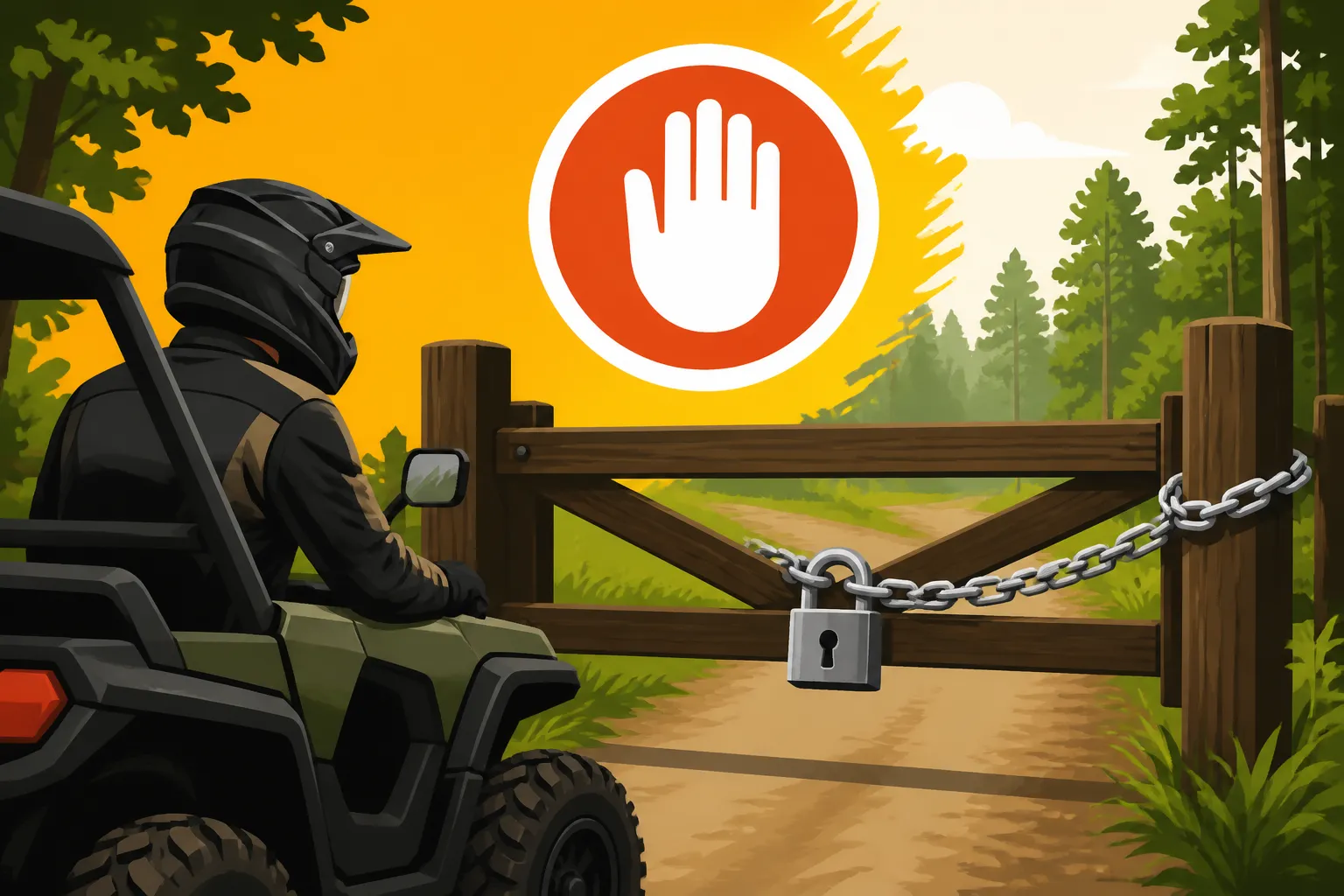
When you encounter a locked gate on a timber road, it's not a suggestion or a temporary inconvenience; it's a clear, unambiguous message: "Do not enter." Ignoring this message can lead to serious legal repercussions, financial penalties, and even physical danger. It's important to internalize what that barrier truly represents, both in terms of the law and practical safety.
Many riders, full of good intentions and a desire to explore, might see a locked gate as a challenge or a minor obstacle. They might think, "No one's around, what's the harm?" or "I'll just go around it." However, this mindset can lead directly to trespassing, which in Louisiana, like elsewhere, is a serious offense. The law doesn't differentiate between someone who knowingly disregards a sign and someone who "didn't know better" when a locked gate clearly denotes private property.
The frustration is understandable, especially when you feel like you're missing out on a great ride. But remember, the landowner has every right to control who accesses their property, and a locked gate is their chosen method of exercising that right. Respecting that boundary is not just good etiquette; it's a legal obligation that protects both you and the landowner.
It's Not an Invitation
Let's be blunt: a locked gate is explicitly not an invitation to enter. It's a denial of access. Period. Attempting to bypass a locked gate by riding around it, cutting chains, or climbing over is a clear act of trespassing. In Louisiana, trespassing can result in fines, and if property damage occurs or valuable resources are disturbed, the penalties can escalate significantly.
Imagine if someone decided to simply "go around" a locked gate on your property; you wouldn't appreciate it, and the law would be on your side. The same principle applies here. These lands are private, and the owners have a legal right to exclude others. Law enforcement, including Louisiana State Troopers and parish deputies, are authorized to enforce these laws. If you are caught on private timberland without permission, you could be issued a citation, and your machine could even be impounded. [Louisiana Trespass Law for Riders] provides more specific details on what constitutes trespassing and its consequences.
The temptation to explore can be strong, especially when you see tantalizing trails beyond the gate. You might even see evidence of other riders having gone around, but that doesn't make it right or legal. Following in the tracks of others who have trespassed only increases the likelihood of you facing penalties. It’s never worth the risk of a ticket, a fine, or having your machine towed, not to mention the potential for more severe legal action.
The Dangers of Unauthorized Entry
Beyond the legal ramifications, entering private timberland through a locked gate exposes you to a host of very real and often unseen dangers. These aren't just pretty woods; they are active industrial sites or managed hunting grounds, and they come with hazards that recreational riders are often unprepared for. Your safety should always be your top priority, and unauthorized entry puts that safety at significant risk.
Active logging operations are incredibly dangerous environments. Heavy machinery like feller bunchers, skidders, and log loaders are constantly moving, often in areas with limited visibility. Falling trees, unstable ground, and wide swinging loads can appear without warning. A rider on an ATV or UTV is almost invisible to an operator in a large piece of equipment, and the noise of your machine can mask the sounds of logging activity until it's too late. These areas are not designed for recreational traffic, and the risks are simply too high.
Even on timberland not actively being logged, there can be hidden hazards. Old logging trails might have washouts, deep ruts, or sharp debris like stumps and cut branches that can damage your machine or cause an accident. There might be unmarked hazards like old wells, sinkholes, or poorly maintained bridges. Furthermore, if you're riding during hunting season on a leased property, you could inadvertently place yourself in the middle of an active hunt, which is extremely dangerous. These risks are why companies use products like SuperATV's protective skid plates and heavy-duty axles for their equipment; they understand the harsh realities of the terrain and the need for robust protection, and unauthorized riders often lack such foresight or protection.
It’s also important to consider that if you get injured while trespassing, emergency services may have difficulty locating you, especially in remote areas. Access roads might be locked, delaying first responders. Your unauthorized presence complicates everything, and the landowner would have no obligation to assist you beyond contacting emergency services. This is why respecting locked gates isn't just about legality, it's about personal safety and being responsible.
Seeking Legitimate Access to Louisiana Timber Roads
While encountering a locked gate can feel like the end of the road, it doesn't always have to be. There are legitimate, respectful, and often successful ways to gain access to private timber roads for riding. The key is to approach it with a clear understanding of property rights, a willingness to follow rules, and a good dose of patience. Assuming you can ride wherever you please is the wrong attitude; seeking permission is the right one.
Many timber companies and large private landowners are not inherently opposed to recreational use, but they must control it. They need to know who is on their land, when they are there, and what they are doing. This is for their liability, security, and the ongoing management of their natural resources. By approaching them formally and respectfully, you demonstrate that you understand and respect their concerns, which significantly improves your chances of gaining permission.
Remember, it's about building relationships and trust. A positive interaction can open doors, literally, to riding opportunities you might not have otherwise found. Don't be discouraged if your first attempt isn't successful; persistence, politeness, and a willingness to compromise can go a long way.
Asking for Permission: The Best Approach
The single best way to gain access to a locked timber road is to ask for permission directly from the landowner or the managing timber company. This might sound like a daunting task, but with a little research and a polite approach, it's often more achievable than you think. This is where your homework really pays off.
Start by trying to identify the landowner. Parish tax assessor's offices often have public records that can help you determine who owns a particular parcel of land. You might need to visit their office or check their online portals. Once you have a name, a quick online search can often yield contact information for larger timber companies or land management groups. If it's a smaller private owner, you might need to try sending a letter or inquiring through local community channels.
When you make contact, be clear, concise, and respectful. Explain who you are, what you want to do (e.g., "ride my ATV on a specific road on your property for X hours on Y date"), and demonstrate that you understand and respect their concerns regarding liability and property. Offer to sign any waivers they require and adhere to specific rules, such as no riding during hunting season, staying on designated roads, or specific gate procedures. Getting [Getting Written Permission From a Louisiana Landowner] is crucial; always aim for something in writing, even if it's just an email. This protects both you and the landowner.
Some companies or landowners may charge a small fee or require a permit for access, while others may simply ask for your contact information. Be prepared for either. Your willingness to follow their procedures and respect their property is paramount. This legitimate access contrasts sharply with the risks of bypassing gates, providing a safe and legal way to enjoy the land.
Understanding Hunting Lease Agreements
Many large tracts of timberland in Louisiana are not just managed for timber production; they are also leased out to hunting clubs. These hunting lease agreements often grant exclusive access and control over the land to the club members for hunting purposes. If a timber road is behind a locked gate on land leased by a hunting club, then permission must come from the club, not necessarily just the timber company.
Hunting clubs often pay significant sums for these leases, and they have a vested interest in controlling access to prevent disruption of hunting activities, poaching, and ensuring the safety of their members. A locked gate, in this context, serves not only the timber company's interests but also the hunting club's. They will be very protective of their leased territory, especially during deer season or other active hunting periods. Understanding [What a Hunting Lease Says About Quad Use] is therefore vital for potential riders.
If you discover that the land is under a hunting lease, your best bet is to try and contact the hunting club directly. This can sometimes be challenging, as clubs often prefer a degree of privacy. However, asking around at local feed stores, sporting goods shops, or even politely inquiring with the timber company (if you've already made contact with them) might yield results. Again, be prepared to explain your intentions, respect their hunting schedules, and adhere to their rules. Some clubs might occasionally allow non-members access for specific purposes, especially outside of prime hunting season, but it's entirely at their discretion. Don't just show up and expect entry.
Alternative Riding Opportunities in Louisiana
Even if gaining access to a particular timber road proves impossible, Louisiana still offers a wealth of incredible opportunities for ATV and UTV riders. The state boasts a diverse landscape, from pine forests to muddy bayous, providing a variety of terrains for every type of rider. Don't let a locked gate discourage you; instead, pivot your focus to the places where you are actively welcomed.
It's tempting to fixate on a specific stretch of road, but the Bayou State has so much more to offer. Exploring designated riding areas not only ensures you're riding legally and safely but also often provides a better experience with amenities, marked trails, and a community of fellow riders. Plus, many of these areas are specifically designed and maintained for off-road vehicle use, meaning they are often more exciting and challenging than a typical gravel logging road.
Consider broadening your horizons and looking into the well-established public and private riding parks. These locations are designed to provide a thrilling and secure environment for off-road adventures, making them an excellent alternative to unauthorized timber road access. You can equip your machine with all the necessary gear, perhaps even from brands like SuperATV, knowing you're going to put it to good, legal use on purpose-built trails.
Designated Public Trails and Parks
Louisiana is home to several fantastic designated public trails and private off-road parks that cater specifically to ATV and UTV riders. These are your go-to options for guaranteed, legal riding adventures. The Kisatchie National Forest, for example, offers miles of marked trails, such as the Sandstone Multiple-Use Trail and the Vernon Enduro Trail. These trails are managed by the U.S. Forest Service and typically require a day-use or annual pass, but they provide a safe, legal, and often scenic riding experience. You can find detailed information and maps for these areas, including any seasonal closures, on the Forest Service website.
Beyond public lands, Louisiana also boasts popular private mud parks that are specifically designed for off-road enthusiasts. Places like Muddy Bottoms ATV Park or Louisiana Mudfest offer thousands of acres of diverse terrain, from deep mud pits to wooded trails, complete with amenities like camping, wash stations, and even live entertainment during event weekends. These parks are tailored for extreme riding and offer a vibrant social scene for off-roaders. While they often have gate fees and specific rules, they provide a legitimate and often thrilling way to get your mud fix without the legal or safety worries of trespassing. You can learn more about these options by checking out [Louisiana ATV Trails: Where to Ride].
These dedicated riding areas are maintained with riders in mind, often offering a wider variety of challenges and landscapes than a simple timber road. They're built for fun and community, providing a much more satisfying and secure experience than constantly worrying about getting caught or encountering dangers on private land.
Private Land and Community Riding
If public parks or designated trails aren't quite what you're looking for, or if you prefer a more private riding experience, focusing on gaining permission for private land access (not timber roads) can be another excellent route. Many smaller landowners might be open to allowing responsible riders onto their property, especially if you have a personal connection or can be vouched for.
This often involves riding on the property of friends, family members, or acquaintances who own acreage suitable for off-road vehicles. Always ensure you have explicit, ideally written, permission before riding on anyone's private land. Discuss boundaries, rules, and any specific concerns the landowner might have. This type of riding can be very rewarding, offering a more secluded experience and the chance to truly explore without the crowds.
Another option is to get involved with local ATV/UTV clubs or communities. These groups often organize sanctioned rides, poker runs, or charity events on private lands where access has been pre-arranged. Joining a club is a fantastic way to meet like-minded riders, discover new legal riding spots, and stay informed about upcoming events. These community-driven rides often secure permission from landowners for group access, providing a fun and legal way to ride in new areas. By being part of an organized group, you not only expand your riding opportunities but also contribute to a responsible riding culture that respects landowners and the environment.
Disclaimer
This article is for general informational purposes only and does not constitute professional advice. Laws, prices and regulations vary by location and change over time. Consult a qualified professional for guidance on your specific situation.