Storing a Machine Through a Humid Winter
Living in Louisiana means dealing with heat and humidity for most of the year, but when winter rolls around, many of us put our ATVs and UTVs away. The problem is, that famous Louisiana humidity doesn't just disappear with the cooler temperatures. It lingers, creating a perfect storm for rust, corrosion, and other headaches for your off-road machine while it sits idle. This guide will walk you through exactly how to prepare your ATV or UTV for a humid Louisiana winter, ensuring it's ready to hit the trails strong when spring arrives.
Why Humid Winter Storage in Louisiana is a Challenge
Anyone who's left a tool out in the shed for too long knows the sting of rust. Imagine that, but on an entire ATV or UTV with sensitive electronics, intricate engine parts, and exposed metal. Louisiana's climate, even in winter, is a formidable foe for anything stored improperly. It's not just about keeping the rain off; it's about combating the invisible enemy – moisture in the air.
The Silent Threats: Moisture and Corrosion
When the air is heavy with moisture, it settles on every surface. This isn't just cosmetic; it's a microscopic battle against every piece of exposed metal, every electrical connection, and every painted surface. Corrosion can quietly eat away at brake lines, battery terminals, wiring harnesses, and even the inside of your fuel tank. Think about starting up your machine in the spring, only to find a sputtering engine due to a rusted fuel injector or a loose connection that's been corroded over the months. It's a frustrating and often costly discovery that could have been prevented with a little foresight. The fluctuating temperatures, even if mild, can also cause condensation to form inside engine components if the machine isn't properly sealed or treated. This leads to internal rust, which is far harder to spot and fix.
Critters and Creeping Damage
Beyond the unseen threat of moisture, a parked off-road machine becomes a cozy, appealing home for all sorts of unwelcome guests. Mice, rats, mud daubers, wasps, and even snakes are always looking for shelter from the elements, and the nooks and crannies of an ATV or UTV are perfect. They'll nest in air boxes, chew through wiring harnesses, clog exhaust pipes, and even build homes in tight engine spaces. I've heard horror stories from riders who pulled their machine out after a winter, only to find an entire mouse family had taken up residence, leaving behind chewed wires, soiled upholstery, and a distinct odor. The damage these small invaders can inflict is surprisingly extensive and often requires expensive repairs. Taking steps to deny them entry is just as crucial as battling humidity.
Preparing Your ATV or UTV for Hibernation
Winterizing isn't just for snow states; it's essential here in Louisiana too. It’s about creating a protective bubble around your machine to withstand the dormant months. Every step you take now saves you headaches and repair bills in the spring. This is where you can truly minimize [Louisiana Depreciation on a Used Machine] by maintaining its condition.
Fuel System Preservation
One of the biggest culprits for hard starting in the spring is stale fuel. Modern gasoline, especially with ethanol, can degrade rapidly, attracting moisture and forming gummy deposits that clog carburetors and fuel injectors.
- Stabilize the Fuel: The first thing you need to do is add a high-quality fuel stabilizer to your gas tank. Follow the product's directions carefully. Once added, top off the fuel tank to minimize air space, which reduces condensation. Then, start the engine and let it run for 10-15 minutes. This circulates the stabilized fuel through the entire system – the fuel lines, pump, filter, and carburetor or injectors. This is absolutely critical. If you have a carbureted machine, you might consider draining the carburetor float bowl as an extra precaution against gumming, but stabilization is usually sufficient.
- Ethanol-Free Gas (If Possible): If you can find it, run ethanol-free gasoline for the last few rides before winter storage. Ethanol is notorious for attracting and holding water, which is terrible for small engines, especially during long periods of inactivity in a humid environment. Even if you can't always find it, using it for this final tank can make a big difference.
Battery Care and Charging
Your battery is particularly vulnerable during long storage, especially in fluctuating temperatures. A dead battery in spring is a common and easily avoidable problem.
- Remove and Store: Ideally, remove the battery from your ATV or UTV. Clean the terminals thoroughly to remove any corrosion (a wire brush and baking soda paste work wonders). Store the battery in a cool, dry place – not on a concrete floor, as that can sometimes draw charge. If you have a [Louisiana Title for a Camp Machine] that sits for extended periods, this is especially important.
- Trickle Charger/Maintainer: Connect the battery to a smart trickle charger or battery maintainer. These devices slowly charge the battery and then switch to a maintenance mode, preventing overcharging while keeping the battery at its optimal voltage. This ensures the battery stays healthy and fully charged, ready to go when you are. Never use a standard car charger for an ATV/UTV battery, as it can overcharge and damage it.
- Check Electrolyte Levels: For conventional (non-sealed) batteries, check the electrolyte levels monthly and top off with distilled water if needed.
Tire Treatment and Suspension
Flat spots on tires and stressed suspension components can quickly develop if your machine sits stationary for months.
- Inflate Tires to Max PSI: Inflate your tires to the maximum recommended PSI listed on the sidewall, not the riding PSI. This helps prevent flat spots from forming where the tire contacts the ground. When you're ready to ride again, remember to air them back down to your usual riding pressure.
- Jack Up the Machine (If Possible): For the ultimate protection against flat spots and to relieve stress on your suspension, consider getting the tires off the ground. You can use jack stands or blocks under the frame. This completely unloads the tires and suspension components, preserving their integrity. If you have limited space, even just rotating the tires slightly every few weeks can help, though lifting is best.
- Lubricate Suspension Points: Give all suspension bushings, pivot points, and grease zerks a good shot of fresh grease. This pushes out any moisture that might have accumulated and provides a protective barrier against corrosion.
Cleaning, Lubricating, and Protecting Surfaces
A thorough cleaning and protective treatment are your first line of defense against rust and critter invasion.
- Wash Thoroughly: Give your machine a deep clean. Remove all mud, dirt, and grime from every nook and cranny. Pay special attention to the underside, engine bay, and wheel wells. Mud and organic matter hold moisture, accelerating corrosion. If you've had a particularly muddy season, consider addressing maintenance items like [Oil Changes After a Water Crossing] and [Belt Replacement After a Mud Weekend] before storage. Let the machine dry completely before moving on.
- Rust Prevention Spray: Once clean and dry, liberally spray exposed metal surfaces with a rust-inhibiting spray or fogging oil. This includes frame components, brake rotors (though avoid spraying brake pads), suspension arms, and any exposed bolts or fasteners. For the engine, use a fogging oil specifically designed for internal engine storage. Remove the spark plugs, spray the oil into the cylinders, and briefly turn the engine over by hand (not starting it) to coat the cylinder walls. Replace the spark plugs.
- Protect Plastics and Vinyl: Apply a UV protectant to all plastic and vinyl surfaces. This prevents cracking and fading, keeping your machine looking good.
- Air Intake and Exhaust Protection: Block off the air intake and exhaust pipe with a rag or mesh to prevent critters from nesting inside. Just remember to remove them before starting the machine in the spring!
Choosing the Right Storage Environment
Where you store your machine matters immensely in Louisiana's humid climate. Not all storage solutions are created equal. Thinking about [Louisiana Storage Costs in Humidity] is a good idea when making this decision.
Garage, Shed, or Climate-Controlled?
- Garage: Your home garage is often the best option. It provides shelter from direct rain and sun, and typically offers better ventilation than a simple shed. If it's attached to your house, it benefits from some climate moderation. Keep the garage as dry as possible, perhaps running a dehumidifier if it gets excessively damp.
- Shed: A detached shed can work, but it needs to be dry and well-ventilated. A shed without a concrete slab foundation can be prone to ground moisture seeping in, increasing humidity. Consider elevating your machine on blocks to prevent direct contact with a damp floor. Ensure the shed is secure; [Theft Coverage for a Quad Kept in a Shed] is crucial if this is your chosen spot.
- Climate-Controlled Storage Unit: This is the Cadillac of storage options, especially if you have a high-value machine or simply want absolute peace of mind. Climate-controlled units maintain consistent temperature and humidity levels, virtually eliminating the risks of corrosion and mold. They are more expensive, but the protection they offer is unparalleled for expensive equipment. This is a great option if you are temporarily moving or don't have adequate space at home.
Covering Your Machine Wisely
A cover is good, but the type of cover is critical in a humid environment.
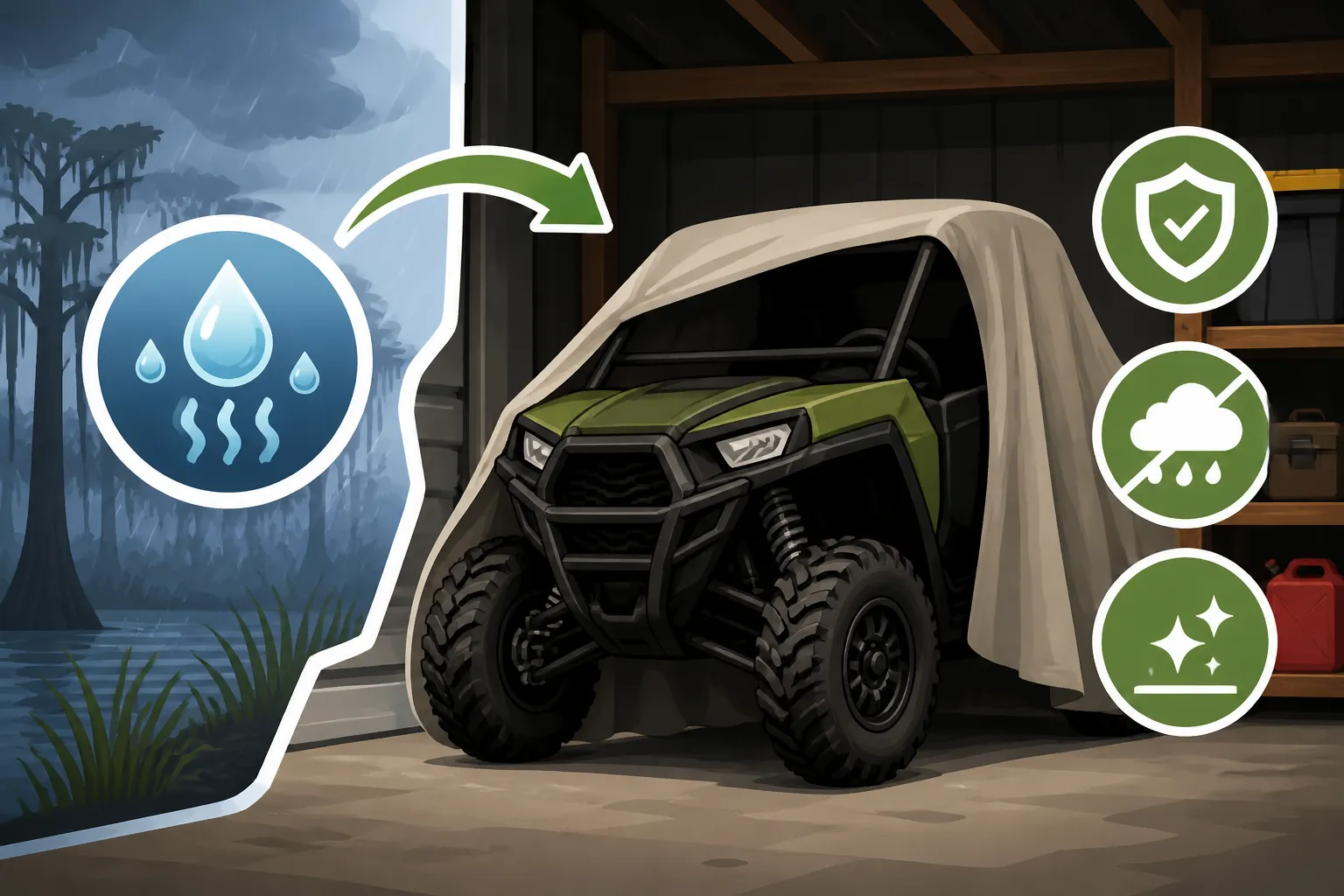
- Breathable Covers are Key: Never use a non-breathable plastic tarp directly over your machine for long-term storage. While it keeps dust off, it traps any moisture that condenses underneath, creating a damp environment that promotes rust and mold. Instead, invest in a good quality, breathable fabric cover designed for ATVs or UTVs. These covers protect against dust and minor scuffs while allowing air circulation to prevent moisture buildup.
- Allow Airflow: Even with a breathable cover, try to ensure some airflow around the machine. Don't push it tightly against a wall where air can't circulate. If storing in a shed, leave a window or vent slightly open if security allows, or run a small fan periodically to circulate air.
Security Considerations
Leaving your valuable machine unattended for months requires some thought about security. Whether it's stored in your backyard shed or on a hunting lease, you want to protect your investment. You might even use a platform like LawDepot to create a simple written agreement if you're leaving your machine on someone else's property, outlining access, liability, and duration, even for informal arrangements. This helps everyone understand the terms and avoid misunderstandings.
- Locked Doors and Gates: This seems obvious, but ensure all shed doors, garage doors, and gates are robustly locked. Use quality padlocks and reinforce latches if they seem flimsy.
- Chains and Anchors: For added security, chain your ATV or UTV to a heavy, immovable object, like a concrete anchor point or a structural beam in your garage. Even better, use a ground anchor secured into concrete. This makes it much harder for thieves to simply roll it away.
- Alarm Systems/Cameras: Consider a simple alarm system or motion-activated camera for your storage area. Many affordable options are available that can alert your phone if there's activity.
- Remove Valuables: Take off anything easily detachable and valuable, like GPS units, tool bags, or winches (if they're easy to remove). These can be tempting targets for opportunistic thieves.
- Insurance Review: Double-check your insurance policy. Does it cover your ATV or UTV while in storage, especially if it's off your primary property, like at a hunting camp? [Louisiana Insurance for Trail Use] often covers theft, but understanding your specific coverage for different storage locations is vital.
The Annual Spring Awakening: Getting Your Machine Ready Again
After months of slumber, getting your machine back on the trail isn't just about hitting the starter button. A few careful steps will ensure a smooth transition from winter storage to full riding season. Taking these precautions protects your investment and ensures reliability. What you do now prevents you from being among the [What Louisiana Owners Underestimate in Year One].
Pre-Ride Checks and Fluid Levels
Before you even think about firing up the engine, run through a thorough inspection. This is the moment to verify all your winterizing efforts paid off.
- Remove Critter Blockers: First things first, remove those rags or mesh you used to block the air intake and exhaust. Forgetting this can lead to immediate engine damage or a very frustrating no-start situation.
- Check All Fluid Levels: This includes engine oil, coolant, brake fluid, and differential fluids. Top them off if necessary. If you followed proper winterizing steps, your fluids should be clean, but always verify. If you didn't change the oil before storage, now is a great time to do it. You might have performed [Oil Changes After a Water Crossing] earlier, but fresh oil is always good.
- Inspect Belts and Hoses: Check all belts for cracks, fraying, or excessive looseness. Look at all hoses for cracks, bulges, or leaks. Give them a squeeze to check for softness or hardening. Pay attention to your CVT belt; if you had a particularly rough season, you might consider [Belt Replacement After a Mud Weekend] before the season starts.
- Brake Inspection: Test both front and rear brakes. Ensure they feel firm and responsive. Check brake pads for wear and rotors for rust. A bit of surface rust on rotors is normal after storage and will usually clear up after a few stops, but excessive pitting can be an issue.
Battery Reconnection and Tire Inflation
These simple steps are often overlooked, leading to immediate issues.
- Reinstall and Connect Battery: If you removed your battery, reinstall it now. Clean the terminals again if there's any new corrosion. Connect the positive terminal first, then the negative. Ensure connections are tight and secure. Give the battery a final charge with your maintainer if it's been a while since it was on the charger.
- Inflate Tires to Riding Pressure: Your tires should still be inflated to their maximum PSI from storage. Now is the time to air them down to your recommended riding pressure. This varies by machine and rider preference, but it’s usually lower than the max PSI. Check your owner's manual or the tire sidewall for appropriate pressures. Also, give the tires a visual inspection for any signs of dry rot, cracking, or damage that might have occurred during storage. Check the wheel bearings too, especially if you experienced [Bearings After a Season in Water] during your last rides.
- Test All Lights and Controls: Turn on the ignition and test all lights (headlights, tail lights, brake lights), turn signals, horn, and kill switch. Ensure everything is functioning correctly before heading out.
- First Start-Up: When you're ready to start it, don't just crank it endlessly. Turn the key and let the fuel pump prime for a few seconds if it's fuel-injected. This builds fuel pressure. For carbureted machines, you might need to use the choke. If it doesn't start right away, give it a break before trying again to avoid flooding it. Once running, let it warm up for a few minutes before putting it in gear. Listen for any unusual noises or smells.
- Short Test Ride: Before embarking on a long journey, take a short test ride around your property or a safe, private area. Test the brakes, steering, and acceleration at low speeds. Listen for any strange sounds, feel for any vibrations, and generally get a feel for the machine. If you're storing it at a hunting camp, a quick spin on a [Louisiana Rules for Riding a Camp Road] is a perfect test.
Winterizing Checklist for Your Louisiana ATV/UTV
Here's a handy checklist to ensure you cover all the bases for winter storage in our humid climate:
| Category | Task | Notes |
|---|---|---|
| Fuel System | Add Fuel Stabilizer | Top off tank, run engine for 10-15 min to circulate. |
| Use Ethanol-Free Gas (if possible) | For last tank before storage. | |
| Drain Carburetor Bowl (carbureted only) | Optional, but recommended for long-term storage. | |
| Battery Care | Remove Battery | Clean terminals, store in cool, dry place. |
| Connect to Trickle Charger/Maintainer | Prevents discharge; check electrolyte levels monthly for conventional batteries. | |
| Tires/Suspension | Inflate Tires to Max PSI | Prevents flat spots. |
| Jack Up Machine (optional) | Relieves stress on tires and suspension. | |
| Lubricate Suspension Points | Use fresh grease to push out moisture. | |
| Cleaning/Protection | Wash Machine Thoroughly | Remove all dirt/mud; ensure completely dry. |
| Apply Rust Inhibitor Spray | On all exposed metal parts, frame, connections. | |
| Fog Engine Cylinders (fogging oil) | Remove spark plugs, spray, turn engine over by hand. Replace plugs. | |
| Apply UV Protectant | To plastics and vinyl. | |
| Block Air Intake/Exhaust | Prevents critter entry; use a rag or mesh. | |
| Storage Environment | Choose Dry, Ventilated Location | Garage or shed with good airflow; climate-controlled is ideal. |
| Use Breathable Cover | Avoid non-breathable plastic tarps directly on machine. | |
| Ensure Airflow | Don't push tightly against walls; consider a fan or open vent. | |
| Security | Lock Doors/Gates | Use quality locks; reinforce if needed. |
| Chain to Immovable Object | Ground anchor or structural beam. | |
| Consider Alarms/Cameras | Especially for detached storage. | |
| Remove Valuables | Detachable accessories. | |
| Review Insurance Policy | Ensure coverage for theft and damage while stored. A [Getting Written Permission From a Louisiana Landowner] for storage on private land could be prudent. | |
| Spring Prep | Remove Critter Blockers | Important for safety and machine function. |
| Check All Fluid Levels | Top off or change if needed. | |
| Inspect Belts, Hoses, Brakes | Look for wear, cracks, leaks. | |
| Reinstall & Connect Battery | Clean terminals, ensure tight connections. | |
| Inflate Tires to Riding Pressure | Adjust from max PSI. | |
| Test All Lights/Controls | Ensure everything functions. | |
| Perform Short Test Ride | To ensure proper function before full use. |
This comprehensive approach might seem like a lot of work, but trust me, it’s far less hassle and expense than dealing with a corroded engine or chewed wires when you're itching to ride in the spring. Enjoy your downtime, knowing your machine is safe and sound, ready for its next adventure. If you're using your machine for [Louisiana Machines for Hunting], you want it dependable. Remember, for any formal agreements like storage contracts or land access, templates from services like LawDepot can be invaluable. Even if you don't use a formal lease, understanding [What a Hunting Lease Says About Quad Use] can inform your storage choices.
Disclaimer
This article is for general informational purposes only and does not constitute professional advice. Laws, prices and regulations vary by location and change over time. Consult a qualified professional for guidance on your specific situation.