Louisiana Titles for a Homemade Machine
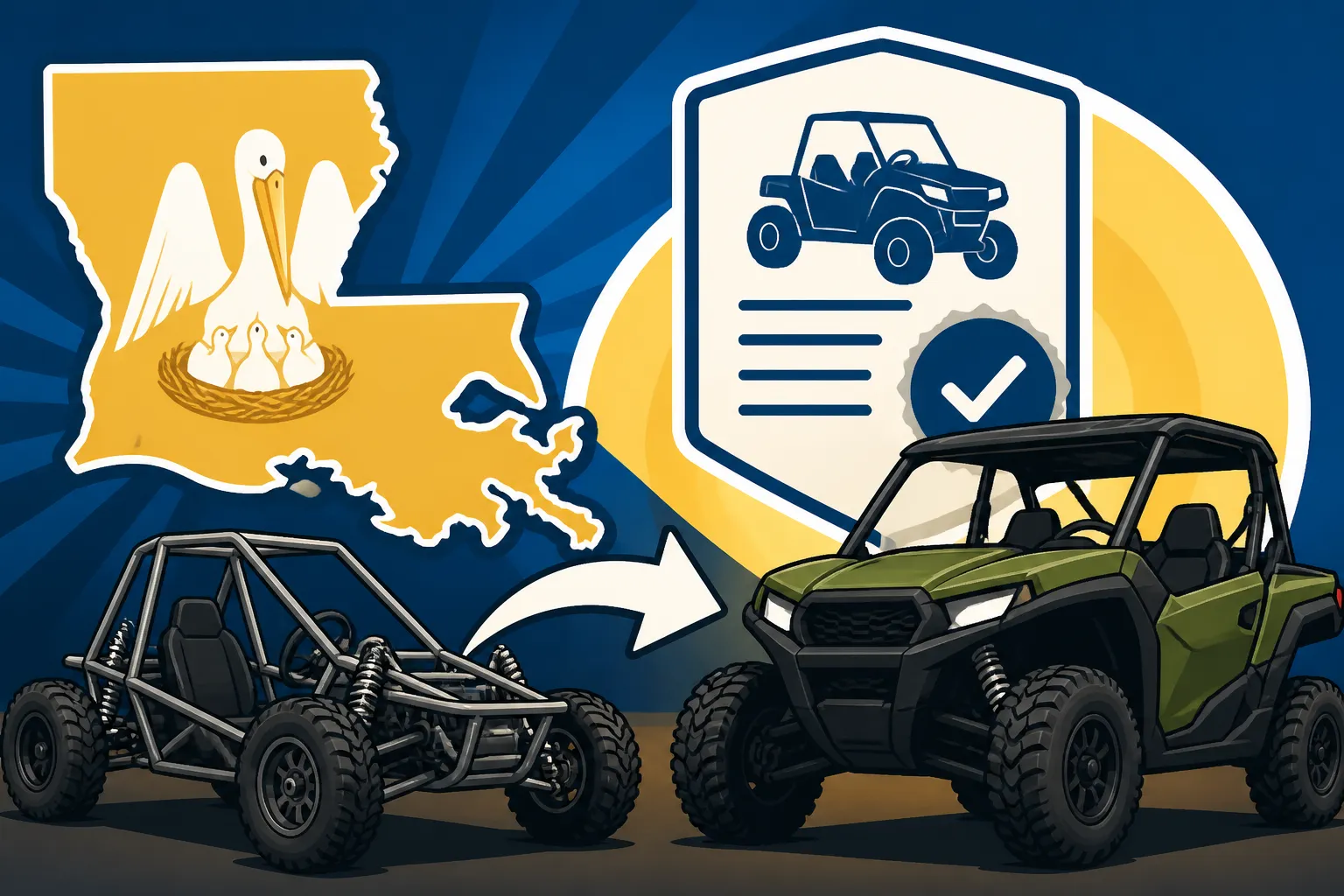
So, you've poured your heart, sweat, and probably a few scraped knuckles into building your own off-road marvel. Whether it's a custom mud buggy, a repurposed quad, or a side-by-side built from a collection of carefully selected parts, the satisfaction of creating something with your own hands is immense. But then reality hits: how on earth do you get a title for this unique machine in Louisiana? The standard process for dealership-bought ATVs with their perfect Manufacturer's Statement of Origin (MSO) just doesn't seem to fit, and it can feel like you're trying to fit a square peg in a round hole at the OMV. This guide is here to walk you through the often-confusing steps to get your homemade off-road machine legally titled in the Bayou State, ensuring all your hard work can hit the trails legally.
The Unique Challenge of Titling a Homemade Machine in Louisiana
Let's be honest, titling a brand-new ATV or UTV you bought from a dealer is usually a pretty straightforward affair. You get a Manufacturer's Statement of Origin (MSO), sign a few papers, pay your taxes and fees, and the OMV handles the rest. But when you’ve built something from the ground up, piecing together an engine from one source, a frame from another, and various custom components, you don't have that neat MSO. This is where many DIY enthusiasts run into a wall of confusion, wondering if their creation can ever truly be "legit."
Why Homemade Machines Aren't Standard
The Louisiana Office of Motor Vehicles (OMV) is set up to process vehicles with established identities. A factory-produced ATV comes with a clear vehicle identification number (VIN) from the manufacturer and that MSO, which essentially acts as the birth certificate for the machine. This documentation proves it's new, hasn't been titled before, and details its specifications.
Your homemade machine, however, doesn't arrive with any of that. It's a patchwork of parts, even if those parts are brand new. Perhaps you bought a rolling chassis and dropped in a custom engine, or maybe you fabricated the frame yourself and sourced components individually. The OMV can't just take your word for it that this collection of parts forms a legitimate vehicle. They need a way to verify its origin, ensure it's not made of stolen parts, and assign it a unique identifier that will stay with it for its lifetime. This lack of a clear, pre-existing identity is the core of the challenge, and it's a frustration many builders can deeply relate to.
The OMV's Role and What They Look For
Despite the uniqueness of your situation, the OMV is indeed the agency responsible for titling your homemade creation. They understand that people build custom vehicles, and they have a process in place to accommodate it, even if it feels a little less common than titling a new pickup truck. Their primary concern is establishing clear ownership and ensuring that the machine can be legally identified and tracked.
For homemade machines, the OMV's process usually revolves around assigning a state-issued VIN. This VIN essentially replaces the manufacturer's VIN that your machine never had. To do this, they'll need to conduct an inspection to confirm the vehicle's construction and ensure it's not a re-VINned stolen machine or composed of parts from stolen vehicles. This inspection also helps them categorize your machine correctly (e.g., as an ATV, UTV, or off-road buggy) for titling purposes. Essentially, you're working backward from the standard process, proving the machine's existence and legitimacy before it gets its official "birth certificate."
Navigating the VIN Assignment Process for Your Homemade Quad
Getting a state-assigned Vehicle Identification Number (VIN) is arguably the most crucial step in titling a homemade off-road machine in Louisiana. Without it, your custom build remains just a collection of parts, however impressive. This process requires a bit of patience and meticulous documentation, but it’s entirely doable once you understand what the OMV expects.
Proving Ownership of Components and Materials
This is where your inner packrat needs to shine. The OMV needs assurance that every significant component you used to build your machine was legally acquired. Think of it like building a house – you need permits and proof you bought the lumber, wiring, and plumbing. For your ATV or UTV, this means keeping detailed records for key parts like the engine, frame, axles, transmission, and even major accessories that contribute significantly to the machine's value.
Ideally, you'll have original receipts, invoices, or bills of sale for every major component. These documents should clearly state the item purchased, the date, and the seller's information. If you salvaged an engine from an old machine, you’ll want the bill of sale for that original machine. If you bought parts online, print out the order confirmations and payment receipts. If you've been collecting parts over time or inherited some from a friend, this can get tricky. For components without official receipts, you might need to create a sworn affidavit detailing how you acquired them. Services like LawDepot can provide templates for affidavits that can help you document these origins clearly and professionally, which can make a big difference at the OMV counter. The more detailed your documentation, the smoother this process will be. Make a comprehensive list of all major components with their serial numbers (if applicable) and corresponding proof of ownership.
The OMV's Inspection Requirement
Before the OMV can assign a VIN, they typically need to inspect your homemade machine. This isn't just a casual glance; it's a critical step where a certified OMV inspector or law enforcement officer will examine your build. The primary reasons for this inspection are twofold: to verify the machine's construction and to ensure no stolen components have been used.
During the inspection, the officer will meticulously check for existing VINs on any major components you've incorporated. If they find a VIN on an engine or frame, they’ll cross-reference it to ensure it hasn't been reported stolen. They'll also assess the overall construction of the machine, looking for basic safety features and ensuring it appears to be a legitimately assembled off-road vehicle, not just a haphazard collection of junk. They’ll also confirm that there is no existing VIN that would already entitle it to a title. To prepare, ensure your machine is assembled and in a state where it can be safely inspected. Have all your documentation (receipts, affidavits, detailed parts list) organized and ready. You’ll need to contact your local OMV office or State Police Troop to inquire about scheduling this inspection, as procedures can vary slightly by region. Once the inspection is complete and approved, you'll receive official documentation confirming the machine's legitimacy and readiness for a VIN assignment. This is the green light for the next step. You can refer to [Serial Numbers the OMV Will Accept on a Title] for more context on what types of identifiers are typically considered.
Obtaining a Vehicle Identification Number (VIN)
Once your homemade machine has passed inspection and you have all your component ownership verified, you're ready to apply for a state-assigned VIN. This is the moment your creation officially gets its unique identity. The OMV will typically provide a VIN plate or sticker that you'll be instructed to permanently affix to your machine, usually on the frame in a visible and secure location.
This state-assigned VIN is incredibly important. It’s what transforms your homemade project into a recognized vehicle. From this point forward, this VIN will be used for all official purposes – titling, potential future registration (if required for certain uses), insurance, and any future sale. It ensures that your machine can be uniquely identified and traced, just like any factory-built ATV. Make sure to follow the OMV's instructions precisely regarding where and how to attach the VIN, as improper placement or attachment could cause issues down the road. Once the VIN is affixed and recorded by the OMV, you're just one step away from holding that coveted title in your hands.
Completing the Title Application for Your Custom Build
With your newly assigned VIN in hand, the finish line for titling your homemade machine in Louisiana is finally in sight. Now it's about gathering the remaining paperwork and making that final trip to the OMV. This stage often involves some standard forms, but with a homemade twist that requires careful attention to detail.
Required Documentation Beyond the VIN Assignment
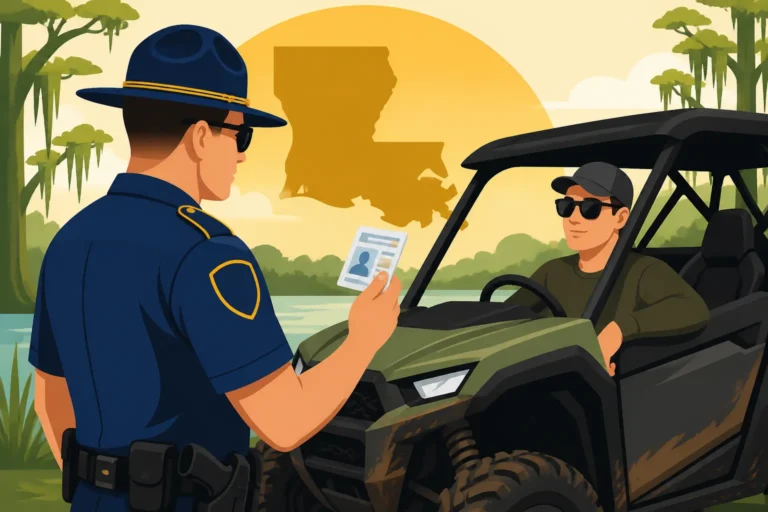
Even after you've secured a state-assigned VIN for your custom build, there's still a standard suite of documents the OMV will need to process your title application. This typically includes the OMV's official vehicle application form, which asks for details about you and your newly minted machine. You’ll also need to provide valid identification, usually a state-issued driver's license or ID card, to confirm your identity. [Louisiana Photo ID at the Counter] clarifies what types of IDs are acceptable. And, of course, proof of your Louisiana residency is essential, which often means utility bills or a lease agreement. You can find more details on this in [Louisiana Title and Proof of Address].
One crucial element that often catches people off guard, even with homemade machines, is sales tax. Even if you built the machine yourself from parts, you're still liable for sales tax on the total cost of those components. This is typically handled as a "use tax" since you bought the components and used them to create a new item. The OMV will expect to see proof that this sales or use tax has been paid before they'll issue a title. So, keep all those receipts for parts purchases organized and ready to calculate the total value. If you haven't already paid sales tax on some of the components, you may need to pay it at the OMV counter based on the value you've established. This process is detailed further in [Louisiana Requires Proof of Sales Tax First].
Crafting a Comprehensive Bill of Sale for a Homemade Machine
This might sound strange – creating a "bill of sale" for a machine you built yourself. After all, who are you selling it to? In this context, it's less about a transaction and more about formalizing the machine's origin and your ownership as the builder. Since there's no dealer or previous owner, you are essentially creating the initial ownership document.
You'll want to draft a document that clearly states you are the builder of the machine, providing the newly assigned VIN, a detailed description of the machine (make, model "Homemade," year "Current Year," type "ATV" or "UTV"), and an estimated value based on the cost of materials and labor. This document serves as a "Bill of Construction" or "Affidavit of Construction" and formally establishes your initial ownership. It's a good idea to have this document notarized, especially if you plan to sell the machine in the future, as it adds a layer of legal formality. Generic templates from services like LawDepot can be invaluable for creating such an affidavit or a formal bill of sale. They ensure you include all the necessary legal language and details that the OMV might look for, avoiding potential headaches or requests for more information. For more information on what makes a bill of sale robust, see [Louisiana Notarized Bills of Sale].
Fees and Final Steps at the OMV
You're almost there! Once all your documentation is in order – the VIN assignment paperwork, proof of component ownership, the OMV application, your ID, proof of address, and your "bill of construction" – it's time for the final visit to the OMV.
At the counter, you'll pay the applicable fees. The primary fee you'll encounter is the Louisiana title fee. As outlined in [Louisiana Title Fee of $68.50], there's a specific amount for this. In addition to the title fee, there's also a handling fee that the OMV charges for processing your paperwork, typically a small flat rate. This [Louisiana Handling Fee of $8] covers the administrative costs associated with your application. Be prepared to pay these fees, as well as any outstanding sales or use tax on your components, using acceptable payment methods. Most OMV offices accept cash, checks, and often debit or credit cards, but it's always wise to check their specific [Louisiana Title Payment Methods] before you go. After all payments are made and the clerk reviews and approves your submission, they will process your title application. You'll usually receive a temporary receipt, and your official title will be mailed to you within a few weeks. Congratulations, your homemade machine is now officially titled in Louisiana!
Common Pitfalls and Best Practices for Homemade ATV Titling
The process of titling a homemade off-road machine isn't the most common transaction the Louisiana OMV handles, which means there's a higher chance for confusion or missteps if you're not fully prepared. Understanding where people often get stuck and how to best prepare can save you a lot of time, frustration, and repeated trips to the OMV.
Avoiding Delays: Documentation is King
The single biggest reason for delays or outright rejection when trying to title a homemade machine is insufficient or disorganized documentation. The OMV operates on paper trails, and for a vehicle without a traditional manufacturing history, your paper trail is its history. Imagine trying to explain the entire history of a complex project to a stranger who has never seen it before, solely through a stack of papers. That’s essentially what you’re doing at the OMV counter.
Every receipt, every invoice, every communication about a major component should be meticulously kept. If you bought an engine from a private seller, ensure you have a notarized bill of sale for that engine. If you fabricated a frame, document the materials purchased and even photographs of the construction process can add weight to your claim. A detailed list of all components, including serial numbers where applicable, cross-referenced with your proof of ownership, is invaluable. Think of it as building a legal case for your machine's existence and your ownership. Organize everything into a binder or a well-labeled folder. When the OMV clerk asks for something, you should be able to pull it out immediately. This level of preparation not only speeds up the process but also demonstrates to the OMV your seriousness and diligence, which can influence how smoothly your application proceeds.
When to Seek Professional Assistance
For most straightforward homemade builds, following the steps outlined here and being meticulously organized should get you through the process. However, there are times when seeking a bit of professional help might be a wise investment. If your build is particularly complex, involves components with questionable origins, or if you're dealing with an inherited machine that has no paperwork whatsoever, you might consider consulting with a vehicle title service or even a lawyer who specializes in vehicle titling issues. They can often help navigate the nuances of state regulations, suggest alternative forms of documentation, or even directly assist in preparing your application.
Additionally, for formalizing documents like a sworn affidavit of construction, or if you ever decide to sell your unique creation, having professional, legally sound templates can be incredibly helpful. Services like LawDepot offer customizable legal documents, including various types of bills of sale and affidavits, which can ensure your paperwork meets legal standards and stands up to scrutiny. This can be especially important for creating that initial "Bill of Construction" that proves you built the machine yourself, providing a solid foundation for your title application.
What Happens After You Get the Title
Once you finally have that Louisiana title for your homemade ATV or UTV, you've crossed a major hurdle! Your custom creation is now a legally recognized vehicle. However, getting the title doesn't automatically mean you can hit just any trail or road. The title primarily establishes ownership. You'll still need to ensure your machine complies with all other Louisiana off-road vehicle laws, particularly regarding usage and decals.
For example, all off-road vehicles operated on designated public lands or crossing public roads in Louisiana typically require an annual off-road decal. This decal is separate from the title and is your proof that you've paid the state's user fee for off-road access. You can learn more about this in [Louisiana's Yearly Off-Road Decal]. While your homemade machine now has an official identity, it still falls under the general umbrella of ATV/UTV regulations. You’ll need to understand if [Do You Need to Register an ATV in Louisiana?] for specific types of use or locations. Always check local parish ordinances as well, as some areas have specific rules for off-road vehicle use. With your title secured, you're now fully equipped to ensure your unique ride is enjoyed legally and responsibly throughout the Bayou State.
Disclaimer
This article is for general informational purposes only and does not constitute professional advice. Laws, prices and regulations vary by location and change over time. Consult a qualified professional for guidance on your specific situation.