Louisiana Machines Stored Through Hurricane Season
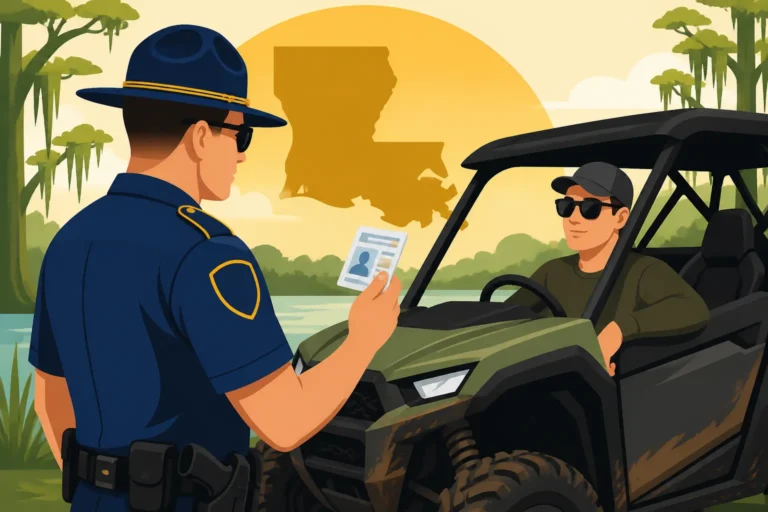
Louisiana's long, hot, and often stormy hurricane season can make many off-road enthusiasts wonder about the best way to handle their ATV or UTV when it's not in active use. You might be concerned about whether you still need to keep up with registration, titling, and other paperwork if your machine is just sitting in a shed or at a hunting camp, especially if you're not riding it for months on end. This guide aims to clear up those questions, helping you understand Louisiana's requirements for off-road machines, even when they're tucked away from the elements during the stormiest parts of the year, and how to maintain compliance without unnecessary stress.
Understanding Louisiana's Hurricane Season and Its Impact on ATV/UTV Use
For those of us in Louisiana, hurricane season isn't just a weather forecast; it's a significant part of our lives from June 1st through November 30th. During these months, many off-road enthusiasts naturally scale back their riding. Whether it's due to torrential rains, the threat of high winds, or the need to secure property, our ATVs and UTVs often get put away for extended periods. This can lead to questions about their legal status, particularly regarding titling and registration.
It’s tempting to think that if your machine isn't actively being ridden, especially on public lands or parish roads, you can let certain things slide. However, Louisiana's laws are pretty clear about the ongoing requirements for off-road vehicles. These machines, whether they're a utility quad used for work around the property, a sport quad for weekend thrills, or a side-by-side for family adventures, generally need to be properly titled and, in most cases, decaled. The very act of ownership typically triggers these requirements, regardless of whether the machine is out tearing up mud or safely parked in a barn awaiting better weather.
The primary reason for these regulations is to establish clear ownership and to ensure that if a machine is ever stolen, recovered, or involved in an incident, there's a legal record. Even if your quad is simply gathering dust in your garage during the worst of summer, its legal identity as a titled piece of property remains. Understanding this fundamental principle is key to navigating the rules during those quiet months when the threat of a named storm looms large.
When Storage Becomes a Necessity
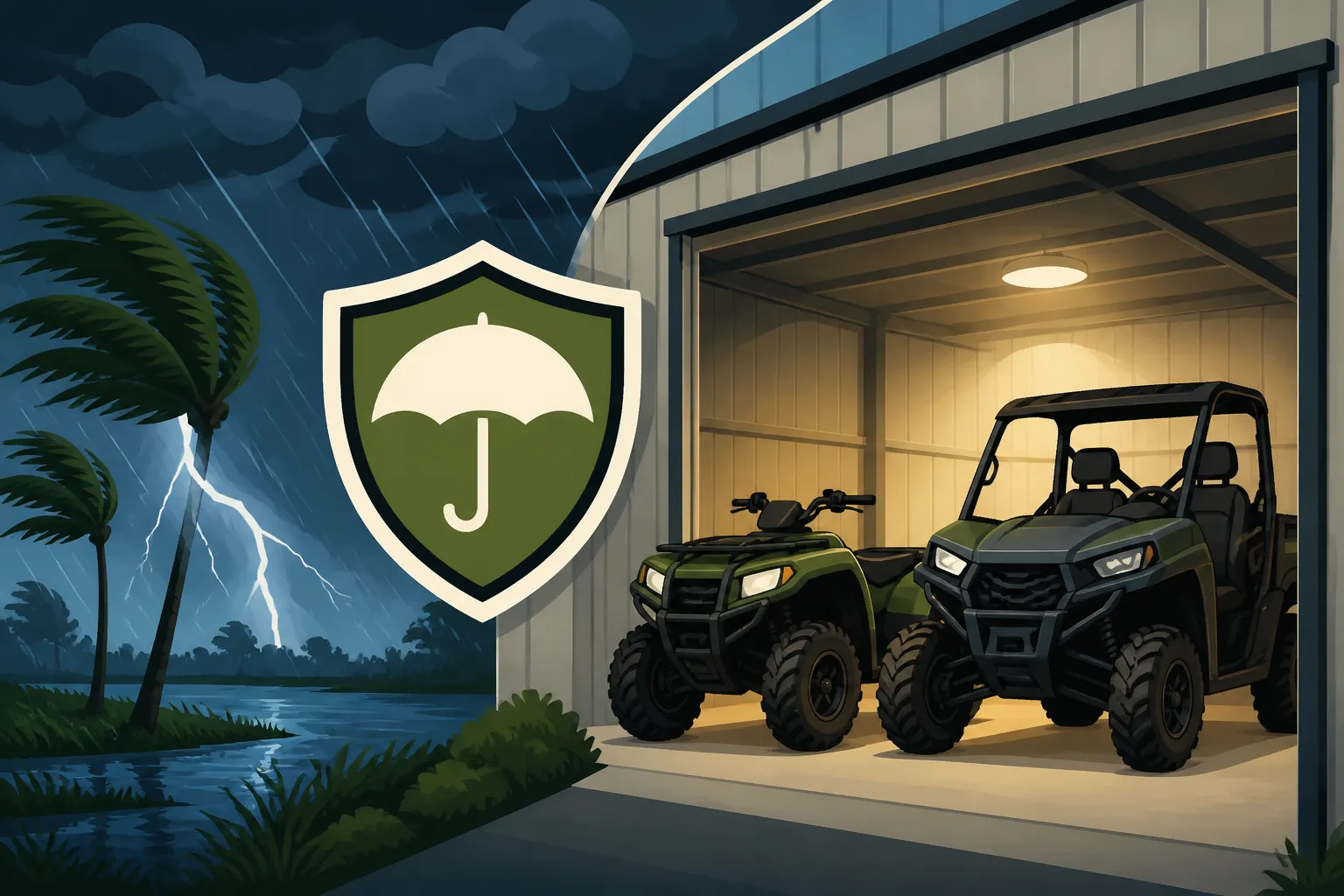
Beyond just personal preference, storage becomes a critical necessity during hurricane season. Many riders evacuate inland, taking their families and essential belongings, but often leaving their larger toys behind. Others batten down the hatches, securing their property as best they can. For an ATV or UTV, this often means parking it in a shed, barn, or a more secure outbuilding. This period of inactivity, while practical for safety, doesn't negate the machine's legal standing.
You might also be storing your machine at a hunting camp or a second property that isn't regularly occupied. This scenario is incredibly common in Louisiana, where hunting leases and camps are a way of life. The machine sits, ready for use when deer season opens or when the camp needs maintenance. Even in these semi-remote locations, the OMV's requirements for [Louisiana ORV Decals and Titles Explained] still apply. The machine doesn't just fall off the radar because it's out of sight and out of mind for a few months.
It’s crucial to distinguish between merely storing a machine and declaring it non-operational. Louisiana doesn't have a specific "non-operational" status for ATVs or UTVs that pauses titling or decal requirements in the way some states might for street-legal vehicles. For all intents and purposes, if you own it, you need to comply with the rules.
Does Storage Affect Your ATV/UTV's Registration and Titling Requirements in Louisiana?
This is perhaps the most common question riders have when their machines are put away for the season: does simply storing an ATV or UTV change what the OMV expects from you? The short answer, for the vast majority of owners, is no. The fundamental requirements for titling and decaling your off-road machine in Louisiana remain in effect even if it’s stored and not being actively ridden.
The Louisiana Office of Motor Vehicles (OMV) is the agency responsible for [Louisiana Titles ATVs Through the OMV], not the Department of Wildlife and Fisheries, as some people mistakenly believe. Their primary concern is the proper identification and ownership of the vehicle. A title proves who legally owns the machine, much like a title for a car or truck. The ORV decal, while it allows for certain types of limited public land use, is also tied to the identification and registration of the machine in the state's system.
If you let your decal expire or fail to get a title, even while your machine is stored, you could face issues down the line. Imagine selling a machine that you let the decal lapse on for two years while it was in storage. The new buyer would then have to deal with getting current, and potentially paying fees for past periods. It complicates things unnecessarily.
Titling: An Ongoing Proof of Ownership
A title is essentially the birth certificate of your off-road machine in Louisiana. It records crucial information like the Vehicle Identification Number (VIN), the make, model, and year, and, most importantly, the legal owner. This document is perpetual as long as the machine exists. So, if you bought a new machine and received its Manufacturer's Statement of Origin (MSO), or purchased a used one with an assigned title, the requirement to register that title with the OMV is a one-time event that establishes ownership. Once titled, it stays titled, regardless of storage.
The cost of a Louisiana ATV Title Cost is a one-time fee, typically a fixed amount, plus any applicable fees for recording liens if you financed the machine. This is not an annual renewal. So, if your machine is titled, you don't need to do anything specific about the title during storage periods unless the title itself is lost or damaged, which could happen in a severe storm. In such a case, you would need to contact the OMV to begin the process of [Ordering a Duplicate Title From the OMV]. Having a secure, physical copy of your title stored off-site, or a digital copy, is a good preventative measure for hurricane preparedness.
Even if you're keeping your machine solely on private property, say at your hunting camp or family land, having a title is paramount. It protects your investment and provides irrefutable proof of ownership should there ever be a dispute or theft. This is particularly important for machines kept in more remote locations, where oversight might be less frequent during non-peak seasons.
Decals: The Annual or Multi-Year Requirement
Unlike the one-time titling process, the [Louisiana's Yearly Off-Road Decal] is a recurring requirement. While the OMV charges $3 a year for the decal, the decal itself runs on a four-year cycle. This means you’ll typically buy a decal that’s valid for four years, but the fee is assessed annually. Even if your machine is stored for several months out of the year, that decal still needs to be current.
The purpose of the decal isn't just for riding on designated public trails or roads; it's part of the state's system for identifying registered off-road vehicles. If you neglect to renew your decal while your machine is in storage, and then decide to take it out for a ride, you could face [Louisiana Penalties for No Decal]. It's a small fee to pay for peace of mind and compliance.
Some owners might mistakenly believe that if their machine is only used on their private farm, they don't need a decal. While there are specific agricultural exemptions for road use, a [Louisiana Farm-Only Machines Need No Decal] generally still requires a title and decal if it's operating off the farm. The wording around these exemptions is very specific and applies primarily to limited road use for agricultural purposes within a defined radius. If your "farm machine" is also used for recreation, or taken to a different property, it needs a decal. It is important to know [Why an ATV Needs Both a Title and a Decal].
Here's a quick overview of the key differences:
| Requirement | Purpose | Frequency | Affected by Storage? |
|---|---|---|---|
| Title | Proves legal ownership | One-time | No |
| Decal | Identifies registered machine | Annual (4-yr cycle) | No |
| Sales Tax | Required upon purchase | One-time | No |
Louisiana requires [Louisiana Requires Proof of Sales Tax First] before a title will be issued. This is a one-time requirement when you first acquire the machine, whether new or used. Storing it later doesn't change this past requirement.
Maintaining Compliance for Stored Machines
Keeping your ATV or UTV compliant while it's stored through hurricane season is generally straightforward. It mostly involves ensuring your existing paperwork is up-to-date and accessible, and that you understand the conditions under which you might use the machine, even briefly, during storage.
For many, the biggest concern is the annual renewal of the ORV decal. Since the fee is minimal and the decal covers a four-year cycle, it’s often easier to just keep it current. Trying to save a few dollars by letting it lapse could lead to bigger headaches later, especially if you suddenly need to move the machine or use it for emergency purposes after a storm.
If you decide to let your decal expire because you genuinely believe the machine won't be used at all, be absolutely certain of your interpretation of the rules. For example, if you use your quad strictly for retrieving deer during hunting season on private land, you might think you don't need a decal. However, if that private land has parish roads crisscrossing it, or you ever need to cross a public road to get to another part of the property, you'll need that decal. The line between private and public access can be blurrier than you think.
Keeping Paperwork Safe and Accessible
When hurricane season hits, one of the first things people do is secure their important documents. Your ATV or UTV title and proof of decal should be among these. Consider making digital copies and storing them in a cloud service, or keeping physical copies in a waterproof, fireproof safe. If the worst happens and your primary documents are lost due to storm damage, having these backups will be invaluable when you need to [Ordering a Duplicate Title From the OMV] or prove ownership to an insurance company.
For machines kept at a hunting camp, especially one that might be difficult to access after a storm, ensuring documents are not left with the machine is a smart move. Bring original titles and other vital records home or to another secure location. While you might keep a copy of your [Louisiana's Yearly Off-Road Decal] with the machine, the original title is far too important to risk.
Sometimes, after a significant event like a hurricane, you might need to prove ownership for insurance claims or to access damaged property. Having easy access to your title, or a notarized bill of sale, is crucial. If you're using a template from a service like LawDepot for a bill of sale, ensure it's fully completed and notarized, as this adds significant weight to your proof of ownership. Using reliable legal templates, such as those found on LawDepot, can help ensure your documents meet common standards.
Special Cases: Agricultural Use During Storage
Louisiana offers some specific provisions for agricultural use. If your machine is strictly used for farming purposes, you might qualify for certain exemptions regarding road use. However, these are often for machines operating within a 5-mile radius of the farm property, and they still typically require an agricultural affidavit to be filed with the OMV. Even a farm-exempt machine often needs a specific decal to denote its status.
If your machine is stored but occasionally brought out to assist with farm tasks, like checking fences or moving small equipment, it's worth reviewing the [Louisiana Agricultural Affidavits for an ATV] rules carefully. While it might feel like the machine is "in storage," its intermittent use for agricultural work can still fall under OMV regulations. The spirit of the law aims to cover most operational machines, even those with limited use.
It is rare for an agricultural exemption to completely waive the need for a title. A title is fundamental proof of ownership. The exemptions primarily apply to the decal and road-riding rules. So, while your machine might be parked for hurricane season, if it's meant for agricultural work, ensure its status is correctly documented with the OMV to avoid future complications.
Special Considerations for Machines Damaged During a Storm
While our hope is always for an uneventful hurricane season, the reality in Louisiana is that storm damage is always a possibility. If your ATV or UTV is damaged or even destroyed during a hurricane, there are specific titling and registration considerations you’ll need to navigate, especially if you have insurance.
When a machine is significantly damaged, it may be declared a "total loss" by an insurance company. In such cases, the insurer typically takes possession of the damaged machine (the salvage), and the title will be surrendered or converted to a salvage title. This process confirms the machine's condition and transfers ownership to the insurance company. If your machine has a lien on it, the insurance payout will go to the lienholder first. Understanding [Louisiana Title and Lien Records] becomes very important in this scenario.
If your machine is damaged but not totaled, or if you don't have comprehensive insurance, you'll still retain the original title. The damage itself doesn't void the title, but it might affect its resale value and future registration if repairs are extensive. Documenting the damage thoroughly with photos and reports is crucial for any insurance claim or future sale. You can use affidavits, perhaps drafted with the help of a reputable service like LawDepot, to document the extent of damage if needed for legal or insurance purposes.
Loss of Documentation Due to Storms
One of the most immediate problems after a severe storm can be the loss of important documents, including your ATV or UTV title, bill of sale, or proof of decal. Water damage, wind damage, or even fire can destroy physical paperwork. This is where having backups, as mentioned earlier, is invaluable.
If you lose your title, you'll need to contact the OMV to request a duplicate. This process requires proving your identity and ownership, which can be challenging if all your original documents are gone. However, the OMV maintains digital records, so they can usually verify your ownership information. Still, the process can take time, which might be frustrating if you need the title quickly for an insurance claim or a post-storm sale. [Louisiana Title Processing Time] can vary, so acting quickly is always best.
For those who purchased their machine in a private sale and only have a handwritten bill of sale, losing that document can be particularly problematic, especially if it wasn't notarized. While Louisiana does allow for [Louisiana Title Without a Bill of Sale] in very specific circumstances, it's a much more involved process, often requiring additional affidavits and proof. This is why using a properly formatted, notarized bill of sale, perhaps generated through a service like LawDepot, is always recommended for private transactions.
Insurance and Stored Machines
It's wise to consider your insurance coverage, even for machines stored through hurricane season. A basic liability policy won't cover damage to your machine itself from a storm. For that, you'd need comprehensive coverage. Many riders often drop comprehensive coverage during off-season storage to save money, assuming the risk is low. However, in hurricane-prone Louisiana, this could be a costly mistake.
Damage from wind, falling debris, flooding, or even theft during a post-storm chaotic period can be substantial. Check with your insurance provider to understand what your policy covers while your ATV or UTV is in storage. Some policies might have specific clauses about machines stored in certain types of structures or locations. Having appropriate coverage ensures that if your machine is damaged, you have the financial means to repair or replace it, rather than facing a complete loss of your investment. Think about [Insuring a Quad That Never Leaves Private Land] – while it might not need road insurance, comprehensive coverage for physical damage is a different matter.
Ultimately, while the thought of an expensive hurricane season often centers on our homes and families, our off-road machines are valuable assets that also need careful consideration. Taking proactive steps to maintain their legal standing and protect them from the elements can save you significant headaches and financial strain down the road.
Disclaimer
This article is for general informational purposes only and does not constitute professional advice. Laws, prices and regulations vary by location and change over time. Consult a qualified professional for guidance on your specific situation.