Louisiana’s 30-Day Decal Deadline
Few things are as frustrating as buying a new off-road machine in Louisiana, only to find yourself confused by the paperwork, deadlines, and seemingly endless trips to the OMV. You’ve just made a big purchase, or perhaps moved to the state with your beloved quad, and now you’re staring down a pile of forms, wondering exactly when that all-important ORV decal needs to be on your machine. This guide is here to cut through the confusion and walk you through Louisiana's critical 30-day decal deadline, ensuring you avoid penalties and get your ATV or UTV ready for the trails.
Understanding the Louisiana 30-Day Decal Deadline for ATVs and UTVs
It’s easy to get caught up in the excitement of a new machine or the hassle of moving, but Louisiana law is pretty clear when it comes to getting your Off-Road Vehicle (ORV) decal. That 30-day window isn't just a suggestion; it's a hard deadline that every ATV and UTV owner needs to respect to stay on the right side of the law. Ignoring it can lead to more than just a headache – it can mean fines, delays, and even having your machine impounded.
What the 30-Day Rule Actually Means
Simply put, the 30-day rule dictates that after you acquire an ATV or UTV – whether through a purchase, a gift, or by bringing it into Louisiana from another state – you have a specific, limited time frame to apply for and obtain your Louisiana ORV decal. This isn't just about applying for it; it's about having the decal in your possession and affixed to your machine. For most riders, this 30-day period begins on the date of sale or the date the machine first enters the state for residency purposes. It's a critical window that kicks off the moment ownership officially transfers to you.
Imagine you just bought that dream side-by-side from a private seller last Saturday. That Saturday marks day one of your 30-day countdown. Every day that passes without you initiating the title and decal process brings you closer to that deadline. It’s not uncommon for people to think they have until their first ride, or until they plan to go to a park, but the clock starts ticking much sooner. The state wants to know who owns which machines and that they're properly registered for their intended use. This initial decal application often goes hand-in-hand with titling, which itself has its own prompt requirements. For instance, if you purchase from a dealer, they often handle much of this for you, but it’s still your responsibility to ensure it gets done promptly. If you're bringing a machine from out of state, the 30 days usually refers to the date you establish residency in Louisiana or the date you bring the machine into the state with the intent to keep it here.
Why This Deadline Matters More Than You Think
Missing the 30-day deadline isn't just a minor administrative oversight; it can open a Pandora's Box of problems. The most immediate consequence, of course, is the potential for fines. Law enforcement officers, whether a Louisiana State Trooper or a local sheriff's deputy, have the authority to check for valid ORV decals when you're riding in designated areas or even transporting your machine. If that decal isn't current or was never obtained within the required timeframe, you could be cited for [Louisiana Penalties for No Decal]. But it goes beyond just a ticket. In some cases, repeated offenses or particularly egregious situations could lead to your machine being impounded, a logistical nightmare no one wants to deal with. Just think about the cost and effort involved in getting your machine released from impoundment – it far outweighs the small fee for the decal itself.
Moreover, the prompt issuance of your decal is often tied directly to the titling process. The state wants to ensure all off-road vehicles are properly titled in the owner's name, both for property tax purposes and for tracking ownership in case of theft. [Why an ATV Needs Both a Title and a Decal] is a question many ask, and the answer is usually about separating legal ownership from the right to operate. While the title establishes who legally owns the machine, the decal permits its operation in approved off-road areas. Without the decal, even if you have a valid title, you're not fully compliant to hit the trails or specified riding locations. This deadline is a foundational piece of Louisiana's ORV regulatory framework, designed to ensure accountability and safety for all riders.
The Journey from Purchase to Decal: Your First 30 Days
The path to getting your ORV decal in Louisiana isn't always a straight line, especially with the 30-day deadline looming. It involves a few crucial steps that must be completed in a specific order, often starting with proving you own the machine and have satisfied all tax obligations. Trying to jump ahead or skip a step will only lead to frustrating delays and wasted trips to the Office of Motor Vehicles (OMV).
Starting with Proof of Ownership and Sales Tax
Before you can even think about an ORV decal, you absolutely must establish clear proof of ownership and demonstrate that all sales tax due has been paid. For a brand-new machine purchased from a dealership, this means you'll receive a Manufacturer's Statement of Origin (MSO). This MSO is essentially the birth certificate for your ATV or UTV, and it's what the OMV will require to issue the first title. The dealer will also provide you with an [Louisiana Itemized Dealer Invoices] showing the purchase price and taxes collected. For a used machine bought from a private seller, things get a little trickier. You'll need a properly executed bill of sale. For Louisiana, this bill of sale often needs to be notarized, especially for private sales, to confirm the identity of both buyer and seller and prevent fraud. So, if you're buying privately, make sure you get a [Louisiana Notarized Bills of Sale]. You can find templates for bills of sale online, perhaps through services like LawDepot, to ensure all necessary fields and notary requirements are met.
The other non-negotiable step before anything else can happen at the OMV is proving you've paid sales tax. Louisiana is very strict on this: [Louisiana Requires Proof of Sales Tax First] before they will process your title or decal application. If you bought from a dealer, they would have collected the state and local sales tax, and their invoice serves as your proof. If you bought from a private party, you're responsible for remitting the sales tax directly to the OMV when you apply for the title. This is often where people get tripped up, thinking they can deal with the tax later. No, it must be settled up front. This includes vehicles brought in from out of state; you'll likely owe Louisiana use tax if you didn't pay an equivalent sales tax in your previous state of residence. Until that tax is paid and documented, your application for a title and subsequently, your decal, will be stuck in neutral.
Titling Your Machine Before the Decal
Once you have your proof of ownership (MSO or notarized bill of sale) and have handled the sales tax, the next critical step is getting your machine titled. While we're talking about the decal deadline, it's vital to understand that the decal almost always follows the title. The Office of Motor Vehicles (OMV) is the agency responsible for titling ATVs and UTVs in Louisiana, not the Department of Wildlife and Fisheries, which is a common misconception. [The OMV Titles ATVs, Not the Wildlife Department], so that's where all your paperwork needs to go. You'll need to complete the official OMV Vehicle Application form, often referred to as [Louisiana Form DPSMV 1799 Explained]. This form requires detailed information about your machine and yourself, so take your time filling it out accurately.
For a new machine, you'll surrender the MSO to the OMV. For a used machine, the previous owner's properly assigned title is what you'll need, along with that notarized bill of sale. Don't forget to bring a valid photo ID, as the OMV will need to verify your identity. This titling process incurs a [Louisiana Title Fee of $68.50] and an [Louisiana Handling Fee of $8], in addition to any sales tax you might still owe from a private sale. Only after the OMV processes your title application and issues a new title in your name can they then issue the ORV decal. The decal is essentially an operating permit linked to a valid title. So, when planning your 30-day window, factor in the time and effort needed for the titling process, as it directly impacts your ability to get that decal affixed to your machine. It’s a package deal, and one cannot truly be completed without the other.
Navigating Common Pitfalls and Exceptions
Even with the best intentions, the 30-day decal deadline can sometimes feel like a moving target. Life happens, paperwork gets misplaced, and special circumstances can add layers of complexity. Understanding what happens if you miss the deadline, and knowing about specific exemptions like those for farm use, can save you a lot of grief and potential penalties down the line.
What Happens if You Miss the 30-Day Mark?
The worst-case scenario is certainly something no one wants to face. If you blow past that 30-day deadline without securing your ORV decal, you're officially operating outside Louisiana law. The most common consequence is a fine, which can vary depending on the specific circumstances and the discretion of the law enforcement officer. These fines aren't just an inconvenience; they can quickly add up, often costing significantly more than the decal itself. Beyond the initial fine, you could also face additional penalties for late registration or even for operating an unregistered vehicle. For example, if you're stopped on what's considered a designated ORV trail or even transporting your machine, the lack of a current decal could lead to more severe actions, including the possibility of [Louisiana Impoundment for No Decal]. Imagine your weekend plans being ruined, not to mention the cost and hassle of retrieving your machine from an impound lot.
If you find yourself in this situation, it's best to act quickly. Don't simply hope you won't get caught. The first step is to gather all your necessary documentation and head to the OMV as soon as possible to rectify the situation. Explain that you're past the deadline, pay any applicable late fees or penalties, and get that decal issued. While it might still involve a fine, addressing it proactively is usually better than waiting for law enforcement to discover the oversight. Many people get busy after a purchase or a move, and suddenly 45 or 60 days have passed. The OMV understands that life intervenes, but they still have a legal obligation to enforce the deadlines. While there's no magic "get out of jail free" card, demonstrating your effort to comply, even if late, is always a better strategy than continued non-compliance.
Understanding Special Cases: Farm Use and Out-of-State Purchases
Louisiana law acknowledges that not all ATVs and UTVs are used solely for recreation. The state has specific provisions for agricultural use, which can sometimes exempt a machine from the standard ORV decal requirement. However, these exemptions come with strict limitations. [Louisiana's Agricultural Registration Exemption] means that if your machine is exclusively used for legitimate agricultural purposes on private farmland, it typically doesn't need the annual ORV decal. However, this is not a blanket exemption for all farm machines. [Louisiana Farm-Only Machines Need No Decal] often still need an affidavit sworn before a notary, confirming their exclusive farm use. Crucially, this exemption generally doesn't apply if you ever take the machine off private farm property, even for short distances on a shoulder of a public road. If it touches a public road shoulder, even briefly, for anything other than specific, limited farm operations within a 5-mile radius, the decal rule likely kicks back in.
Another common scenario involves bringing an ORV into Louisiana from another state. If you've moved to Louisiana with an ATV or UTV you already own, the 30-day clock for getting a Louisiana decal starts ticking from the moment you establish residency. You'll need to go through the process of titling your machine in Louisiana first, which means providing proof of prior ownership, and potentially paying Louisiana use tax if you haven't paid equivalent sales tax in your previous state. [Louisiana Titles for an Out-of-State Purchase] outlines this process. Even if your machine had a valid registration or decal from another state, once you're a Louisiana resident, you're expected to comply with Louisiana's rules within that 30-day window. It's not just about the title; it's about the decal for operational compliance. You might wonder, [Can an Out-of-State Owner Get a Louisiana Title?] – generally, yes, if they meet certain criteria, especially if the machine is primarily kept and operated within Louisiana. Always be prepared with your original out-of-state title, bill of sale, and proof of residency for your OMV visit.
Step-by-Step: Obtaining Your Louisiana ORV Decal
Getting your ORV decal doesn't have to be a daunting task, especially if you're prepared. The key is to gather everything you need before you head to the OMV and to understand the sequence of events. Rushing it or going unprepared will almost guarantee multiple trips and extended frustration. Taking a methodical approach will save you time and hassle, ensuring your machine is legally ready for adventure within that crucial 30-day window.
Gathering Your Essential Documents
Before you even think about setting foot in an OMV office, create a comprehensive checklist of all the documents you'll need. This is the single most important step to ensure a smooth, one-trip experience. First and foremost, you'll need proof of ownership. For a brand new machine, this is the original Manufacturer's Statement of Origin (MSO). For a used machine, you'll need the original, properly assigned title from the previous owner, along with a [Louisiana Notarized Bills of Sale] for private sales. Make sure all signatures are present and correct, and that the VIN on the title matches your machine exactly. Any discrepancies here will cause immediate delays. Secondly, you must have undeniable proof that sales tax has been paid. For dealer purchases, this will be your [Louisiana Itemized Dealer Invoices]. For private sales, be prepared to pay the sales tax at the OMV counter, or show a receipt if you've already paid it to the Department of Revenue. Remember, [Louisiana Requires Proof of Sales Tax First] before anything else moves forward.
Next on your list should be a completed [Louisiana Form DPSMV 1799 Explained], which is the Vehicle Application form. You can often download and fill this out beforehand from the OMV website, saving time at the counter. Ensure all sections are filled accurately and completely. You'll also need a valid, unexpired photo ID, such as your Louisiana driver's license. If you're establishing new residency, you might need additional proof of your Louisiana address. Finally, have the exact funds ready for the [Louisiana ORV Decal Cost] (which is typically a nominal fee per year, but you might pay for multiple years at once), the [Louisiana Handling Fee of $8], and any outstanding sales tax or late fees. Having everything organized in a folder, perhaps with a printout from LawDepot for a bill of sale or other necessary legal forms, will greatly enhance your chances of a successful single visit. This level of preparedness is crucial for [Planning an OMV Counter Visit So It Takes One Trip].
The OMV Visit and Finalizing Your Decal
With your meticulously prepared stack of documents, it's time for the actual OMV visit. While no one loves waiting in line, going prepared significantly speeds up your time at the counter. When your turn comes, present all your documents to the OMV clerk. They will review everything, verify your identity, and ensure all tax obligations are met. This is where any missing signatures, incorrect VINs, or unpaid taxes will surface, potentially halting your application. Assuming everything is in order, the clerk will process your title application, input your machine's details into the state system, and then proceed with issuing your ORV decal. You'll pay the applicable fees, and then, triumphantly, the decal will be handed over to you.
It's important to remember that receiving the decal is only half the battle; the other half is properly affixing it to your machine. Louisiana law generally states that [You Have 30 Days to Affix the Decal] once it is issued. While you have this additional 30-day grace period for placement, it’s always best practice to put it on immediately. The decal must be visibly displayed on the off-road vehicle in a manner that is easily seen and not obstructed. This typically means on the left rear fender or a prominent, flat surface. The OMV clerk can provide specific guidance on [Louisiana Decal Placement on a Machine] if you're unsure. Once it's on, your machine is officially compliant for off-road use in Louisiana, provided you adhere to all other riding regulations. Congratulations – you’ve successfully navigated the 30-day deadline and the OMV process!
Maintaining Compliance: Renewals and Proper Placement
Getting your initial ORV decal within the 30-day window is a significant achievement, but compliance doesn't end there. Louisiana's ORV decal system involves ongoing responsibilities, including regular renewals and ensuring the decal is always correctly displayed on your machine. Staying on top of these details is key to enjoying your off-road adventures without the lingering worry of penalties or legal issues.
Decal Renewals and Their Cycles
Unlike some vehicle registrations that renew annually on a specific date, Louisiana's ORV decals operate on a four-year cycle, with the cost of [Louisiana Charges $3 a Year for a Decal]. This means you typically pay for four years upfront, making the total cost quite manageable. However, if you purchase a machine mid-cycle, your first decal might be prorated to align with the statewide renewal schedule. It's crucial to understand [Louisiana Decal Cycles and Their Length] to know when your next renewal is due. The OMV often sends out renewal notices as your decal nears its expiration, but these are courtesy reminders, not a guarantee. As the owner, the ultimate responsibility for knowing [When a Louisiana ORV Decal Comes Up for Renewal] rests squarely on your shoulders.
Renewing your decal is generally a much simpler process than the initial application. Often, you can renew by mail or online, without the need for an in-person OMV visit, assuming all your information is current and there are no changes to your ownership or address. You'll typically only need your current title number and basic identifying information for your machine. This makes ongoing compliance relatively easy. However, if you've moved, or there's been a change in ownership (like adding or removing a co-owner), you may need to update your title records first, which could necessitate an OMV visit. The aim here is simplicity: Louisiana wants you to stay compliant, and the renewal process is designed to facilitate that, especially after the initial hurdles of titling and the first decal application are cleared.
Correct Placement and Avoiding Penalties
The state isn't just concerned that you have a decal; it's equally important that it's visible and correctly placed. Louisiana law specifies that the ORV decal must be prominently displayed, typically on the left rear fender, or another easily seen, non-obstructed flat surface of the machine. The idea is that an enforcement officer should be able to quickly and easily verify your decal without having to search for it. [Louisiana Decal Placement on a Machine] is not just a suggestion; it's a requirement. Trying to hide the decal, placing it on an inaccessible part of the frame, or letting it become obscured by mud or accessories can lead to the same penalties as not having one at all. An officer might issue a citation if they deem the decal improperly displayed or illegible, even if you technically possess a valid one.
Common mistakes include placing the decal upside down, on a part of the machine that regularly gets covered in mud or dirt, or on an accessory that might be removed. To avoid [Louisiana Penalties for No Decal] (or penalties for an improperly displayed decal), take a moment to clean the area thoroughly before applying it, ensuring it's flat and won't be easily damaged or obscured during typical riding. Using a clear protective film over the decal can also extend its life and keep it legible, especially if your machine sees a lot of mud and grime. This small act of proper placement ensures that when a game warden or state trooper checks, your compliance is immediately evident, allowing you to focus on the enjoyment of your ride rather than potential legal hassles.
Beyond the Decal: What a Louisiana ORV Decal Doesn't Cover
It’s easy to assume that once you have your shiny new ORV decal, you’re good to go anywhere and everywhere on your ATV or UTV. Unfortunately, that's a common and potentially costly misconception. A Louisiana ORV decal is a permit for off-road use, not a pass to ride on public streets, highways, or even most parish roads. Understanding these limitations is critical to avoid serious legal trouble, heavy fines, and even the impoundment of your machine.
Decals Are Not Street Legal Registration
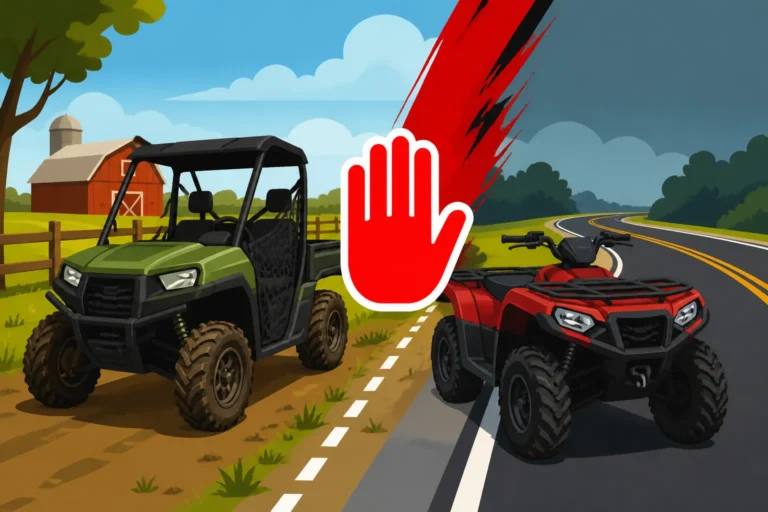
This is perhaps the most important distinction for any Louisiana ORV owner to grasp: [Why an Off-Road Decal Is Not Street-Legal Registration]. Your ORV decal allows you to legally operate your ATV or UTV on designated trails, private property (with permission), and within recognized off-road parks. It absolutely does not grant you the right to cruise down Main Street, run to the grocery store, or even travel short distances on state highways. Louisiana law is very clear about the prohibition of ATVs and UTVs on public roads, interstates, and most travel lanes. There are specific, limited exceptions for UTVs on designated parish roads under strict conditions, and very narrow allowances for farm use on shoulders, but these are exceptions, not the rule.
If you are caught riding an ATV or UTV on a public road where it is prohibited, you can face significant [Louisiana Penalties for Illegal Road Riding]. These penalties can include substantial fines, court costs, and potentially even impoundment of your machine. Law enforcement takes these violations seriously due to safety concerns for both the ORV rider and other motorists. Even riding on the shoulder, unless it falls under the very specific farm use exemption, is generally illegal. For farm operations, [Louisiana Rules for Riding a Shoulder] are incredibly narrow and require an affidavit. You cannot use the decal as justification for road travel; it simply doesn't apply to that context. Always remember: an ORV decal means "off-road."
The Importance of Ongoing Awareness and Local Ordinances
The landscape of ORV rules in Louisiana isn't static. State laws can change, and equally important, local parishes and municipalities often have their own specific ordinances that further restrict or, in rare cases, permit certain types of ORV use. This means that staying compliant isn't a one-and-done process after getting your decal; it requires ongoing vigilance and awareness. What might be permissible in one parish could be strictly forbidden in another. [Louisiana Parish Ordinance Lookups] is a vital resource for any serious rider. Before you load up your machine and head to a new riding spot, or even consider riding near your own property, it’s always wise to check with the local parish sheriff’s office or municipal authorities to understand any specific restrictions they might have in place.
Furthermore, always ensure you have explicit written permission if you plan to ride on private land that isn't your own. Even with a valid ORV decal, trespassing is illegal and can lead to severe penalties. Keeping a copy of your current title and decal information, along with any relevant permits or permissions, accessible on your person when riding is always a good idea. While the decal is a state requirement, understanding the local nuances is how you truly stay out of trouble and responsibly enjoy your machine. Services like LawDepot can be useful for generating things like landowner permission forms, ensuring you have proper documentation before hitting those private trails. By staying informed and respecting both state and local regulations, you ensure that your passion for off-road riding remains a source of enjoyment, not legal headaches.
Louisiana ORV Decal Checklist and Common Scenarios
To help you keep track of all the requirements and understand how the 30-day deadline applies to different situations, here's a handy overview. This table simplifies the process and highlights the critical steps for various ORV acquisition scenarios in Louisiana.
| Scenario | Key Requirements | Sales Tax Obligation | Decal Deadline (from acquisition/residency) | Common Pitfalls |
|---|---|---|---|---|
| New Machine (Dealer) | – MSO (Manufacturer's Statement of Origin) | – Collected by dealer; shown on invoice | 30 Days | Assuming dealer handles everything; delayed OMV visit. |
| – [Louisiana Form DPSMV 1799 Explained] | ||||
| – Photo ID | ||||
| Used Machine (Private Sale) | – Original Title (assigned by seller) | – Paid by buyer at OMV counter | 30 Days | No [Louisiana Notarized Bills of Sale]; incorrect title. |
| – [Louisiana Notarized Bills of Sale] (recommended) | ||||
| – [Louisiana Form DPSMV 1799 Explained] | ||||
| – Photo ID | ||||
| Out-of-State Machine | – Out-of-state Title/Registration (if applicable) | – Paid by buyer at OMV counter (use tax) | 30 Days | Ignoring LA use tax; missing original docs. |
| – Proof of prior ownership/bill of sale | ||||
| – [Louisiana Form DPSMV 1799 Explained] | ||||
| – Photo ID | ||||
| Farm-Exempt Machine | – Agricultural affidavit (notarized) | – Depends on purchase method | N/A (no decal, but affidavit needed) | Using machine off-farm; not having affidavit. |
| – [Louisiana Form DPSMV 1799 Explained] (for title) | ||||
| – Photo ID |
Note: While the table provides a general overview, always consult the Louisiana OMV website or local offices for the most current and specific requirements, as rules and forms can change.
Disclaimer
This article is for general informational purposes only and does not constitute professional advice. Laws, prices and regulations vary by location and change over time. Consult a qualified professional for guidance on your specific situation.